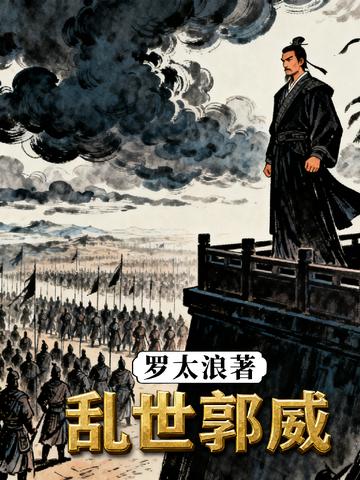
This is an era where heroes do not care about their origins, and it is also an era when human lives are as trivial as they are worthless. Nine years before Zhao Kuangyin's "Chenqiao Mutiny", Guo Wei was forced to wear a yellow robe and declare himself emperor by soldiers in Chanzhou. However, he first performed a drama of "supporting the Liu clan → going north to defend Liao → passively accepting Zen". This not only avoided the reputation of "regicide and usurping the throne", but also rationalized the seizure of power by leveraging the morale and public opinion of the military. It can be called a textbook-level operation of the Five Generations.
Guo Wei was an orphan from Yaoshan in Xingzhou. He joined the army at the age of eighteen and started as a low-level soldier. With his bravery and resourcefulness, he successively attached himself to Li Cunxu, Shi Jingtang, and Liu Zhiyuan, and rose to prominence in the light of swords. He assisted Liu Zhiyuan in establishing the Later Han Dynasty, but because of his outstanding achievements, he was jealous of the hidden emperor Liu Chengyou and his entire family was killed.
Under the blood feud, he raised troops in Yedu and commanded Bianliang in the name of "Qingjun Side". Liu Zipi won a battle to determine the outcome, but saw his old master dead; when he entered the capital, he encountered soldiers "dressed in yellow robes". From a courtier to an emperor, this road is stained with blood and helplessness.
After ascending the throne, he did not indulge in power. Facing the Central Plains, which was facing a lot of waste, he stopped farming, reduced salt taxes, relaxed skin restrictions, and rested with the people; he reorganized government, revised laws, suppressed vassal towns, and stabilized the government. The emperor, who called himself a "poor man," spent three years personally injecting vitality into the broken world, laying the groundwork for the subsequent "Reign of Expressing De" and the unification of the Northern Song Dynasty.
This is not only a history of an emperor's entrepreneurship, but also a man's struggle, revenge and redemption in troubled times. See how Guo Wei sticks to his original intention amidst the turbulent currents of military rule, how he chooses between the love and hatred of his family and his country, and how he maintains his integrity as a hero.