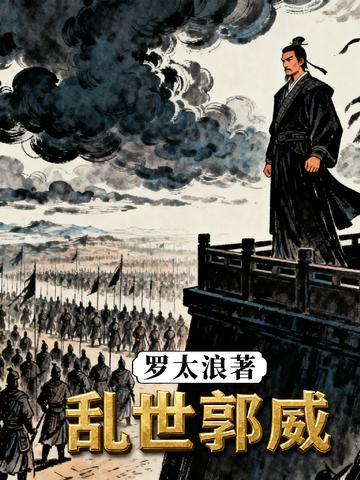
This is an age when a hero’s origins do not matter, and an age when human life is as worthless as grass. Nine years before Zhao Kuangyin’s Chenqiao Mutiny, Guo Wei was forcibly draped in a yellow robe by his soldiers at Chanzhou and proclaimed emperor. But first, he staged a sequence of events: “install a Liu clansman → march north to repel the Khitans → passively accept the throne.” This spared him the infamy of murdering his sovereign and usurping the throne, while using military morale and popular sentiment to legitimize his seizure of power. It was a textbook example of political scheming in the Five Dynasties.
Guo Wei was an orphan from Yaoshan, Xingzhou. He joined the army at eighteen and rose from the ranks, distinguishing himself through bravery and cunning. He successively served Li Cunxu, Shi Jingtang, and Liu Zhiyuan, making his name amid the clash of swords. He helped Liu Zhiyuan establish Later Han, but his achievements made the emperor fear his power. Emperor Yin, Liu Chengyou, grew suspicious of him and had his entire family killed.
Driven by a sea of blood and vengeance, Guo Wei raised an army in Yedu under the pretext of “purging the court of corrupt ministers” and marched on Bianliang. The Battle of Liuzibei decided the fate of the realm, but he saw his former ruler die. Then, upon entering the capital, his soldiers placed the yellow robe on his shoulders. The road from minister to emperor was soaked in blood and helplessness.
After ascending the throne, he did not become drunk on power. With the Central Plains in ruins and awaiting renewal, he abolished the military farms, reduced the salt tax, relaxed restrictions on leather, and gave the people time to recover. He also reformed the bureaucracy, revised the laws, and curbed the military governors to stabilize the court. This emperor, who called himself “a poor man,” breathed life back into a broken realm with his own hands in just three years, paving the way for the later “Reign of Xiande” and the unification under the Northern Song.
This is more than the story of an emperor building his empire. It is also the story of a man’s struggle, revenge, and redemption in an age of chaos. See how Guo Wei holds fast to his original ideals amid the corrupt tide of military rule, how he makes choices amid the tangled loyalties of country and family, and how he uses his...