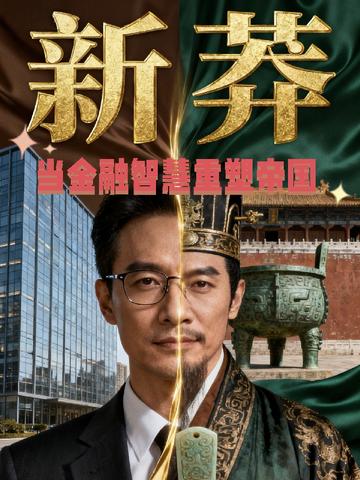
"New Mang" is a dialogue spanning two thousand years, an ultimate experiment in economic principles and the fate of empires. Wang Mian, a modern business tycoon, accidentally traveled through time and became Wang Mang in the late Western Han Dynasty. He is no longer the pedantic and utopian usurper in the history books, but a reformer holding the sharp edge of modern economics. Faced with Chichi Qianli's doomsday scenario, he vowed to use the power of capital to turn things around. This is not a simple game of power, but a set of ancient practices of the modern economic system: he issued "national bonds" and used national credit to leverage dormant private capital; he established an audit department and a public opinion station to cut off millennia-old officialdom abuses with the sword of the system; he promoted franchising and found a delicate balance between imperial power and the market. But reform is never about treating guests to dinner. A powerful counterattack, the test of natural disasters, and the inertia of history are like three mountains pressing down on us. The deeper contradiction is hidden in the heart - how can the lonely soul missing his wife and daughter under the moonlight balance his guilt for the "small family" and his responsibility to "everyone"? The most touching thing about "New Mang" lies not in how the protagonist uses modern knowledge to crush the ancients, but in the tragic idea of a sober idealist, a man in power who sympathizes with the world, and still chooses "Although tens of thousands of people will die," after recognizing the limitations of the times. When Wang Mang finally chose to cultivate a successor and retire after his success, what he completed was not only a transfer of power, but also a profound revelation about responsibility and inheritance. If you are tired of the same time-travel novels and long for a work with ideological depth, historical depth and human warmth, this book will take you into a familiar yet unfamiliar new dynasty and witness a lonely reformer...