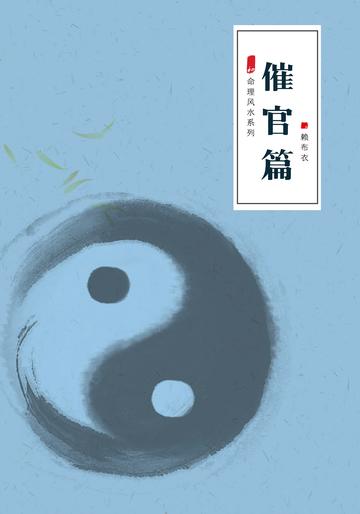
"Jiguan Pian" is a Feng Shui classic written by Lai Buyi (formerly known as Lai Wenjun, also known as Tai Su), a famous Feng Shui scholar in the Song Dynasty. It focuses on the influence of geographical conditions on destiny, and is especially famous for promoting officials and promoting luck. It is known as an outstanding work in Feng Shui circles and has been included in the "Sikuquanshu". Lai Buyi abandoned his official position and traveled around, devoting himself to the study of Feng Shui. His academic and practical experience are reflected in this book, which is highly praised by both academic circles and practitioners.
The book has a clear structure and is divided into four chapters: "Evaluating the Dragon", "Evaluating the Acupoints", "Evaluating the Sand" and "Evaluating the Water". By systematically discussing the ups and downs of the dragon's veins, the good and bad luck of acupoints, the configuration and orientation of sand and water, it elaborates on the Feng Shui logic of yin and yang, the five elements, and the restraint of life. The whole book is expressed in the form of poetry and prose, which is easy to remember but full of mystery. It is based on the yin and yang of the twenty-four mountains, the three auspicious signs and the six figures, and explains the relationship between the direction of the Qi pulse and the fortune of the official career. It has a profound influence on the Feng Shui of later generations. It is an authoritative work for learning the Qi principle of "stimulating officialdom and promoting luck".