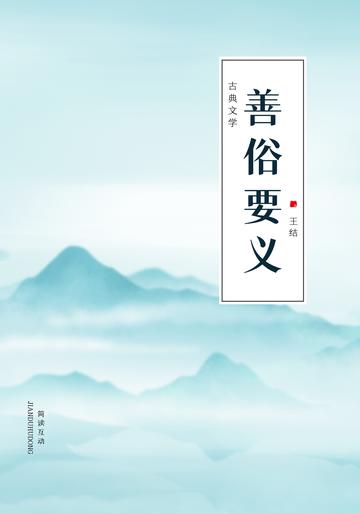
Essentials for Improving Customs is a work on rural governance, moral education, and agricultural guidance written by Wang Jie, a Yuan dynasty official. While serving as the chief administrator of Shunde Circuit, Wang Jie compiled the book in response to imperial edicts and local governance needs. It sets out “thirty-three items” as standards of conduct for local communities, balancing the twin goals of “agriculture” and “moral education.”
The book states at the outset: “The thirty-three items are intended to encourage farming and sericulture, uphold human relationships, improve customs, and reduce the use of punishments.” In other words, by promoting agricultural production, regulating moral conduct, and reinforcing social customs, it sought to reduce reliance on punishment and thereby stabilize society. Its first item is “Give priority to farming and sericulture,” followed by topics including tree planting, saving, animal husbandry, water conservancy, educating the people, and filial piety and proper conduct.
Essentials for Improving Customs is a blend of policy manifesto and guide to local governance. It reflects the Yuan dynasty ideal of nurturing the people through “good customs” and improving social mores through ritual and moral education, a vision shared by the central and local governments. Later scholars have concluded that Wang Jie's work played a practical role in grassroots governance and rural cultural education, and regard it as a local governance text with real-world value.
If you are interested in Yuan dynasty institutions and governance, rural education, customary regulations, or the history of agricultural policy, Essentials for Improving Customs is an important text for understanding how local government and Confucian moral education came together in the Yuan dynasty.