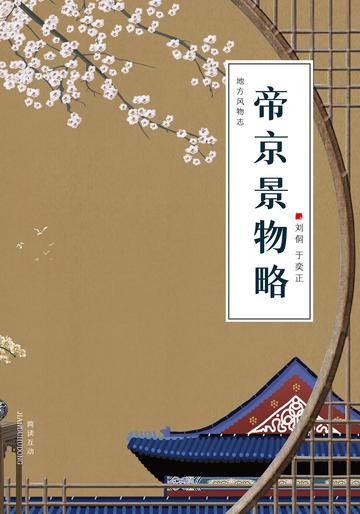
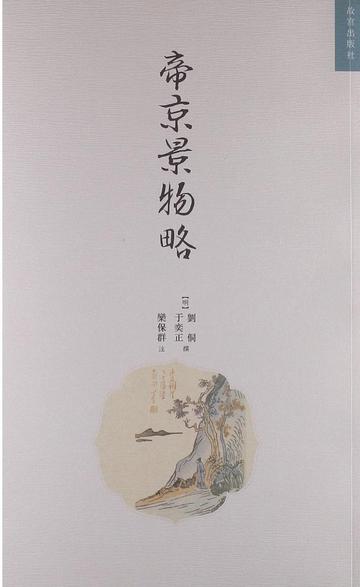
"Scenery of the Imperial Capital" is a humanistic and geographical work describing the scenery of Beijing and its suburbs published in the eighth year of Chongzhen in the Ming Dynasty (1635). The authors are Liu Tong and Yu Yizheng, and Zhou Sun is responsible for editing. It is one of the most detailed records of Beijing's landscapes and gardens, temples, bridges, springs, and folk customs in the late Ming Dynasty.
The book has a clear structure and is divided into volumes according to regions such as the north of the city, the east of the city, the south of the city, and the west mountain. It records palaces, temples, ancestral halls and gardens, famous springs and bridges, festival customs, lantern markets, spring markets, and the daily scenes of the people in the city. Many historic sites, such as Xiangshan Temple, Yuquan Mountain, Marco Polo Bridge, Tanzhe Temple, etc., Not only depict their scenery, but also record their historical origins and environment.
The charm of this book lies in its writing style and perspective: it is different from the cold and rigid style of official revision of history, it has both the feelings of a scholar and the style of a travelogue. The author made on-the-spot investigations and repeated deliberation, and incorporated Beijing's gardens, landscapes, cultural elegance, and folk customs into his writing, making readers feel as if they have traveled back to the capital of the Ming Dynasty, walking through the temples and alleys, watching the lively lantern market, and listening to the temple bells and sunsets. It is both historical and full of beauty and interest.
Overall, "Scenery of the Imperial Capital" is not only a treasure of urban geography and history, but also a masterpiece of travel notes with literary value. For those who want to understand the actual landscape, social customs and literati life of Beijing during the Ming Dynasty, this is an important document that cannot be missed.