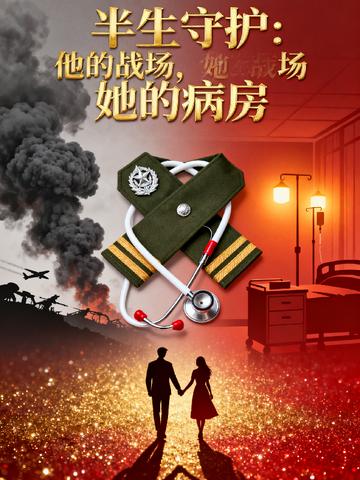
In the ruins of Wenchuan in 2008, scout Lu Zheng's steel gun met intern Su Qingyan's white coat for the first time. He braved the aftershocks to dig out survivors, while she raced against death in a temporary shed. A military compass became the first bond between the two "rescuers."
From the confrontation of ideas at the medical point in the military camp to the life-and-death struggle of peacekeeping in South Sudan - he protected the refugee camp from artillery fire, while she guarded her life on the hospital bed. The ring made of bullet casings witnessed the vow to "come back alive". In the world of fireworks, the wedding was postponed due to tasks, and the psychological trauma was hidden in silence. They struggled with "lost contact" and "persistence", and found a balance between "family and country" and "small family".
When the epidemic hit, he led the team to build shelters and transport supplies, while she went retrograde to the intensive care unit. The stares at both ends of the cordon gave the "guard" the appearance of resonance. When he was transferred to the Emergency Management Bureau due to injury, she refused the high salary to delve into trauma first aid. The former battlefield and ward finally became a new battlefield where we fight side by side.
After half a lifetime of ups and downs, the steel gun has been replaced by an emergency suit, and the white coat has added traces of time. The apprentices they taught became new "Chargers", and their son was admitted to the Military Medical University to continue his mission. It was not until the retirement courtyard, with military medals and scalpel ornaments photographed under the setting sun, that Lu Zheng smiled and said: "The compass back then is no longer useful. You are my direction."
This is a record of a relationship that spans twenty years. It describes the hard-core responsibilities of soldiers and doctors, and also hides the most firm tenderness in daily life.