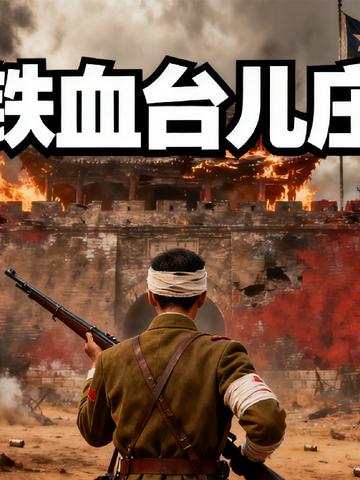
In the spring of the 27th year of the Republic of China, the land of southern Shandong was filled with gunpowder smoke. The Japanese army's Isotani Division's frontline pointed directly at Taierzhuang. This small canal town became the last barrier blocking the Japanese army from moving south. Wang Zhenting, the commander of the 186th Regiment of the 31st Division, was ordered to guard the north gate with a remnant of less than 500 men. Faced with the crazy attacks of Japanese tanks, heavy artillery and special forces, he vowed to live and die with the position.
During the street fighting, the brothers used rifles and grenades to fight the Japanese house by house. The people spontaneously supported them by sending food, medicine, and building fortifications. The soldiers and the people worked together to build the Great Wall of flesh and blood. Chen Ming, the commander of the second company, spilled blood on the position, Zhao Erhu, the commander of the first company, was wounded and fought hard, and Wang Zhenting led his troops to defend for three days, even though they ran out of ammunition and food, they still did not retreat.
At the critical moment, the reinforcements of the 27th Division broke through the Japanese blockade, cooperated with the 186th Regiment, and finally drove the Japanese troops out of Taierzhuang. This battle not only defended the small town, but also showed the iron-blooded character of the Chinese soldiers, becoming a tragic heroic hymn in the history of the Anti-Japanese War.