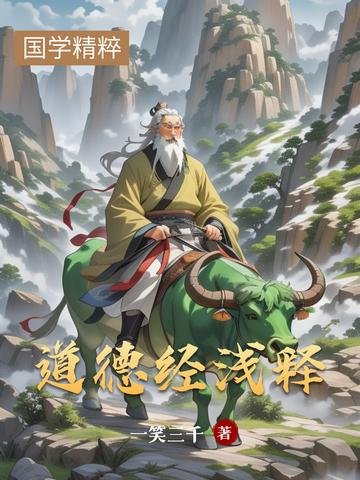
The Tao Te Ching, also known as Laozi, was written by Laozi, a great thinker and philosopher in the pre-Qin period. It is a treasure of ancient Chinese philosophy, politics and cosmology, and is the foundation of Taoist thought. The whole book has only more than 5,000 words, but it is all-inclusive and profound. It can be called the source of wisdom of Chinese civilization. This book is divided into "Tao Jing" (Part 1, Chapters 1 to 37) and "De Jing" (Part 2, Chapters 38 to 81), with a total of eighty-one chapters.
This brief explanation aims to provide an in-depth explanation of the subtle meaning of the Tao Te Ching in a respectful, rigorous and easy-to-understand manner. Interpretation will follow the following principles:
1. Origin exploration: Strictly based on the authoritative originals (such as Wangbi version, silk version, Guodian Chu slips, etc.), The scriptures are carefully revised and strive to be close to Laozi's original meaning.
2. Hierarchical analysis: Each chapter's brief explanation will imitate the style of commentaries on Buddhist scriptures, set up chapter titles, lead from the "Introduction", conduct detailed exegesis and philosophical analysis of the original text sentence by sentence or even word by word, and interpret it in combination with historical background, philosophical system, self-cultivation guide, state governance strategy and other multiple dimensions.
3. Connect ancient times with modern times: On the basis of respecting the original meaning of classics, appropriately connect it with management, life, ecology, psychology and other issues in modern society to reveal its timeless and eternal value.
4. Integration: At key points, the incisive insights of important commentators of the past dynasties (such as He Shang Gong, Wang Bi, Han Shan Deqing, Wei Yuan, etc.) Are quoted to help readers broaden their horizons and deepen their understanding.
5. Language style: Strive to write fluently and gracefully, with both academic rigor and popular readability, making the profound mysteries clear and perceptible, and guiding readers