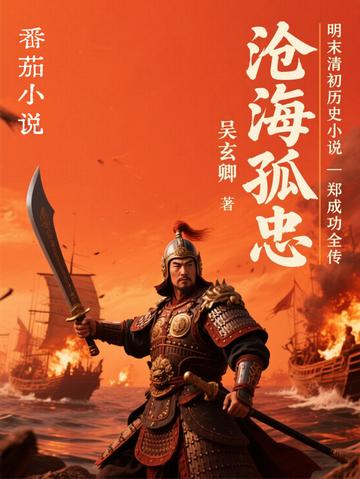
Guzhong in the Sea
沧海孤忠
- Status
- Ongoing
- Length
- 669k Words
- Genre
- Historical
- Subgenre
- Historical & Ancient
- Audience
- Male
- Updated
- 1d ago
- Source
- Fanqie
Stats
Tags
Synopsis
Reader comments
In booklists 43
Explore more →
Historical Fiction
Recommend historical novels
The Historical Type Does Not Need to Be Systematic. Tang, Song and Ming Dynasties Are All Acceptable. IQ Is Online.
Recommended Historical Books
I am a history class representative. Do you have any good books on historical literature and practical history?
Looking for Historical Novels About the Late Han Dynasty, the Late Sui Dynasty, the Late Tang Dynasty, the Late Northern Song Dynasty, the Ming Dynasty and the Late Qing Dynasty
History! You Must Be Smart! !
Are there any modern people who travel back to ancient times and use their own career development~ For example, doctors travel back to ancient times and develop medicine based on the environment, or modern military kings travel back to ancient times and use modern people's ideas to build troops, casually come up with penicillin, and draw Ak4 at the beginning.
Daming's Beautiful Daming 9.5, Exciting, the Latest
I want to read a book like "The Eight-Year-Old Blind Saint Grandson Climbs Out of the Tomb of the Ming Dynasty at the Beginning". Daming, Daming looks good. Daming 9.5 Points, exciting and good-looking
Ming Dynasty Novels
Novel about the Ming Dynasty, the last dynasty of the Han people, book introduction
The Ming Dynasty Series Has No Gods to Defend!
I want to read a book similar to "The First Duke of Ming Dynasty". What exactly is the Ming Dynasty to us? Is it the last Han Dynasty? Or is the party fighting for public grievances? Or is the emperor guarding the country and the king dying in the country? The Ming Dynasty is the last backbone of China. If you have the opportunity, you are willing to go to the Ming Dynasty.
Looking for Books with a Score of 9.9 or Above in the History Category. Are There Any Novels by Academics?
The Ceiling of Ming Dynasty Novels
Machiavellian, Ancient Style
Are there any novels about big-picture plotting similar to "Acacia" and "The Adviser in the Golden Age", about intrigues in the court, turmoil in the world, and no fighting in the house?
High Quality Historical Novels
Books from the Jin, Southern and Northern Dynasties, Five Dynasties and Ten Kingdoms Periods
A history book with the background of the Jin, Southern and Northern Dynasties, Five Dynasties and Ten Kingdoms periods.
What Is the Most Popular Historical Text on Whole Tomato?
Want to watch something similar to "Fake your surname Zhuge: Youyou Cang Tian?" Make a big man again! Content.
Are There Any Novels from the Late Ming Dynasty That Are Comparable to Ke Shanmeng's "The Iron-Blooded Remnant"?
Don't use system literature, let alone travel through time without thinking and make guns and cannons. Anyway, it's just two words, real! ! ! Start from scratch, step by step, it doesn't have to be the end of the Ming Dynasty, it's just troubled times anyway
Nice Historical Novel
The End of the Ming Dynasty Is a Passionate and Good Article, and the Book Is Wonderful!
At the end of the Ming Dynasty and the beginning of the Qing Dynasty, the situation was changing, a time of great strife, and historical changes!
Late Ming Dynasty War Novels
I want to read a book similar to "The Ming Dynasty: I asked you to hang yourself, but not to rebuild the Ming Dynasty". Looking for novels about the late Ming Dynasty, from humble beginnings to powerful ones, with historical evidence
Novel About Rebellion in the Late Ming Dynasty
I've read it before, but forgot the title. During the Chongzhen period in the late Ming Dynasty, the protagonist slowly developed and reached a certain scale, and various anti-kings appeared one after another. Chongzhen had no money to trade his official position with the protagonist for money.
Historical Article, Please Don't Read Nonsense.
It doesn't mean it's completely historical, but at least it's not outrageous. There are powerful plots and games, and the games must be reasonable and reasonable. There is no reason to be confused at every turn and believe the protagonist when you see them. The language does not need to be completely elegant, but don't just use Internet hot words to express Chinese quintessence.
Begging for High-Quality Masterpieces in the Late Ming Dynasty
Ming Novels
This book is beautiful and of good quality
A Book You Will Regret If You Don't Read It, Worth Tens of Thousands of Dollars
I want to read a book similar to "A Guide to Enlightenment and Becoming an Immortal in the Human World (Top Secret: Ling Tian Ji)". A book you'll regret if you don't read it
The Pinnacle Novel of the Ming Dynasty Series, I Can't Stop at All
I want to read a book like "Eternal Life: I was picked up and brought home by Xu Da in the Ming Dynasty (The Legend of the Consort of the Country)".
When I started writing this book, my original intention was very simple - I wanted Zheng Chenggong to step down from the altar and into the fireworks of the world. Everyone knows that he is a "national hero" and his contribution to the recovery of Taiwan will go down in history. But the word hero is too strong, so heavy that it obscures his appearance as a human being. What I want to write about is a warm Zheng Chenggong: he would kneel down and weep blood when his father was sent to the Qing Dynasty, he would collapse within five seconds when his mother died for the country, he would lose a good game because he underestimated the enemy under the city of Nanjing, and he would cry endlessly while looking towards the mainland before his death. He is of mixed Chinese and Japanese descent, and has been searching for identity between two cultures throughout his life; he is a Confucian scholar, but he has to burn his green clothes and raise swords; he is a filial son, but has to cut off his father's robe; he is a strict father, but he has turned against his son. These contradictions and struggles are the real, three-dimensional and flesh-and-blood Zheng Chenggong. What does this book do to attract readers? I think there are four things: One is the story of "people", not the legend of "gods". I wrote about his confusion as a boy, about his torn between his father's power and Confucian ideals, about his collapse and reflection after the failure of the Northern Expedition, and about his anger and powerlessness in the face of family tragedy in his later years. Heroes can also make mistakes, suffer, and be lonely - this kind of "imperfection" is precisely the most touching perfection. The second is the fireworks behind the flash of swords. In addition to naval battles and sieges and power games, I also deliberately wrote many "small" scenes: the laughter of soldiers playing dice and gambling on the Mid-Autumn Festival night, the first sound of farm tools being buried in the field, and the sound of children reading at school. Big history is made up of countless small days. I hope readers can smell the fireworks of that era. The third is the "why" behind every decision. Why did Zheng Chenggong abandon his father and fight against the Qing Dynasty? Why did you go against all odds to conquer Taiwan? Why are you so furious about Zheng Jing's affair? I am not satisfied with writing "what he did", but also want to write "why he did it" - cut open his heart to show readers, where there is the tearing of loyalty and filial piety, the burning of ideals, the responsibility of a father, and the despair of a monarch. The fourth is the background of compassion. There is no villain in this book. Zheng Zhilong is a scheming hero, but he is also a father who loves his son; Shi Lang and Zheng Chenggong parted ways, each with their own reasons; even the Qing generals and the Dutch governor, I tried my best to write about their positions and dilemmas as "human beings". The cruelty of history is that many times, the right people meet at the wrong time.
This historical biography of the Ming Dynasty just fits my favorite historical themes. It breaks away from the heroic narrative and depicts Zheng Chenggong's complete life from multiple angles. It not only describes his persistence in resisting the Qing Dynasty to defend his homeland and regaining the treasured island, but also objectively shows the shortcomings in the character's character and the ideal gap and family tragedies he encountered successively in his life. The text is thick and restrained, and it fully presents the personal struggles, beliefs and complexity of human nature in the torrent of the times. It is very heavy and has space for thinking. It is a historical reading that suits me very well.
A historical article about the treasure dug up by Tomato! "Cang Hai Gu Zhong" is really amazing! When talking about Zheng Chenggong, we only remember the label of "national hero", but this book made me truly understand the weight behind this name. The author did not write him as a perfect god, but as an ordinary person who endured everything with his lonely and loyal body in the turbulent waves of the Ming and Qing dynasties. There is the scholar's determination to act righteously, the tenacity to resist the Qing Dynasty and defend the country, the trauma of disillusioned ideals, and the belief in family and country that has remained unchanged throughout his life. There is no bloody novel, only the most authentic history and the most touching persistence. The more you read it, the more you become addicted to it, and the more you read it, the more shocking it becomes! If you like historical texts and heroic biographies, this book is definitely a must-read of the year!
"The Lost Hero" tears apart Zheng Chenggong's heroic symbol and restores a true soul struggling in troubled times. He is a mixed-race Confucian scholar of Chinese and Japanese descent, and a lonely minister who broke away from his father; from a scholar who burned his clothes for justice, to the mainstay of the resistance against the Qing Dynasty in the southeast, and to the feat of regaining Taiwan, the book outlines his tenacity and torn between the hatred of his country and his family and the gap between his ideals. What's even more touching is that he is also a mortal with weaknesses. His strong and harsh character, hit by the martyrdom of Emperor Yongli and the scandal of his eldest son, led to family and personal tragedies. This book allows us to see that heroes are not perfect symbols, but ordinary people who fight with faith until the last moment of their lives in the turbulent waves of history. It is worth recommending to friends, the author's writing style is delicate and smooth. Come on, come on, come on!
"The Loyalty in the Sea" outlines the magnificent picture of Zheng Chenggong's recovery of Taiwan in an epic way. The national integrity and the feelings of family and country are intertwined into an immortal chapter. Today's international situation is turbulent, with undercurrents of geopolitical conflicts surging. Looking back more than eighty years since the victory of World War II, the builders of the post-war order are now faced with the reality that the alliance system is loosening. If new global challenges come, the international community may witness a historic turning point in the shaping of rules by multiple forces. As an insightful person in the field of diplomacy said: "The world is undergoing changes, and our country is keeping watch."
The novel has an excellent look and feel, the author has solid narrative skills, the plot arrangement is tight and tight, and the story logic is smooth and reasonable. The characterization is delicate and three-dimensional, and both the protagonist and the supporting characters are vivid and there is no facial makeup problem. The plot has ups and downs, the foreshadowing is natural, the foreshadowing is interlocking, the reversal design is unexpected, and there is no unnecessary plot in the whole process. The text is smooth and concise, the scene description has a strong sense of atmosphere, and it is full of immersion. The author's imagination is online, the world view is completely constructed, and the conflict settings are just right, leaving you with endless enjoyment. You can feel that the author carefully conceived each plot, updated it stably, and took great care. The follow-up story is very worth looking forward to. I sincerely recommend this book and will keep reading it!
This book has a compact plot and is enjoyable to read. The text is simple and delicate, and the characters are vivid and three-dimensional. When reading, follow the characters to experience the joys and sorrows, and understand the warmth and warmth of human nature. There are both daily fireworks and hidden truths about life. Reading it is thought-provoking, can broaden your horizons, and heal your heart. No matter what age you are, you will gain something from reading it carefully and it is worth reading again and again. Very good looking, second time reading, highly recommended!
The author's cultural background is really deep and solid, and he writes the story of Zheng Chenggong in a real and moving way. Whether it is family love, teacher-student relationship, friendship, or even patriotism, Zheng Chenggong's spirit is very rare. Later, teachers and students turned against each other, father and son broke up, and his mother would rather die than surrender. His inner decision prompted him to step out of his own life step by step. Even if he did not succeed in returning to the country, he still did what Zhuge Liang did, devoting himself to death and dying. Also, I really like the author's poems.
The legendary story of Zheng Chenggong is a heart-stirring heroic epic. The author uses history as his bones and love as his soul, and deeply depicts the hero's struggle and perseverance without deification or facial expression, showing the weight of faith and sacrifice. The justice of family and country is intertwined with human nature, and the tragic song of a lonely minister in troubled times reaches people's hearts. The text is thick and majestic, and it makes you passionate and full of compassion when you read it. It is a masterpiece worth reading again and again.
Looking at the opening chapter, Mr. Tagawa gives birth, and there are strange phenomena in the sky and the earth, indicating that this child is extraordinary, and indeed. Zheng Chenggong, a historical figure that everyone is familiar with, was born. His deeds are known as resisting the Qing Dynasty and regaining Taiwan. Take root in our hearts like God. The author greatly pulled Zheng Chenggong out of the altar and gave the public a historical figure with flesh and blood. He is no longer a god-like being, he also has seven emotions and six desires, he also has selfishness, he has feelings for his family and country, and he also has unending family ties. The entanglement and contradiction in the dilemma of loyalty and filial piety. Very good article, worth collecting
"Lonely Loyalty in the Sea" takes the magnificent sea frontier in the late Ming Dynasty as its volume and unfolds a soul-stirring tragedy of loyalty. The novel breaks away from the facial expression narrative and places the protagonist in a desperate situation where his family and country are overturned and he is faced with the dilemma of loyalty and filial piety, and writes about the perseverance and struggle of a lonely minister in troubled times amidst the stormy waves. The author's writing is profound, the naval battle scenes are majestic, and the characters are fleshed out. They have the heroism of an iron horse, the tenderness of love between children, and the lonely courage of doing something knowing that it cannot be done. The book's interpretation of the righteousness of the family and the country and the integrity of the nation is profound and profound. It restores the warmth of human nature in the gaps in history and makes the heroes step down from the altar, making them more authentic and respectable. The whole book uses the sea as the curtain and the heart of loyalty as the pen to describe the perseverance and helplessness in troubled times. The lines are full of desolation and tragedy, which makes one feel sad and moved when reading it. It not only shows the weight of history, but also feels the heat of integrity. It is a masterpiece that combines literature and feelings of family and country.
The tenacity, unwillingness and regret in human nature are all mixed into the story of the resistance to the Qing Dynasty and the restoration of Taiwan. It is not a dry historical anecdote at all. The author is very talented, and the writing is full of tension and very interesting.
The writing style of the work is smooth and delicate, very good! The characters are vividly created, and the emotional descriptions are quite delicate. They gradually grow up in suffering, which makes people very moved after watching it. The plot of the story is ups and downs, exciting, exciting, and the details are in place, making it very visual.
This book breaks away from the stereotypical heroic narrative and digs deeper into Zheng Chenggong's complicated life. The righteousness of family and country, the rift between father and son, family tragedy, and layers of conflicts pull the characters together. He is an indomitable national hero and an ordinary person who was tempered by fate. The heavy feeling of history comes to your face, allowing people to truly understand the tragedy of being lonely and loyal in troubled times.
The layout of this historical novel is really grand, and the feelings of family and country under the background of the great era are vividly written. Watching a scholar stand upright in the great changes of the times, the unyielding sense of faith is so shocking. The plot is thick and passionate. It is definitely a rare treasure of history and a must-see. Very nice looking forward to it
The author has a very deep understanding of history, and the scene he created is very grand and has a strong historical atmosphere. Each character can be close to the described environment and deeply rooted in this environment, which is very comfortable.
The rhythm of the plot is relaxed and relaxed, the setting is novel and elegant, the characters are vivid and three-dimensional, the love-hate entanglement is delicate and moving, the foreshadowing is cleverly laid, the plot is advanced layer by layer, and the twists and turns are surprising. Continue reading after the update!
"The Lost Hero" breaks away from the monumental narrative of traditional hero biographies and uses delicate writing to restore Zheng Chenggong's struggle in the current of the times. He is not only a lonely righteous man who resisted the Qing Dynasty, but also had the tenacity and harshness of a mortal. This book is a moving epic about faith, sacrifice and the complexity of human nature.
I read this heroic epic in one sitting. The author's writing style is excellent. Every chapter contains poetry. In every word, you can see the original intention of the literati who has been missing for a long time. It is so rare in today's many flashy and sensational online articles. It is simply a breath of fresh air. The book uses history as its bones and love as its soul, and restores Zheng Chenggong's life without deification or facial expression. It not only describes his tenacity and perseverance as a lonely minister in troubled times, but also depicts the struggles and weaknesses of the mortals behind the heroes. The justice of family and country is intertwined with human nature. The text is majestic and full of compassion. It is a masterpiece worth collecting and reading [Like] [Like]
This is really a treasure novel. This novel is really excellent. This novel will write about our national hero Zheng Chenggong. The author did not portray him as an omnipotent character, but still wrote about a flesh-and-blood man who fought heroically in times of national crisis. There is no bloody plot, and the real and profound history is the theme, which is the most touching and shocking.
The author did not write the protagonist perfectly, making the hero particularly real and relatable. The righteousness of family and country is intertwined with the bonds of human relationships. It is tragic and passionate. Readers who like biographies of heroes in the troubled times of the late Ming Dynasty should not miss it. Come on, come on [love]
It has a strong sense of fate and the author's writing style is very strong. It not only restores the heaviness and desolation of the times, but also writes thoroughly about the struggle, faith and the complexity of human nature under the overall situation. The characters are flesh and blood, and the tragic song of a hero who refuses to surrender is so shocking, so tear-jerking, and so beautiful to watch.
The author uses history as his bones and love as his soul. He does not portray Zheng Chenggong as a born hero, but writes through the contradictions and tears in his life: he is a "son of a pirate" of mixed Chinese and Japanese descent, looking for identity between two cultures; But he had to cut ties with his father who surrendered to the Qing Dynasty, and had to make a life-and-death choice between loyalty and filial piety; he was the mainstay of the resistance against the Qing Dynasty in the southeast, but he failed in Nanjing and suffered the pain of disillusionment; he was a national hero who regained Taiwan, but suffered the double blow of Emperor Yongli's death and the scandal of his eldest son in his later years, and was dragged into an irreparable family tragedy by his strong and harsh character. The most rare thing about this book is that it does not avoid the "imperfections" of the hero. It describes Zheng Chenggong's confusion, pain, anger and powerlessness, his selfishness and obsession, and how he lived step by step from an ordinary scholar to a lonely hero in the turbulent waves of history, burdened with the hatred of his country and his family. Behind the battlefield of swords and swords, there is the tug of family affection and the collapse of ideals in the smoke and fire; under the epic of fighting and iron horses, there is the perseverance and struggle of an ordinary person in troubled times. The text is thick and majestic yet delicate. It contains both the soul-stirring righteousness of family and country, as well as the warmth of human nature that touches people's hearts. The book is both passionate and full of compassion, allowing us to truly understand: heroes are never perfect gods, but ordinary people who fight to the last moment of their lives with lone courage in the huge gap between ideals and reality. This is not only a personal legend of Zheng Chenggong, but also a tragic song about faith, sacrifice and the complexity of human nature in troubled times. It is worth reading again and again by everyone.
The most touching thing about "A Loyalty in the Sea" is that it brings Zheng Chenggong back from the altar to the human world. The author did not portray him as a perfect national hero symbol, but opened up his contradictions and struggles: his mixed-race Chinese-Japanese identity, the break with Jiangqing's father, the pain of the failure of the Northern Expedition, and the powerlessness of family tragedy in his later years, which gave this hero warmth and fireworks. With history as the bone and emotion as the soul, he not only writes the magnificent epic of the recovery of Taiwan, but also depicts the struggle of human nature in the collision between ideals and reality. The tension between the righteousness of family and country and personal emotions makes the characters three-dimensional and vivid, making it a passionate and compassionate read. This is not only a heroic legend, but also a tragic song about faith, sacrifice and the complexity of human nature, which is worthy of everyone's careful reading.
At the end of the Ming Dynasty, the mountains and rivers were overturned, the situation was over, the court was decayed, the army was demoralized, and the people surrendered. Everyone is seeking self-protection, wealth, and a way out, but the protagonist is the only one who bucks the trend. He experienced the rift between father and son, the death of his mother in the national disaster, the suspicion of the emperor and his ministers, the betrayal of relatives and separation, and the dilemma of family ties and justice. The future of his family and country was dark, but he still resisted the torrent of the world with a mere island.
I have known Zheng Chenggong, a national hero, for a long time, but some books have different views. Thank you to the author for restoring that period of history. It is also very lively and interesting to read. Five-star praise, keep up the good work
It's a very interesting novel. I'll give it a five-star review and try my best to write more exciting content. [Like][Like][Like][Like][Like][Like][Like]
The image of Zheng Chenggong is completely brought to life. He is not a cold symbol, but a lonely minister who carries the righteousness of his family and country. He has been fighting all his life from a scholar's righteousness to regaining Taiwan. In his later years, he was betrayed by his relatives one after another, and his family and country were broken. The combination of the hero's steadfastness and the helplessness of ordinary people makes people sigh.
The author's biography of Zheng Chenggong is sharp and profound. It not only describes Zheng Chenggong's birth, growth and competition in detail, but also restores history and explores the rise and fall of heroes in the great era. It is super interesting to read.
The plot is lively and interesting, and the plot is delicate and exciting. I like it very much! ! ! !