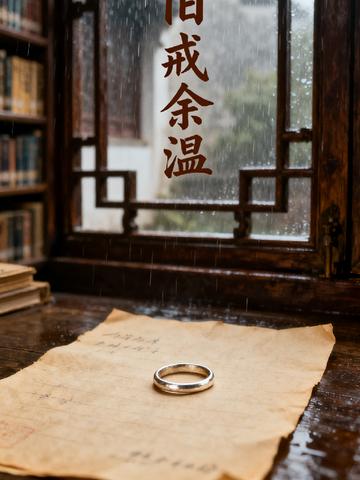
It was raining in the south of the Yangtze River in 1937. Half a ray of light leaked through the wooden window of the library, and I saw the carving knife on Shen Yan's fingertips running on the silver blank - "When the Anti-Japanese War is won, I will wrap it in red silk and marry you." When the plain silver ring was put on Su Wan's fingertips, the light in his eyes was brighter than the spring sun outside the window.
On the day he left, the wind was strong at the pier. She stuffed a stack of stationery with poems on it. He smiled and put it into his underwear pocket and said, "Read each one three times." But amid the Japanese bombing, the library was in ruins, and his news was completely lost.
Su Wan hid in the countryside with her silver ring and sent letters to her old address every month. The letters said that the plum blossoms in the small town had bloomed and fallen, and that she folded his old shirts at the bottom of the box, but never received a reply. This wait is forty years.
In the late autumn of 1977, in the corner of the yellowed old newspaper, the four words "Shen Yan sacrificed" pierced her eyes. In the relic bag that he searched for, there was only a postcard stained with old blood, and on the back was his unfinished handwriting: "Wanwan, if the silver ring is worn out..."
She rubbed the shiny silver ring on her ring finger. The cold metal still retained the warmth of his fingertips half a century ago. It turns out that some waits are doomed to be in vain from the beginning; some promises are, after all, old dreams blown away by the wind in the old alleys, with only an old ring left, lingering in the warmth of a half-life.