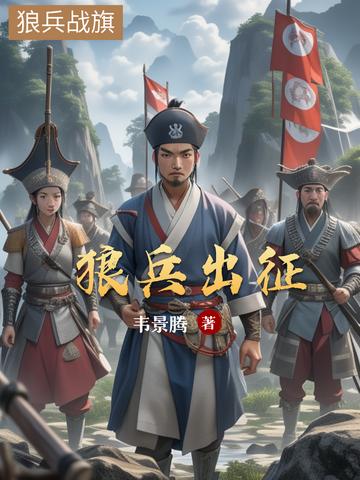
In the middle of the Ming Dynasty, Japanese pirates ravaged the southeastern seaboard. The official army was weak and the people were killed. In the critical autumn, a mysterious force from Donglan, Guangxi emerged - they were the wolf soldiers named "", who made the Japanese pirates frightened. The novel focuses on the four generations of the Donglan Wei clan chieftain family, and panoramically presents the anti-Japanese epic of this Zhuang army fighting in Guangdong, Fujian, and Jiangnan.
From the fourth year of Zhengde (1509), chieftain Wei Zhengbao took the lead in a bloody battle on the Jiulian Mountains in Huizhou and was killed by an arrow. When his 15-year-old posthumous son Wei Huchen was ordered to face danger, he led the wolf soldiers to defeat the Japanese pirates with his immature body. He became famous in the first battle; then Wei Qiyun and Sun Wei Yinglong, the sons of the tiger ministers, inherited the legacy. Four generations of people engraved the bravery and loyalty of the wolf soldiers in the flames of Jiangnan with their family and country sentiments of "not fearing hardships and sacrifices". The book not only vividly presents the loyal character of the Wei family, but also vividly depicts Mrs. Wa, a heroine of the Zhuang ethnic group. With the ambition of "not being born a thief", she led 6,000 wolf soldiers to rush to the rescue and turned the tide with her heroic body. The Ming court decreed that she be the "Second-grade Lady".
Why are wolf soldiers so brave? Originating from the "Ancient Zhuang Fist" practiced by the ancestors of the Zhuang ethnic group for generations - an ancient martial art known as the "ancestor of Southern Fist", which gives them steel and iron bones and the blood of a wolf. The novel uses magnificent writing to restore the shocking scenes of the wolf soldiers practicing ancient Zhuang boxing and charging into battle with rattan brand ground sword skills, filling the gaps in the historical records of this legendary army. This is not only a biography of family loyalty, but also a heroic anti-Japanese song in which the Chinese nation "fear no hardships and sacrifices", testifying to the loyalty of the children of Donglan who are closely connected with the fate of their home and country.