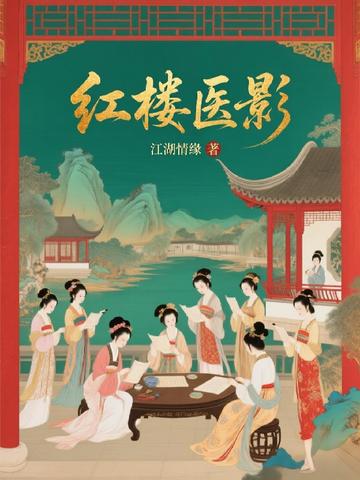
Shen He, a medical doctor trained in both Chinese and Western medicine, is unexpectedly reborn as a distant orphaned relative of the Jia family. Bringing with her a modern understanding of medicine and the diagnostic approach of traditional Chinese medicine, she enters the Rongguo Mansion, a place steeped in poetry and fate. She knows the tragic ending of Dream of the Red Chamber, but she cannot bear to watch Daiyu cough up blood without end or Baoyu waste his days in idle pursuits. With a gentle air of “knowing a little about nourishing the body,” she quietly begins a journey of protecting those she can, even when she knows it may be impossible.
She does not urge Baoyu to prepare for the imperial examinations. Instead, she introduces him to Compendium of Materia Medica, teaching him to identify herbs and memorize the rules for using them. Baoyu’s new habit of making ginger and brown sugar water for Grandmother Jia and preparing medicine for Daiyu gradually softens his mischievous nature. Shen He uses poems about medicinal herbs to open up to Daiyu, gently easing her sensitivity and melancholy with the idea that “love is about protecting one another, not clinging obsessively.”
The novel respects the original work’s central plot and characterizations. Key events such as the burial of the flowers, the search of the Prospect Garden, and the Jia family’s downfall remain unchanged, and the ending unfolds as it does in the original. Shen He never intends to “overturn” the story. She only uses medicine to relieve suffering: so Daiyu endures less pain from coughing blood before she dies, so Qingwen receives a bowl of soothing lily soup before her death, and so Baoyu learns to “protect” rather than “run away.” In the end, Shen He disappears into the Jiangnan region, leaving behind only a book titled Poems Fragrant with Herbs. It bears witness to this medical bond with the world of Dream of the Red Chamber, one that “can treat illness, but cannot save lives,” and adds a faint yet warm touch to the tragic fate in which “all beauties mourn.”