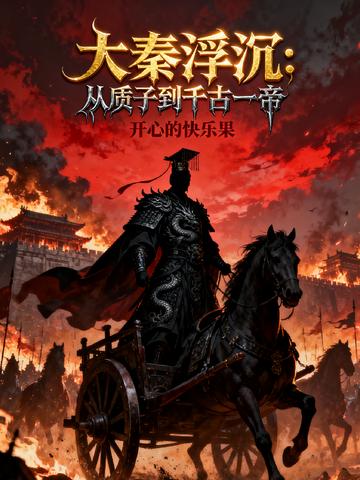
Amid the flames of war at the end of the Warring States period, a life destined to overturn the world began in Handan, Zhao. Ying Zheng, son of a Qin hostage, struggled to survive from childhood amid discrimination and abuse in Zhao, and tasted the full bitterness of the world. The merchant Lü Buwei recognized his father Yiren as “a rare commodity worth investing in,” poured his resources into him, and helped him return to Qin to contend for the throne, changing Ying Zheng’s destiny in the process. Yet returning to Qin was not the end. After the thirteen-year-old Ying Zheng ascended the throne, power fell into the hands of his “Second Father,” Lü Buwei, and his mother, Zhao Ji. He also faced the raging storm of Lao Ai’s rebellion.
The young King of Qin endured humiliation and bided his time, silently building his strength. Once he took power, he swept away every obstacle with an iron fist, had Lao Ai torn apart by chariots, stripped Lü Buwei of his position, and secured a firm grip on power. With the ambition to unite all under heaven, he put capable ministers and generals such as Li Si and Wang Jian to work, befriended distant states and attacked nearby ones, and in ten years swept away the Six Kingdoms of Han, Zhao, Wei, Chu, Yan, and Qi like autumn leaves in the wind. He established the first unified dynasty in Chinese history, the Qin Dynasty, and called himself the First Emperor.
He standardized the written script, unified axle widths and measures, and established the commandery and county system, laying the foundations of Chinese civilization for two thousand years. He drove back the Xiongnu in the north, built the Great Wall, and led campaigns against the Baiyue in the south, laying the foundations of China’s territory. Yet behind the splendor lay the controversy of harsh laws and the burning of books and burying of scholars, the backbreaking labor of building Epang Palace and the Lishan Mausoleum, and an unrelenting search for immortality. The wheels of fate quietly turned at Shaqiu. The First Emperor died, and Zhao Gao and Li Si altered his final edict, putting the foolish Hu Hai on the throne. Under tyranny and corrupt officials, the great empire quickly plunged into the abyss.