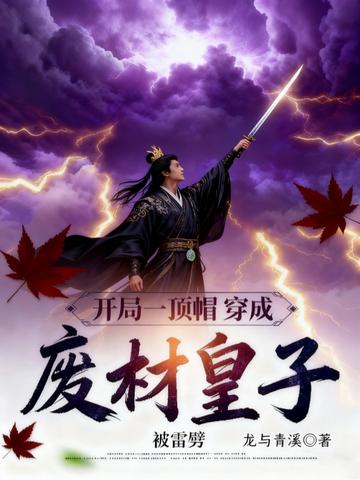
The Chronicles of Qi Jinfeng's Flames of War
齐烬烽烟录
- Status
- Completed
- Length
- 429k Words
- Genre
- Historical
- Subgenre
- Historical & Ancient
- Updated
- 9mo ago
- Source
- Fanqie
Synopsis
More by this author
In booklists 47
Explore more →
Follow for Follow, Likes for Likes (Book Recommendations Welcome)
I reply to every comment. Like once, get two likes back.
The Heroine Leaves the Male Lead and Returns Years Later, Only for Him to Hate Her to the Core
The heroine leaves the hero. Years later, she returns, and he hates her to the core.
New Novel, Let’s Review Each Other
Looking for books similar to *The Mysterious Finger Technique*.
Three Kingdoms, Going Independent, System, Martial Strength
Please Recommend Three Kingdoms Stories About Building an Independent Power and Eventually Unifying the Land
Like Mythic Version of the Three Kingdoms: Power Levels, Schemes, Beauties, and Conquest
Three Kingdoms novels
Looking for Novels About the Three Kingdoms, Where the Protagonist Builds Their Own Faction
The plot has to make sense. Don't recommend stuff where Hua Xiong backs Guan Yu down with a single line, even though Guan Yu has sworn a military oath, or where someone transmigrates into the Three Kingdoms and immediately starts making guns and cannons. Are there no normal stories about the Three Kingdoms' power struggles? ╰ (‵□′)╯
The Male Lead Isn’t Ill or Disabled, but He’s Always Getting Injured, Gravely Wounded, and Near Death
A Stunningly Beautiful, Vicious, Cruel Heroine Who Loves the Male Lead but Torments and Humiliates Him
Looking for Angsty Romance: The Male Lead Carefully Tries to Please the Cold Female Lead
I want something similar to The Buddhist Beta Made the Big Shot Cry Again.
Three Kingdoms System Novels
The Three Kingdoms, with a System
Literary Fiction, I Want Literary Fiction!!!
Everyone, I’m looking for literary books that can improve my writing or broaden my horizons. Please, I’m begging you!
The Male Lead Is Hurt Beyond Measure and Eventually Forgets the Female Lead
The Male Lead Has Heart or Stomach Problems, Is Insecure About Losing the Female Lead, and Is Submissive: Happy Ending
The male lead has a heart condition or stomach problems, is insecure about the heroine leaving him, and is so humble it breaks your heart. Happy ending.
Any Angst Stories Where the Female Lead Has a White-Moonlight Love and Never Likes the Male Lead?
Heartbreaking stories.
Novels Where the Male Lead Gets Put Through the Wringer
The kind that's absolutely, devastatingly heartbreaking.
Looking for Stories That Torture the Male Lead Relentlessly
I want angst that's earned and makes sense, not brainless drama. I'd like a story about a prodigal who turns over a new leaf, or someone who regrets their mistakes. The heroine shouldn't forgive them too easily.
Books Where the Heroine Hurts the Hero Early On, Then Chases Him in a Groveling Romance Later
Angst! Angst for the Hero! Angst for the Hero! I'm Saying It Three Times for Emphasis!!
A Crazy Woman Abuses Men
Waaah, are there any stories where the heroine is abandoned early on, then later thoroughly torments the hero, who has to chase after her and beg for forgiveness?
The Male Lead Has a Severe Illness: Coughing Up Blood, Rushed to the Hospital, So Pitiful It Brings You to Tears
Sickly Protagonists Who Cough Up Blood and Collapse, Yet Keep All Their Pain to Themselves
The Heroine Hurts the Hero, and His Hair Turns White Overnight
Looking for books similar to *My Wife Wants to Talk About Love*. Everyone turned around, only to see Chu Yunshu walk in with an expressionless face. What shocked them was that his hair had turned completely white! He’d gone gray overnight!
Looking for Stories Where the Male Lead Suffers and the Female Lead Has to Win Him Back, But She Must Love Men
Looking for books like Entangled. Bring on all the melodrama. Angst is fine, and the hero can be a lovesick puppy, as long as it makes sense. Don’t have him fall for the heroine for no reason, get hurt terribly, then immediately forgive her after she’s reborn and comes crawling back. I don’t want that.
Reader comments 90
Translated by Google Translate
The most eye-catching thing is that it breaks out of the time-travel routine of "system, natural selection, etc." And creates a vivid protagonist rooted in the war-torn reality. Li Yu is not the "chosen one" who can easily turn things around with modern knowledge, but an ordinary royal child who was caught in the flames of war when he first came to ancient times. Facing the ruins and displaced refugees, he did not rush to show his extraordinary performance, but passively counterattacked. When he uses modern common sense to make improvements, he will be questioned. When he uses basic first aid knowledge to save people, he must first overcome it. Even when trying to convey simple tactical ideas, he must overcome ancient injustices. These "unsuccessful moments" have become the shining points of the character. The protagonist's growth does not depend on the system or talent, but on learning to understand and adapt through the "collision of ideals and reality": he is no longer obsessed with "changing history", but first does his best to protect the people around him; he no longer talks about "equality and freedom", but learns to convey goodwill in a way that ancient people can understand. This "down-to-earth" transformation makes the "traveler" no longer a floating symbol, but a bridge connecting modern readers with the troubled times of ancient times - through his perspective, we can truly feel the crushing impact of war on individuals, and in each of his small successes, we can see ordinary people's persistence in "life" and "goodness" in desperate situations.
The opening chapter captures people's hearts with strong emotional tension. The first half unfolds the desperate situation of a frustrated middle-aged man: his career hits a wall, his wife betrays him, and he is heavily in debt. The coldness and suffocation of reality hit his face through the text. The sudden appearance of white light is a sharp turn, instantly dragging the despair of dying into the fantasy of time travel. From a debt-ridden boss to a ten-year-old prince, the gap in status and the suspenseful beginning of "breaking the jade seal and being punished by heaven" are full of suspense. The exhaustion of reality is in sharp contrast with the crisis of the ancient palace. It not only makes readers sympathize with the protagonist's desperate rebirth, but also full of expectations for how to resolve the royal dilemma. The opening chapter lays down exciting points and foreshadowing.
When a time-traveling modern soul collides with the flames of war in troubled times, when the idle prince's mask hides the ingenuity to turn things around, "Qi Jin Beong Yan Lu" uses historical machinations as its bones and human struggle as its flesh. In the strong-paced narrative of Tomato novels, it unfolds an epic of troubled times that is both refreshing and profound. The most touching thing about the novel is the growth arc of the male protagonist Li Yu who "breaks through a desperate situation". From the romantic idle king who was despised by the world to the "white-robed military god" who stirred up the world with his resourcefulness, his transformation was never an overnight cheating, but a step-by-step process in the game of power and the persistence of his original intention in the test of life and death. The author's plot drama is the finishing touch. There is no floating "golden finger", but more of a battle of psychological games and tactical layouts - the verbal exchanges in the court, the unexpected plots on the battlefield, every foreshadowing is hidden, and every reversal is logical. It is both hearty and hearty to read, and can withstand scrutiny. The laying out of emotional lines adds warmth to the hard-core plot. The emotional entanglement between Li Yu and Jiang Shang'er and Jiang Shangji is not a simple love between children, but is deeply bound to the righteousness of the family and the country and personal choices. The pull of love and responsibility, the game of trust and suspicion make the characters more three-dimensional and vivid, and also add a bit of human softness to the cold war and intrigue. This kind of narrative of "powerful plots as the surface and human nature as the core" not only satisfies readers' pursuit of a strong plot, but also gives the story a depth beyond entertainment.
The troubled times are like ashes, and the long river is difficult to cross. Li Yu comes through with modern knowledge and plays chess to defeat the dynasty on the edge of collapse. It can be called an excellent fusion of Machiavellian writing and love and hatred. The author's writing style is delicate yet sharp, and he writes about the court game in a shocking way: the dark network of collusion between aristocratic families, the calculations of emperors, and the crisis of border wars. The protagonist uses modern thinking to solve the dilemma. There is no halo from heaven, only the forbearance and layout of judging the situation. Every confrontation is logically online, making it a hearty read. And love, hate, and resentment add to the rich texture: from tit-for-tat confrontation to life-or-death support, the deep-rooted love is difficult to reconcile due to the position; the former allies parted ways due to power, and the former friendship was torn to pieces in troubled times. Personal love collides fiercely with the righteousness of family and country, and the cruelty and ignition are intertwined, giving the cold strategy a scalding temperature. "Jinhe Crossing" is named after "crossing" and describes the struggle and perseverance in troubled times. The writing is concise and the picture is full of sense. The hard core of conspiracy and the tenderness of emotion are perfectly balanced. It is a masterpiece of fictional history that is worthy of careful reading. When I first read it, I was addicted to the game of court, which burned my brain. When I read it again, I was struck by the delicate emotions between the lines. Li Yu's modern wisdom has never been a golden finger, but the sharpest and heaviest weapon in troubled times - his calmness when dismantling the family's dilemma, his hesitation when facing his confidante, and his forbearance when parting ways with his allies, every part of it is so real that it makes people heartache. The plots described by the author range from the clandestine fights over the appointment and dismissal of officials to the layout of border wars. The plots are logically closed and interlocking. There is no forced plot, and every reversal is within reason. And the emotional line is more advanced, not a brainless love brain, but an involuntary love under the righteousness of family and country, restrained but strong love, unintentional cruelty, and a sharp edge hidden in the sweet spot, which adds a touch of heart-warming warmth to the cold battlefield of machinations. The writing style is still stunning, and the atmosphere of "troubled times are like embers, and long rivers are difficult to cross" runs throughout. The war scenes are described with great grandeur, and the characters' moods are delicately and affectionately portrayed. After the second brush, I admired the author's layout ability even more. All the foreshadowing laid in the previous article was recycled, and the response in the details was amazing. Whether you like hard-core machinations or you prefer to be patient and affectionate, this book is worth reading. It is definitely one of the top fictional historical novels I have read in recent years.
The novel begins with "Qi Jin" setting the tone. The frustrated middle-aged male protagonist's time travel captures people's hearts with strong suspense. The plot and confrontation go hand in hand throughout the book, especially the "Battle of Puqi" which is the most soul-stirring. It is not a simple accumulation of strength, but a picture that integrates psychological games, tactical ingenuity, multi-faceted human trials and natural forces. The character arc is sufficient, and Li Yu's portrayal is exquisite. His transformation from the romantic idle king to the "white-robed military god" did not happen overnight. His awareness of "turning defeat into victory" and his determination to "run thousands of miles" demonstrated the forbearance and courage of a superior strategist. The author's machinations are hidden and full of emotions. The plots are intertwined and have thousands of foreshadowings. From Zhao Yu's "benevolence and power" to Wu Qi, to Li Sheng's foresight to "pass the throne to Li Lian and secretly protect Li Yu" before his death, every turn is both unexpected and reasonable. There is no absolute good or evil in the book, only difficult choices between positions and situations. At the same time, the complex and entangled emotional lines between Li Yu, Jiang Shanger and Jiang Shangji are closely connected with the current world. All in all, the author's writing style is grand and poetic. The literary and artistic appeal of the work. This novel is not only a hegemony novel with dense reversal points and tense rhythm!
"Qi Jin Feng Yan Lu" inherits the epic structure and the essence of the strategy of "Three Kingdoms", using Jin, Tang and Chu to reflect the three kingdoms, and continues the tradition of historical romance through grand war scenes such as the Battle of Puqi. Its innovation lies in using a "microscope of human nature" to deeply depict the character's psychology, reshaping women such as Jiang Sang-hee as destiny players, and replacing the traditional view of destiny with the philosophical speculation of "people's hearts are against each other". While continuing the classical narrative, the work injects modern humanistic care and achieves neoclassical charm.
This book cleverly combines time travel settings with fictional history, and the protagonist's struggle and growth in a strange time and space are real and palpable. The author's meticulous outline of the details of the era covers everything from food, clothing, housing and transportation to court games, which not only satisfies the historical imagination without losing logic. The ups and downs of the plot hide the discussion of human nature. It is both passionate and thought-provoking to read. It is a masterpiece of this genre that is both refreshing and in-depth.
The author constructs a large and detailed ancient world, integrating political struggles, military disputes and other elements into it, showing the competition between various forces in troubled times and the ups and downs of ordinary people, making people feel like they are in that changing era. The writing style is majestic and yet poetic and agile. It is magnificent when describing war scenes and power struggles, but it is also delicate when depicting the emotions and psychology of the characters, which enhances the literary and artistic appeal of the work. [Like][Like][Like] Two parallel lines, exquisite foreshadowing, intertwined war and intrigue, grand scenes The protagonist's realistic growth from idle king to military god has a strong sense of resonance. The triangular entanglement is bound to the world situation, and the tension is full The fictional history is rich in details, showing the tumultuous times. It is both majestic and delicate, with outstanding literary appeal.
When the beacon smoke burns out, the original intention is revealed, and the power plot weaves the heroic aspirations - "Qi Jin Beacon Smoke Record" As a combination of historical intrigue and time-travel elements, the novel cleverly balances the weight of history with the sense of substitution from a modern perspective. It does not stick to the rigid retelling of historical facts, but uses the creative logic of "big things are true and small things are not unrealistic" to allow modern thinking and ancient rules to collide with unique sparks, which not only avoids the dullness of historical dramas, but also avoids the suspension of time-travel stories. This adaptability also gives the story a high potential for visualization. The undercurrents in the court, the fighting on the battlefield, and the love and hatred of the characters all have a film-like tension. Covering the book and meditating, the novel not only tells a refreshing story of "counterattack and becoming king", but also explores individual choices and perseverance in troubled times. When the smoke cleared, what was left was not only the legend of the change of ownership, but also thoughts about original intention, responsibility and human nature. For readers who love machinations and growth narratives, this is undoubtedly a masterpiece worth immersing in. With its solid story foundation and distinctive character creation, it is worth looking forward to this novel blooming in more dimensions.
A very good novel that goes beyond the simple narrative of "winner and loser" and represents the ultimate showdown between two ruling philosophies. Among them, Li Yu has the image of "not a king but a saint". Let the pattern of the work be elevated to a philosophical level. The author uses scalpel-like strokes to cut open the shell of heroism, allowing us to see the struggle and helplessness of individuals in the wheel of history. A breakthrough work of fictional historical novels, looking forward to updates!