Introduction to Dragon Ruins and the Legacy of Civilization
When the red fog sweeps over the Great Wall, the words in ancient books begin to seep ink-blood, and a sleeping bronze cauldron lets out a mournful cry in the darkness. This apocalypse, born from a rupture in civilization, can only be cured by civilization itself.
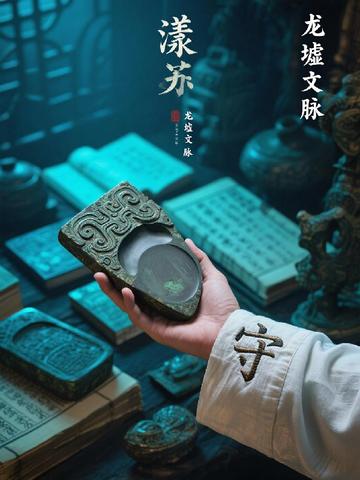
Su Yan, an ancient-text restorer clutching half a bronze inkstone, awakens the city-defense patterns from The Treatise on Architectural Methods amid hordes of corpses. Chu Feng, a defense engineer wielding a Luban ruler, uses mortise-and-tenon joinery to build the last barrier atop the ruins. When the inkstones of the “Institute of Literary Heritage” meet the ink marks of the “Nine Provinces Guard” in the red fog, thread-bound books dismissed as “dusty old papers,” forgotten bronze artifacts, and simplified mortise-and-tenon structures suddenly become the keys to survival.
Some hide vaccines inside dragon-patterned cauldrons; others extract defensive formations from The Exploitation of the Works of Nature. When Su Yan draws the oracle-bone character for “shield” on the ground, and Chu Feng’s Luban ruler measures the last inch of safe distance, they finally understand: the apocalypse is not the end of civilization. The prayers carved on oracle bones, the pacts cast onto cauldrons, and the military strategies written on bamboo slips have long since prepared weapons for humanity to fight the chaos, so long as someone still remembers how to read them.
This is a breakout protected by the legacy of civilization. When zombies devour not only flesh but also the words in ancient texts, when the red fog corrodes not only skin but also the memory of civilization, a group of “bookworms” clutching ancient books and bronze fragments will use the sharp edges of oracle-bone script to carve out a path to survival scented with ink.