Introduction to "Dragon Ruins Context"
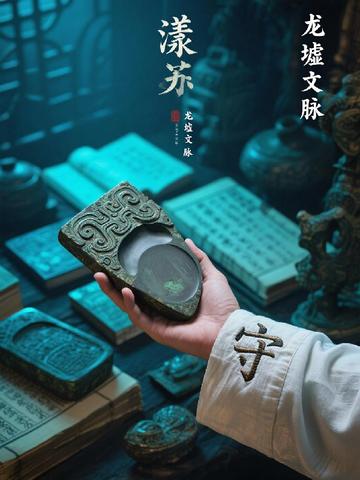
When the red mist spreads over the Great Wall, the words on the ancient books begin to ooze ink and blood, and the sleeping bronze tripod whimpers in the dark night - this apocalypse that began with the fault line of civilization will ultimately use civilization itself as the antidote.
Su Yan, an ancient book restorer holding half a bronze inkstone, awakened the city defense pattern of the "Creation Method" in the tide of corpses; Chu Feng, a defense engineer holding a Luban ruler, used a mortise and tenon structure to build the last barrier on the ruins. When the inkstones of the "Wen Shu Yuan" and the ink marks of the "Jiuzhou Guard" collided in the red mist, those thread-bound books that were regarded as "old paper piles", the forgotten bronzes, and the simplified mortise and tenon structures suddenly became the codes of survival.
Some people hid vaccines in the dragon-patterned cauldron, others dismantled defensive arrays from "Tiangong Kaiwu", when Su Yan used oracle bone inscriptions to draw the word "shield" on the ground, and when Chu Feng's Luban ruler measured the last inch of safe distance, they understood: the so-called apocalypse is never the end of civilization. Those prayers engraved on oracle bones, contracts cast on tripods, and military strategies written on bamboo slips have already prepared weapons for mankind to fight against chaos - as long as there are still people who remember how to read them.
This is a breakout guarded by context. When zombies eat not only the flesh, but also the words in the classics; when the red mist corrodes not only the skin, but also the memory of civilization, a group of "nerds" holding ancient books and bronze tablets will eventually use the edges and corners of oracle bones to open a way out with the scent of ink.