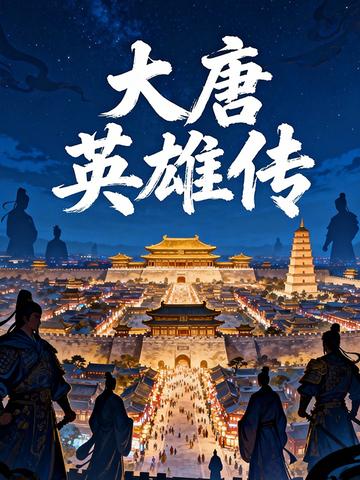
Lingyan Pavilion was originally an inconspicuous small building in the imperial palace of the Tang Dynasty. In February of the 17th year of Zhenguan, the already elderly Emperor Taizong ordered the portraits of 24 heroes to be painted in Lingyan Pavilion. These 24 heroes were all well-known famous officials of the Tang Dynasty, such as Changsun Wuji, Yuchi Jingde, Cheng Yaojin, Qin Shubao, Fang Xuanling, etc. When we were painting portraits of the heroes, some of them had already passed away, and those who were still alive were no longer young. Emperor Taizong of the Tang Dynasty was also old at this time, and his hero was in his twilight years. He recalled the war years when he was a fierce warrior and an iron horse, swallowing thousands of miles like a tiger. In his passion, he ordered people to paint the images of his old subordinates into Lingyan Pavilion to show off their achievements. Therefore, Lingyan Pavilion became synonymous with achievements in later generations. After Emperor Taizong of the Tang Dynasty, four more emperors continued to add meritorious officials to Lingyan Pavilion, forming the phenomenon of Tang Dynasty heroes entering Lingyan Pavilion in batches in different eras. These figures are representative, including Guo Ziyi and Li Guangbi who quelled the Anshi Rebellion. The history of Lingyan Pavilion for portraits of heroes has continued intermittently for more than three hundred years, throughout the history of the Tang Dynasty. More than a hundred people have climbed up to Lingyan Pavilion. It can be said that in Lingyan Pavilion, famous generals of the Tang Dynasty are like clouds, and famous officials of the Tang Dynasty are like rain. However, in the middle and late Tang Dynasty, powerful eunuchs, such as Yu Chaoen and others, were also admitted to Lingyan Pavilion. This was a sign of the decline of the Tang Dynasty. A Lingyan Pavilion, it witnessed a series of major historical events such as the founding of the Tang Dynasty, the Xuanwumen Incident, and the Anshi Rebellion, and condensed the entire process of the Tang Dynasty from its glory to its prosperity and decline.