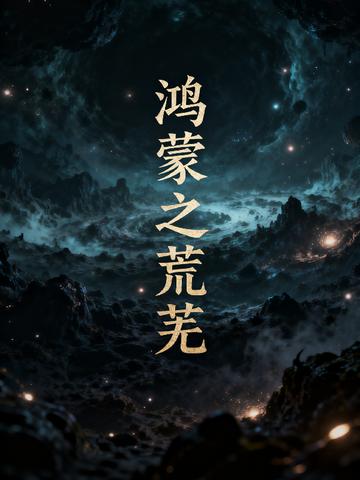
Primordial Chaos: A Barren World
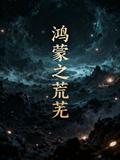
鸿蒙之荒芜
- Status
- Completed
- Length
- 393k Words
- Genre
- Eastern Fantasy
- Subgenre
- Eastern Cultivation
- Updated
- 11mo ago
- Source
- Fanqie
Synopsis
More by this author
 Praying to Buddha 2
 Life Between the Lines
 Hongmeng: Return to the Void
 The Twin Foxes of Kunlun: A Calamity of Spirit Veins and Blood
 Fox and Rabbit Bonds: A Tangled Fate in Kunlun
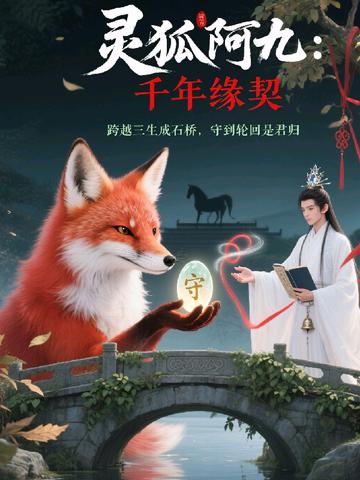 Fox Spirit Ajiu: A Thousand-Year Pact
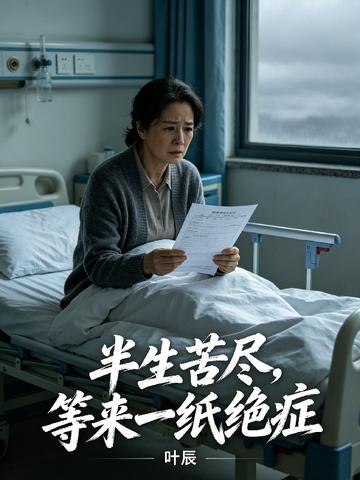 After a Lifetime of Hardship, All I Got Was a Terminal Diagnosis
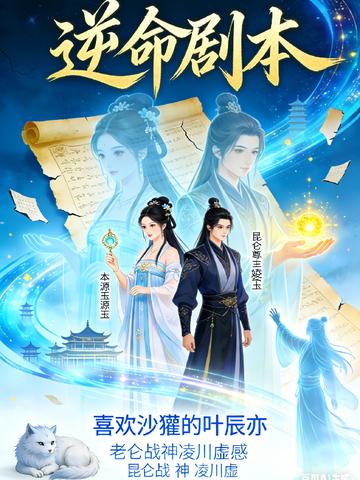 A Script That Defies Fate
In booklists 8

Any Exceptionally Good Wish-Fulfillment Novels?
I'm out of books to read.
Hilarious and Off-the-Charts Passionate


Pretty Good, Pretty Good. Give It a Read and See for Yourself
I want to read something similar to Hell Academy: From the Start, the Human Cleansing Plan.
A Record of a Mortal's Journey to Immortality
The More Books You Read, the Less Interested You Feel. So Few Truly Stand Out
A Little Angst and a Little Sweetness
Looking for books like His Sea, Her Shore. I love this kind of story. The leads' setup isn't contrived or cliché, and there aren't constant misunderstandings. They both choose each other.

Mythology and Cultivation, Something Like Transmigration
I want books like "Hongmeng: The Wasteland". I'll always return the favor if you comment on my list. Please show some support for a new reader.
In a Reading Slump? Check These Fantasy Novels Out
Looking for books like "One Sword, No Life". A fresh, imaginative fantasy novel to cure your reading slump! If you're out of books, come check it out. Don't miss it: action-packed, ruthless, rebirth, revenge, and a protagonist who doesn't have a masochistic streak. Life and death are no big deal; if you don't like it, fight back.
Reader comments 106
Translated by Google Translate
This chapter of the novel, which focuses on the "systematic construction of the Hongmeng world", demonstrates the beauty of order and the wisdom of collaboration. Its subtlety lies in transforming the abstract and grand theme of "co-creation and governance" into a vivid and majestic narrative through clear and perceptible division of labor design and progressive system construction. The most prominent highlight of the chapter is to dismantle the grand task of "inheriting the foundation, establishing order, and co-governing both sides" into a concrete chain of cooperation between the immortal and mortal parties. In the mortal world, "Spiritual Crane Communication" is used to build an information network, "Spiritual Vein Control" is used to lay the energy foundation, and then "Evil Suppression Defense" and "Spiritual Grass Healing" are used to achieve dynamic balance, and finally the resource allocation rules are formed. This series of designs not only conforms to the logic of the cultivation world, but also coincides with the systematic engineering of infrastructure, security mechanisms, people's livelihood protection and distribution of justice in real society. The Immortal Realm builds an institutional framework through the "Hongmeng Immortal Mortal Communication Law", uses the dispatching station to achieve resource coordination, and uses the education center to promote cultural integration. The two lines of defense take into account both internal and external security, and jointly build a governance system that combines hardness and softness. This construction not only demonstrates the author's in-depth thinking on "order generation", but also immerses readers in a world that is both fantasy and full of realistic metaphors. In addition to the rigorous system, the chapters give the system a soul through the plot of "merit selection". A Yan was elected to take charge of the main palace of the sky, and his responsibilities - completing laws, ruling on responsibilities, and supervising linkages - are not only the concentration of power, but also the binding of responsibilities. This setting cleverly conveys the dialectical thinking that the core of the system lies in people, and people's authority needs to be restricted by rules. When the immortal and mortal parties show "tacit cooperation" in spiritual vein protection and chaos defense, readers see not only the success of the mission, but also a warm picture of the mutual achievement of rules and human nature. This portrayal of "co-governance" goes beyond simple binary collaboration and touches on the eternal propositions of order and freedom, authority and tolerance. The deep charm of this chapter lies in the mirror image between the "order establishment" of the world of immortality and the wisdom of organizational governance in real society. The spiritual control and resource allocation rules in the mortal world coincide with human society's exploration of sustainable development and fairness and justice; the law-making and educational halls in the fairy world echo the interaction between institutional design and cultural inheritance in the process of civilization. Through the process of building the "Hongmeng Foundation", the author metaphorically implies that the prosperity of any community must be based on rule consensus, capability matching and value recognition. This conception not only enhances the ideological thickness of the subject of immortality, but also provides readers with a way to observe reality. With its systematic world construction and tense institutional narrative, the novel injects novel and profound connotations into the theme of fairy tales. It is not only an imaginary feast about "co-governance by immortals and mortals", but also a philosophical discussion on how order is born and how collaboration is realized. When the spiritual pulse protection and chaos defense begin to bear fruit, and when the order of the Hongmeng world becomes more and more stable, readers will also realize that the real foundation is always a common belief based on rules and empathy.
I must praise the author for his excellent writing. This chapter of "Hongmeng" can be called the finishing touch in worldview construction. With "inheriting the foundation, establishing order, and co-governance" as the core, the grand narrative of the collaboration between immortals and mortals is laid out in a clear and well-structured way. The power transformed by Lord Qingling, Lord Zhuoling and Lord Lingshu injects core energy into the foundation of Hongmeng, laying the foundation of the story. The mortal world uses five major measures such as spirit crane communication and spiritual vein control to build a solid framework for the operation of the mortal world, giving concrete support to the daily order; the fairy world uses laws, dispatch desks, education halls, etc. To build a co-governance framework, and the setting of dual defense lines shows the rigor of the defense system. A Yan is in charge of the selection of talents in the main hall of the sky, which has become a key step in improving the order. The division of responsibilities of supplementary laws, rulings, and supervision provides a core hub for the linkage between immortals and mortals. At the end, Xianfan's remarkable achievements in spiritual vein protection and other aspects not only demonstrate the power of collaboration, but also bring the sense of order and vitality of the Hongmeng world to the face, laying solid foreshadowing for the subsequent plot. Reading makes people full of expectations for the future of Hongmeng. It's so exciting, keep reading
"The Desolation of Hongmeng" may not be a traditional Honghuang novel that can make you feel "familiar and at ease", but it is definitely a subversive masterpiece that can inject soul storm into this subject matter. It does not belong to those Liu Shui works that follow the routine and reproduce the classics, but is truly written for those "old bookworms" who still have expectations for the prehistoric Liu Shui and are eager to see new light in the chaos. If you are tired of following the map on the established mythological map, tired of the repeated treasure hunting, treasure grabbing, and path to sainthood, then this book will unfold a completely different Hongmeng star map for you - not a retelling of the known destiny, but the first cry of the unknown law. Many of us remember the shock we felt when we first read "The Buddha Is the Tao." It is not only a novel, but also the foundation of a world view: from the creation of Pangu, to the first calamity of Long and Han, to the war between lich and demons, to the canonization of gods and the ordering of gods... That complete and magnificent system has almost become the "creation bible" of countless ancient works. We walked along that mythical path that has been traveled countless times, safely, but gradually losing the surprise. The most precious thing about "The Desolation of Hongmeng" lies precisely in its courage to "break and then stand up again". Most prehistoric novels are on a stage that has already been set up, performing scripts that we are already familiar with - who is the villain, who is the hero, who is born in response to disaster, and who is destined to become a saint. But what "The Desolation of Hongmeng" does is not to repeat the performance in a different role, but to reconstruct the stage itself and even rewrite the physical and logical foundation of the world. You can hardly see the poorly written labeled plots such as "Dragon and Phoenix Catastrophe" and "Lich Showdown" here. The author boldly abandons the familiar "table of historical events" and returns to the two most primitive and fundamental concepts of "Hongmeng" and "Desolation" to re-deduce the birth of the world, the establishment of rules, and the germination of civilization from nothingness. This is not an adaptation, but a creation. Of course, constructing a brand new framework will extremely test the author's writing power and depth of thought. How to break the tradition without losing the unique "divine atmosphere" of Honghuang literature? How can you still create a convincing world logic and character destiny after abandoning routines? The author is trying to answer all this. And we, as readers, are privileged to witness this process unfold. "The Desolation of Hongmeng" is not an easy reading journey, but it is a thought experiment worth looking forward to. We are fortunate to have an author who is willing to step out of his comfort zone and challenge the boundaries of the genre - and we are looking forward to his next work. However, after watching too many stereotyped "Destiny" movies, I finally encountered a refreshing work like "Hongmeng Zhi Desolation". The most valuable thing about it is the courage to "break and then build again". Looking forward to the author's next work
Oriental Immortal, this book takes the Hongmeng world as the stage, revolves around three spiritual kings, and tells a grand narrative of immortals and mortals co-governing and establishing order. The mortal world builds a basic order through spiritual vein control, evil suppression and defense, etc., While the fairy world formulates and builds a co-governance framework, and finally elects A Yan to take charge of the main hall of the sky to achieve a balance between spiritual vein protection and chaos defense. The work combines the magnificent imagination of **Oriental Fantasy** and the epic sense of **Order Reconstruction**. It is especially suitable for those who like a solid world view and group portraits.
The highlight of this article is the "sense of system": settings such as Linghe Communication, Double Lines of Defense, and Co-Governance Framework, the "establishing order" is written in detail and logically. Readers who like to read the worldview structure will find it very solid, and I recommend it.
Delicate sensory description: The author is very imaginative and writes the abstract "aura" in a visual and perceptible way. For example, the "golden glow" of the phoenix's tail feathers shaking off, and the "glow" of the earth's veins when the dragon's claws touch the ground, fill the entire Hongmeng world with a radiant and agile texture. Vivid character creation: The four spiritual kings have distinct personalities. Huang's fiery determination, Xiang's calmness and reliability, Xiang's coldness and hard work, and Hou's gentleness and tenacity are all vividly reflected on the page through his words and deeds. Newly born humans are full of curiosity and humility, which makes people look forward to their growth. Rigorous system setting: The novel constructs a self-consistent "aura" system, such as Qing Lingjun's "Sun Rail Golden Light" governs day and night time and space, Zhuo Lingjun's "Earth Vein Aura" governs the vitality of the earth, and Lingshu Jun's "Aura Line" governs the connection of all things. This system allows all supernatural forces to be traced to their origins, enhancing the realism of the story. Worth watching Watching it again is still so heart-wrenching and thought-provoking
"The Desolation of Hongmeng" is a fairy tale work with a grand world view and profound connotations. At the beginning of time, the Yuanling Ancestor divided the world, and the immortal and mortal realms coexisted according to the "spiritual circulation" and "cognitive synergy". However, the power wanted to break the balance, and the chain of the three realms was broken, and the game of redefining the rules began. The book explores order and creation, responsibility and responsibility in depth, and the characters' growth arcs are clear. For example, the transformation of the Red Emperor from an evil spirit to a ruler of the human race shows the tenacity of life. The setting of symbiosis of diverse ethnic groups conveys the concept of win-win cooperation. Its plot is ups and downs and its world view is solid. It is a masterpiece not to be missed by Xianxia lovers.
The most eye-catching thing about the novel is its novel theme setting and clear logical structure. Different from the common flow of leveling up and fighting monsters, the story focuses on the desolate universe outside Hongmeng, integrating elements such as "solidifying sand and diverting water, ethnic symbiosis, and cross-domain cooperation" into the fantasy narrative. The protagonist Xiao Muchu leads the ethnic group to develop a land and establish a kingdom in the wilderness. The plot has a full sense of science fiction such as mechas and fleets, but also does not lose the passion and passion of the world of cultivating immortals. The picture is very strong. The author is very attentive in describing the details of the pioneering process, from equipment deployment to resource allocation, from saving lives to resisting foreign enemies. The small plots are interspersed naturally, and the foreshadowing is in place, making the core main line of "barrenness transformed into a paradise" full of persuasion. At the same time, the core concept of "pioneering the wilderness with the sword and guarding the original souls" runs throughout. The protagonist's character combines bravery and warmth, and the plot of creatures of all races uniting to survive in desperate situations adds warmth to the hard-core pioneering story.
A very excellent oriental fairy novel! Super pretty! The story is amazing! The author's conception is ingenious, the writing is smooth and natural, the scenes are grand and the skeleton is full. Good work, worth recommending!
"The Desolation of Hongmeng" constructs a mysterious world with natural Taoism and majestic charm. In ancient times, Taoist Xuanyuan transformed into yin and yang, laying the foundation for "spiritual synaesthesia" and "karma and karma" to maintain a delicate balance in all worlds. However, old grudges and heavenly secrets intertwined, causing the "track of reincarnation" to collapse, and a dispute concerning the recasting of destiny and the survival of orthodoxy began. The work's philosophical speculations on "destiny and freedom", "sacrifice and detachment" are particularly profound. The changes in the fate of the characters are touching, the plot is magnificent, and the setting is rigorous and profound. It is undoubtedly one of the most profound and ingenious works on the fairy tale theme in recent years.