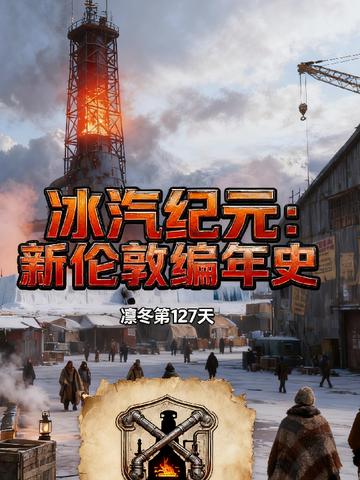
On the ice sheet at minus 120 degrees Celsius, the breath turns to ice and the steel is brittle - the ashes of the old world have not yet frozen through, and the breaths of 1,200 people in New London are hanging on the crumbling white smoke of the energy tower.
As the manager Elias Thorne's boots crushed the ice shell, he clutched two reports: one was that there was only enough coal to last for 72 hours, and the other was that the frozen child had been buried in a third snow grave. The predator's pickaxe was digging into the door of the coal mine, and half of the frozen hand of the team member who went to search for food yesterday was still stuck in the ice crevice. In the camp, the screams of "Sacrifice the old man for heating" have overcome the cold wind.
He burned ancient books to keep warm, and abandoned injured prospectors to survive, but he never dared to extinguish the spark of "civilization" in his arms - but when the howl of the direwolf mixed with the cry of a child came, he finally understood: the way to survive in the age of ice and steam has never been to choose "survive", but to choose "survive with something."
This is an epic paved with gears and flesh and blood, and it is also mankind's last knock on the door to civilization in the frozen doomsday.