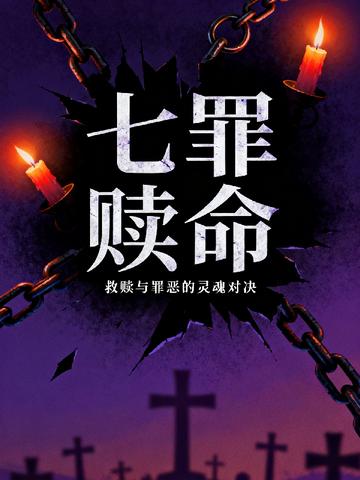
This novel builds a dark fantasy world brimming with tension: humans draw supernatural powers from “Sin Brands,” but in doing so become vessels for the power of the abyss. The protagonist, Lin Feng, bears the “Greed” Brand. With his life ticking away, he is forced to explore the mysterious ruin known as the “Vault of Original Sin,” embarking on a game of survival in which he races against his own curse.
Key highlights:
Fresh worldbuilding: The laws of the “Seven Deadly Sins” become power resources that can be fought over. The “energy trade-off scale” and “Brand backlash” deepen the philosophical question of whether power is itself a curse.
Tight storytelling: Multiple crises unfold in parallel, including pursuit by mechanical guards, energy contamination, and the mystery of childhood memories. The fragmented storytelling in Chapter Twelve, which reveals the identity of “Little Lin Feng,” is particularly ingenious.
A violent aesthetic: The battle scenes combine the hard-edged feel of machinery, such as chainsaw guards, with the tension of sin-based abilities, including energy devouring and spatial rifts. The imagery is powerfully striking.
An exploration of human nature: The protagonist’s struggle with the roots of “Greed” and “Gluttony” in desperate circumstances reveals the timeless conflict between dependence on power and the corruption of human nature.
Potential areas for improvement:
Some terms, such as Key M and the rules of the Brands, could be introduced more gradually to avoid overwhelming readers with information. The antagonists’ deeper motives could also use more foreshadowing.
Overall, the novel successfully blends cyberpunk horror, Lovecraftian mystery, and allegories about human nature, offering a thoughtful exploration of the theme of “eternal life through sin.” If it maintains its pacing and balance of worldbuilding in later chapters, it could become a standout in dark science fiction,,
What's going on? Is there no one?