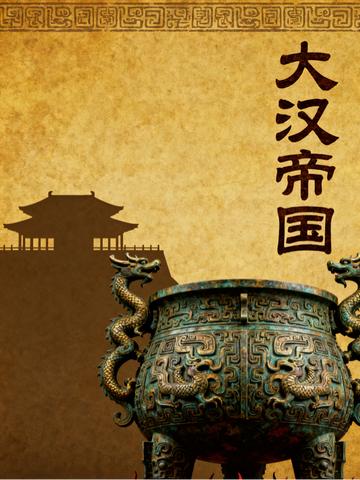
The overall framework of the tetralogy of "The Han Empire"
Part One: "The Wind Rises"
· Core proposition: How can a commoner emperor stand out from troubled times?
· Main content: From when Liu Bang raised his troops in Peixian County, to going through ups and downs, and finally overcoming many obstacles, he restored the Three Qin Dynasty and laid the foundation of the king's career.
· Core conflict: civilian regime vs. The old aristocrats of the Six Kingdoms vs. The remaining forces of the Qin Dynasty.
· The end sign: Liu Bang established his foothold in Guanzhong and formed an east-west confrontation with Xiang Yu.
Part Two: "The Conflict between Chu and Han"
· Core proposition: How to defeat a powerful, almost invincible opponent?
· Main content: Comprehensive display of the magnificent strategic stalemate, head-on confrontation and final decisive battle between Liu Bang and Xiang Yu. It focuses on describing how the Liu Bang Group shifted from strategic defense to strategic counterattack, and finally decided the outcome in the battle at Gaixia.
· Core conflict: Liu Bang's "talent alliance" vs. Xiang Yu's "personal heroism"; "Logistics and strategy" vs. "Force and bravery".
· The end sign: Xiang Yu commits suicide in Wujiang River, Liu Bang proclaims himself emperor, and the world is reunited.
Part Three: "Imperial Order"
· Core proposition: How to transform from "conquering the world" to "ruling the world"?
· Main content: In the early days of the founding of the Han Dynasty, it tells how Liu Bang eliminated the princes and kings of the opposite sex, competed with the hero group, formulated laws and etiquette, and responded to the threat of the Xiongnu. The process until Empress Lu came to power and continued the country focused on the initial establishment of the imperial system.
Part 4: "The Reign of Wenjing"
· Core proposition: How do empires prosper and survive internal crises?