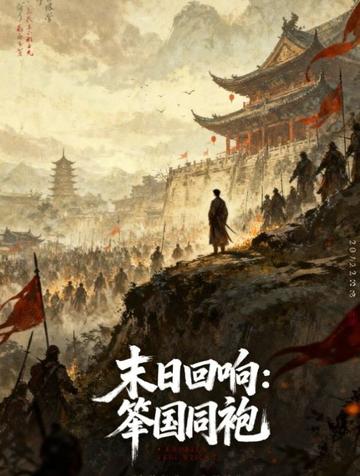
In 2075, Xiao Chengye, who had memories of the seventh ice age, suddenly woke up. There were only 117 days left before the "big collapse" that would engulf civilization. As a strategic analyst in his previous life, he held on to three fatal warnings: the rupture of the Tibetan Plateau, the eruption of volcanoes in the Pacific Rim, and the countdown to a super tsunami.
From being treated as crazy and smashing the monitoring screen, to alerting the central government to start nationwide preparations for war, he witnessed Northeast Heavy Industry switching to seismic steel production within 48 hours, 3,000 engineering soldiers blasting the blocking layer in Hoh Xil, and the people hoarding drinking water comparable to three West Lakes.
When volcanic ash covered the sky and the sun on September 15, and a tsunami hit the breakwater on October 21, Xiao Chengye and millions of compatriots built the Great Wall of flesh and blood: railway workers used their body heat to melt ice to protect lifelines, old professors cultivated cold-resistant potatoes in underground bunkers, and drones on South China Sea islands formed a five-star red flag.
Finally, in the light of the geothermal power station and the constant temperature of the Yunnan-Guizhou Plateau seed bank, the anchor of human civilization penetrates deeply into the earth. This is not a doomsday elegy, but an eastern sunrise rising in a collapsing world with 1.4 Billion people using camaraderie.
Frankly speaking, I can't understand it.