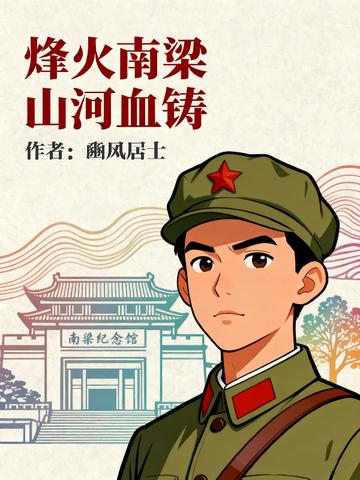
In 1937, the Japanese invaders trampled on North China, and the Nanliang Revolutionary Base became a key barrier in the Shaanxi-Gansu-Ningxia Border Region. Young Dong Zhiyuan was originally an Orion hunter from Nanliang Mountain Village. He was proficient in ancestral martial arts and machine skills. He joined the anti-Japanese torrent because his home was destroyed. Relying on his profound understanding of "On Protracted War" and the flexible application of ancient military techniques, he led the militia guerrillas through the dense forests of Ziwu Mountains, used tunnels and mountain streams to set up ambushes, and repeatedly defeated the enemy with the "Sixteen-Character Technique". During the battle, he and Nan Lianghong, a propaganda team member, became acquainted with Qingyang folk songs. The two used paper-cutting as secret messages and shadow puppetry as cover to connect with the underground intelligence network. From guerrilla warfare to base area construction, from land reform to military-civilian cooperation, Dong Zhiyuan gradually grew into an anti-Japanese general with both strategy and responsibility, while Nan Lianghong used embroidery to convey strategic maps and organize women to support the front line. Facing the raids and encirclement by the Japanese army, the two worked together to lay out thunder arrays using Mohist techniques, fight at close quarters with mountain boxing techniques, and protect their homeland in blood and fire, creating a legend of the Anti-Japanese War that combines martial arts, resourcefulness, and cultural inheritance.