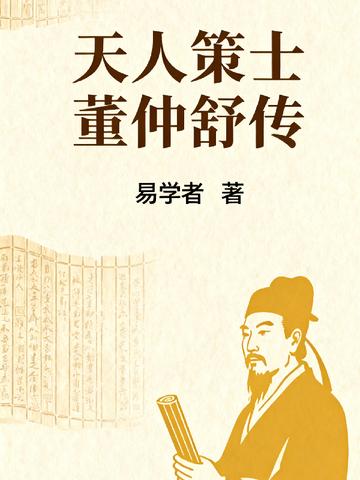
Dong Zhongshu (179 BC - 104 BC), a native of Guangchuan County (now Jingxian County, Hebei Province) of the Western Han Dynasty, was a master of the Gongyang School of Confucianism and a giant in the ideological circles during the reign of Emperor Wu of the Han Dynasty. When he was young, he was studying the Spring and Autumn Annals. He spent three years away from the garden, studying the relationship between heaven and man. In the first year of Jianyuan (140 BC), he responded to Emperor Wu's policy questions with the "Three Strategies of Heaven and Man" and proposed the idea of "deposing hundreds of schools of thought and respecting Confucianism alone", which established the orthodox status of Confucianism for more than two thousand years. Its theory takes Confucianism as the core, integrates Yin-Yang, Five Elements, Legalism and other ideas, creates a system of "influence between heaven and man", advocates "divine right of kings" and emphasizes "natural punishments and disasters" to restrain the king's power. The book "Spring and Autumn Fanlu" systematically expounds the theories of "Great Unification" and "Three Cardinal Guidelines and Five Constant Virtues" (the ruler is the guideline for the ministers, the father is the guideline for the son, the husband is the guideline for the wife; benevolence, righteousness, etiquette, wisdom, and trustworthiness), making Confucian ethics the core norm of feudal society. He once served as Prime Minister of Jiangdu and Jiaoxi, and resigned from office in his later years to write. His thoughts profoundly shaped the political system and cultural form of the Han Dynasty, and achieved a major transformation of Confucianism from folk theory to official ideology. He is a key figure in the history of Chinese thought that connects the past and the future.