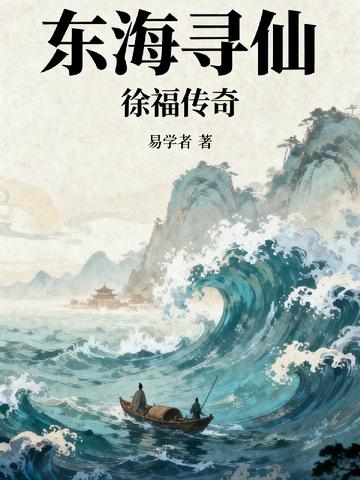
Xu Fu (date of birth and death unknown), a famous alchemist in the Qin Dynasty, was born in Langya, Qi State (now Langya Town, Qingdao, Shandong). Proficient in Taoist alchemy, astronomy, navigation and medical knowledge, he won the trust of Qin Shihuang. In 219 BC, he wrote a letter saying that there are three sacred mountains, Penglai, Fangzhang and Yingzhou in the East China Sea, and he was willing to seek the elixir of immortality for the First Emperor. For the first time, he led 3,000 boys and girls, hundreds of workers and grain seeds to the east but failed. Nine years later, he went to sea again according to the order, bringing "Poems", "Books" and classics, crossbowmen and various craftsmen, and finally "obtained the plains and vast swamps, and stopped the king from coming". Many historical records in Japan record that he arrived in Kishu Kumano (today's Wakayama Prefecture) and taught farming, textiles, medicine, and smelting techniques. He was revered as the "God of Farming" and the "Ancestor of Medicine." His eastward journey pioneered cultural exchanges between China and Japan. To this day, there are still more than 20 relics such as Xu Fu's tomb and Xu Fu Shrine in Japan, which have become important symbols of maritime exploration and the spread of civilization in ancient East Asia.