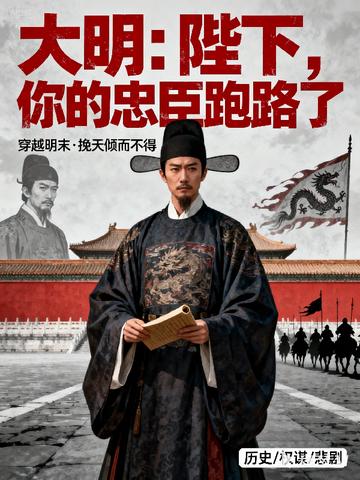
Traveling through the late Ming Dynasty, Li Dan originally wanted to use modern knowledge to save the world and help the Ming Dynasty from falling. However, the emperor was suspicious, the courtiers were at odds with each other, there were powerful traitors inside, and there were Tartar cavalry outside. In exchange for his loyalty, he was jealous of the reduction of power, the tragic death of his best friend Yuan Chonghuan, and the reform edict that he had worked hard on throughout his life.
When he was disheartened, he suddenly realized: This decadent dynasty is not worthy of being buried with him! Since there is no hope for the Ming Dynasty, let's set sail and create a new world!
Collect refugees, reclaim deserted islands, train new troops, and build giant ships.
Defeated the Netherlands, controlled Southeast Asia, opened up trade, and established a new dynasty.
In Nanyang, he established a new Chinese regime that stopped internal strife, encouraged innovation, and integrated the best of the East and West.
From a loyal minister who devoted himself to saving the country, to a hero who became king overseas.
What he protects is no longer the country of one family, but the spark of the entire civilization.
Let's see how Li Dan fights his way through this apocalyptic turmoil, retains the last piece of pure land for China, and starts a magnificent era of ocean hegemony!
Reader comments
When gathering at the school grounds, you don't have to wear armor. Why do you have to take it off only when you receive your salary, and why do you want to see the artillerymen facing you? Is that distance enough for you to hit? Who would carry an inkstone with them? After the gunner is hit, can he also light the gun powder chamber? Don't have too many coincidences. Can you think of some reasonable cause-and-effect relationships?
It's not a good book if you don't rebel in the late Ming Dynasty. I feel bad when I read it. It's a good book but it's not suitable for me.
When gathering at the school grounds, you don't have to wear armor. Why do you have to take it off only when you receive your salary, and why do you want to see the artillerymen facing you? Is that distance enough for you to hit? Who would carry an inkstone with them? After the gunner is hit, can he also light the gun powder chamber? Don't have too many coincidences. Can you think of some reasonable cause-and-effect relationships?
It's not a good book if you don't rebel in the late Ming Dynasty. I feel bad when I read it. It's a good book but it's not suitable for me.
This book is pretty good