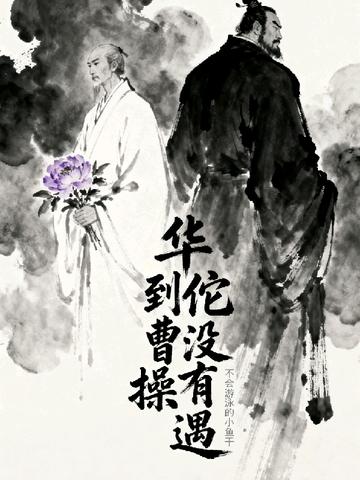
At the end of the Eastern Han dynasty, Cao Cao suffers a bout of head pain and sends Tiger Guard soldiers to summon Hua Tuo in haste. Feng Xi foresees the danger that will take Hua Tuo’s life, transforms to rescue him, and helps him escape his deadly fate. Hua Tuo then goes into hiding in the countryside, where he meets Shao Yi, the peony fairy who has admired him for many years. They grow close and eventually marry. But the immortal and mortal worlds are divided, making it difficult for them to have children. Following Feng Xi’s guidance, they travel far to Kunlun, overcome countless dangers, and obtain snow lingzhi. Breaking through the constraints of heaven and earth, they finally have a beloved son, Hua Fei. After a lifetime of practicing medicine, Hua Tuo combines the secret arts of the Feng clan with the essentials of practical experience to write the Qing Nang Jing, creating a medical classic for the ages.
Their son Hua Fei is of both immortal and mortal blood, and his birth is accompanied by celestial omens. Exceptionally gifted, he inherits his parents’ knowledge, receives Feng Xi’s instruction, and is protected by the dragon Jiao Longlong. Not only does he become a master physician, he also learns the arts of cultivation and combat, carrying the teachings of the Qing Nang Jing to new heights. The Hua family’s medical tradition is passed down from generation to generation, its influence reaching far into the present and spanning time and distance to benefit both East and West.