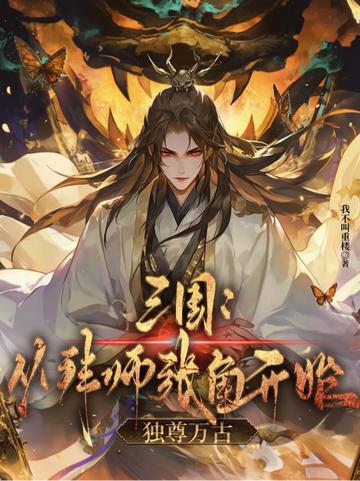
Stats
Synopsis
No synopsis yet.
We haven’t got an English blurb for this one. It appears once the source description has been translated.
Reader comments
In booklists 30
Explore more →
One Person, One Sword and One Girl
Single heroine
Three Kingdoms, Above 9.0, the Protagonist Is Terrible, and the Main Body Is Cavalry.
It is best to be in You and Bing, the states rich in horses, with superb military force. Don't trespass and don't summon them.
The Top Ten Hammer Generals Rewarded at the Beginning of the Three Kingdoms
Looking for a Male Channel, a Novel with a Single Female Protagonist, Two Strong Characters, a Strong Female Protagonist with Multiple Roles
I'm looking for a few books with single female protagonists and two strong male and female protagonists. The female protagonist is not silly and sweet, but has strong strength, has many roles, and often appears with the male protagonist.
The Pinnacle Family, the Son of the Ancient Emperor, the Single Heroine
Want to watch something similar to "Villains: The Emperor's Son in the Forbidden Zone!" The book "Sleeping for Ten Thousand Years to Destroy the Source of God".
Three Kingdoms, Train Ordinary People to Become God Generals and Fight with the Gods of the Three Kingdoms
Is there that kind of system
9.6 Points the Three Kingdoms Period, the Novel About Gods
I would like to read a book similar to "Three Kingdoms: My brother Dian Wei starts with a tough fight against Lu Bu".
High-Scoring Masterpieces Involving Taoism, Confucianism, Buddhism, Evil, Demons, and Spirituality
Looking for Grades 1 to 9, Grandmaster, Great Grandmaster, Ten Thousand Dynasties, Ten Thousand Clan, Bottom Martial Arts.
The protagonist is very strong and insists on developing one-third of an acre. All races can enter this place. The protagonist suppresses it strongly. Military is prohibited here. It is a place where all races coexist peacefully. Watching this land is to seek the road.
The Three Kingdoms Traveled Through Time Since Childhood and Were Born with Magical Powers and Did Not Strive for Hegemony.
Fantasy Novels Top List
I want to read a book similar to "I'm Not a Drama God". Recommended by Twenty Bookworms, Tomato's top ten must-read books
Is There Anyone Who Transformed Diao Chan from the Beginning of the Three Kingdoms? ?
I strongly recommend the start of the Three Kingdoms and I transformed Diao Chan. If you are interested, you can come and take a look♡~
Each Prince Has His Own Trump Card in the Battle for Hegemony
Three Kingdoms, Guan Yu's High Score Was Collected at the Beginning
I just want to see how the protagonist develops after taking over Guan Yu, and those who use perverted cheats won't watch.
Three Kingdoms, System, Beauties, Famous Generals, and Unification of the World
Sword Cultivator, Single Female Protagonist, High Score
The boss gives a book
Martial Arts, Jianghu (Single Female Protagonist)
Don't cultivate immortality, don't go to other worlds
Are There Any High-Quality Ancient War Texts Similar to "Shao Song"?
Fantasy, Single Heroine, Love + Bridal Chamber + Sweet Text + the Relationship Between the Two Develops Very Quickly
It's best if the two of them are inseparable from each other within the first 100 chapters + the two of them break through their relationship. Don't look at the awkward situation where the two of them are still pulling each other for hundreds of chapters.
Are There Any Novels About Martial Arts, Swordsmanship, Court, and Fantasy?
It is best to be like "Yuan Zun", the court type is best for girls, and the other categories are best for boys.
Is There a Fantasy Harem? ! Too Many Emotional Scenes
I want to read a book similar to "The Rebellious Disciple Has Many Beauties: Master Gao Leng Turned Dark (The Beauties of the Three Realms)". There are a lot of emotional scenes in the fantasy harem, and it is best to use more non-toxic words, and less about killing and killing, focusing on emotional descriptions! Similar to this one!
The Three Kingdoms Has a Large Space Devoted to Lu Bu and His Relationship.
For Martial Artists, Any Level One to Level Nine or Level Nine to Level One Is Fine, Fantasy Is the Best.
The Three Kingdoms Is the Hottest Topic on Tomato. Please Read the Three Kingdoms Article.
I want to read a book similar to "Ji Xing Three Kingdoms". As long as you dare to write all kinds of good Three Kingdoms articles, I dare to read them.
Dou Yu's growth line is written so realistically and believably that he went from being an ignorant young man relying on his father's protection to facing the pain of defeat and losing relatives and friends alone, and then later finding a balance between intrigue and force. Every step of his maturity paid a real price. The author does not set a halo for others. He will be confused, shrink back, and make mistakes due to temporary impulses. But it is these imperfections that make his goal of "severing the troubled world with one sword" particularly determined. Coupled with the novel's restrained setting of the high-level martial arts system, there are no exaggerated scenes of destruction of the world, but rather the use of force as a tool for Dou Yu to protect his beliefs. This setting of "strength matches ambition" makes the whole story full of logic and realism, making it impossible to stop.
The family line between the Dou family and his son becomes more and more flavorful as it gets better. It is not just a simple "father is kind and son is filial", but also contains inheritance and redemption. In order to protect his son, Dou Wu disguised himself as a hunchbacked old man and silently endured the misunderstanding of the world, but he gave all his money when teaching swordsmanship late at night; when Dou Yu grew up, he carried his father's last wish through troubled times, not only preserving the character of the Dou family, but also breaking his father's regrets. The author writes this kind of deep fatherly love delicately and restrainedly, without being too sensational, but touching in the details - for example, Dou Yu would rub the sword spike left by his father before every battle, and silently recite his father's instructions to the night sky when he was defeated. This collision of family affection and troubled times adds warmth to the goal of "ending the troubled times" and makes the whole story more appealing.
It's rare to see a Three Kingdoms novel with such a solid subject matter! It does not follow the trend of the system, but focuses on the local narrative of the late Eastern Han Dynasty. It has the right balance between the weight of history and the refreshing feeling of martial arts. Old Three Kingdoms fans can find resonance, and new readers can get a fresh feeling. The writing style is particularly on point, both heroic and delicate. The passion for fighting, the brain-burning machinations, and the tenderness of the troubled times are all vividly written, making it a catchy read. The textual research is astonishingly rigorous. Everything from clothing and daily diet to war formations and political systems strictly follows the background of the Eastern Han Dynasty and is not fabricated out of thin air. It has three advantages and is worth savoring!
The setting of the fantasy mashup of the Three Kingdoms is very interesting. The background of the troubled times of the late Han Dynasty is quite solid. The setting of orthodox Confucianism and hundreds of heretics is also interesting. However, the pace of the plot in the early stage is a bit slow and the foreshadowing is a bit long, so you have to be patient and read it.
It's okay, the scene description has a sense of substitution, whether it's the fireworks of the countryside or the atmosphere of the battle, it can be highlighted. But the pace is sometimes fast and sometimes slow. Sometimes the fighting scenes are enjoyable to watch, and sometimes the foreshadowing of the plot seems a bit draggy.
The writing style is really on point. It is both heroic and delicate. It can not only describe the passion of fighting and iron horses, but also depict the tenderness of the love between children and children, and also show the brain-burning plotting. When describing the fighting on the battlefield, the words are sonorous, making people seem to hear the sound of weapons clashing; when describing the deep love between father and son, the brushwork is gentle and the details are touching; when describing the suffering of troubled times, just a few strokes can arouse empathy. This flexible language style allows readers with different needs to find resonance. Whether they are readers who like passionate and refreshing writing, or readers who prefer historical depth, they can be satisfied in this work.
What impressed me most was the novel's comprehensive portrayal of "troubled times". It not only focused on the grand narrative of princes competing for hegemony, but also did not avoid the suffering and struggles of ordinary people in troubled times. Displaced people are struggling for survival, poor scholars are struggling against obstacles for their ideals, and petty officials have no choice but to compromise under power. The stories of these little people make the entire world of the Three Kingdoms more real and palpable. And Dou Yu's "One sword cuts off the troubled world" is no longer a simple slogan for hegemony, but with compassion and protection for these ordinary people. He not only has to fight against power and war, but also finds a way out for the common people. This writing method that combines grand narrative with micro individuals opens up the story in an instant. It is both passionate and refreshing, and also has a depth that directly touches people's hearts. After reading it, I can't calm down for a long time.
I was hit hard by the subject matter! From the story of the Dou family's collusion with the Party's control to the troubled times of the Three Kingdoms, it not only talks about the undercurrent of power in the temple, but also contains the inheritance of Jianghu swordsmanship. Gao Wu is never a destroyer of history but a protector. The writing style is both heroic and gentle. When writing about the confrontation between princes, the language is clever and hidden, and when writing about refugees helping each other, the writing style is warm and touching, filling the sense of immersion. The details of the textual research are amazing. The three-level administrative divisions of the Eastern Han Dynasty "prefectures, counties" are accurately restored, the "horse faces" and "female walls" of the city defense are clearly structured, and even the number of "zhajia" plates of the soldiers' armors are in line with historical facts, full of sincerity! V
As a loyal reader of the Three Kingdoms, what stood out to me in this work was the excavation of "unpopular historical details" - such as the shortcomings of the imperial examination system in the late Eastern Han Dynasty, the distribution of folk martial arts schools, and even the tax system at that time, all of which were naturally integrated into the plot. When Dou Yu raised military pay, he did not rely on golden fingers to make profits out of thin air. Instead, he accumulated strength by reforming taxes and appeasing the refugees. This setting that conforms to historical logic is a plus. Coupled with the restrained high-level martial arts system, the military commanders' force value always serves the plot, without breaking away from the framework of the cold weapon era, making the entire story both real and innovative.
After reading it for a while and briefly evaluating it, I think the writing level of this novel is indeed good. However, for this author who is still updating to nearly 400,000 words, keep up the good work. After all, if you want to complete a million words, you still need a lot of perseverance. I wish you the best in the future.
I am a fan of the subject matter, writing style, and research! The setting of no system and no time travel returns to the essence of the Three Kingdoms. Gao Wu is just a tool to protect the road. The core is the game of power and survival in troubled times. The writing style is elegant and smooth. When writing about the undercurrents in the court, the language is clever and hidden. When writing about father and son practicing swordsmanship, the writing style is gentle and delicate, and the switching is natural and not abrupt. The textual research is full of details. The ins and outs of the disaster of the Party and the organizational structure of the Yellow Turban Uprising are supported by detailed historical data. The usage scenarios of bamboo slips and silk books, the "stone" units of official salaries are all in line with the Han Dynasty system, and even the folk rituals of "sacrifice to the land god" are restored. It is a full reading experience!
The slow-burning preparation of this novel is really worth it. A lot of ink is spent in the early stage to explain the social background of the late Eastern Han Dynasty and the intertwining of various forces, from the overt and covert struggles between nobles and eunuchs, to the opportunistic actions of relatives, to the undercurrents among the people, every detail foreshadows the subsequent outbreak of conflicts. When Dou Yu officially enters the troubled times, the layers of intrigues in the court are seamlessly connected with the excitement of fighting on the battlefield. His clash of force with Cao Cao and his test of tactics with Yuan Shao make every opponent scene full of tension. What's even more rare is the author's writing style, which is quaint but not obscure. It has the boldness of "The Romance of the Three Kingdoms" and the smoothness of modern online writing. Even readers who are not familiar with the history of the Three Kingdoms can quickly immerse themselves in the delicate description and catch up.
The writing style is very delicate. Although it is slow in the early stage, you can feel that the author's writing style is solid and he has created the atmosphere and characters of the late Eastern Han Dynasty with great texture. It is slow to heat up, so this is the writing style. The early foreshadowing is also worth reading patiently.
What struck me most about this Three Kingdoms novel was its in-depth interpretation of "sword" and "Tao". Dou Yu's sword was first wielded to protect his family, and then later to cut through troubled times for the common people. Each upgrade was accompanied by a change of state of mind. The author does not describe the way of swordsmanship as simply crushing by force, but incorporates thoughts on morality and responsibility, plus a game of power that fits the official history - the overt struggle between the nobles and the eunuchs, the secret struggle between the princes, and the secret help of Dou Wu's old tribe, making the whole story both passionate about martial arts and rich in history. Especially when Dou Yu refused Cao Cao's recruitment and insisted on going his own way, the sentence "The sword can cut the enemy, but not the heart" instantly filled up the character's structure and was particularly shocking to read.
The textual research party is really going to call for this novel. The author's restoration of the geography, weapons, and etiquette details of the Three Kingdoms period is extremely good: the route from Luoyang to Jizhou is clear, and the strategic significance and customs of each city are mentioned; the weight of the ring-shou sword, the protective details of the armor, and the etiquette process of the court proceedings can all stand up to scrutiny. What's even more rare is that these textual researches did not become a burden, but were naturally integrated into the story - Dou Yu used swordsmanship that suited the background of the times to fight against the enemy, and the words and deeds of the princes during discussions fit his identity. This made the integration of Gao Wu settings and the official history framework particularly smooth. You can also learn historical knowledge while reading the novel. This double-gain reading experience is really rare.
It's true that it's slow to heat up, but it's also true that it's stunning! The author's writing style is so contagious, and the plain words portray the heaviness and desolation of the troubled times of the Eastern Han Dynasty so deeply that you feel like you are in that era when you read it.
At first I was too slow and abandoned it once, but later I picked it up and realized I had missed a treasure! The slow development of this novel is to better restore the historical context. The author uses rigorous textual research to restore the social rules of the late Eastern Han Dynasty. From the tax system to the official selection process, from weapon forging to city structure, every detail can withstand scrutiny. Coupled with the smooth and natural writing style, these boring textual researches are transformed into vivid plots. When the clues laid out in the early stage are connected one by one, the feeling of sudden enlightenment is more enjoyable than the fast-paced and exciting writing.
Slow to heat warning but strong recommendation! After getting through the foreshadowing, you will find that this is a masterpiece of the Three Kingdoms with delicate writing, rigorous research, and an absurdly grand worldview. Every conflict of forces and every historical detail can make people feel the author's intentions. The more you read, the more you get excited!
What moved me most was the novel's true portrayal of the "troubled times", not only the passion of the warriors, but also the displaced people, the struggle under exorbitant taxes and miscellaneous taxes, and the little people who couldn't help themselves in the torrent of the times—— The old man selling liquor on the roadside hides his determination to resist violence, and the soldiers guarding the city have concerns for their families. Even the female characters are not background. Cai Yan's talent and tenacity, and the unknown female general's fortitude and courage all add a different kind of warmth to the troubled times. Dou Yu's "Ending the Troubled Times" is no longer a simple struggle for hegemony, but with compassion for the common people. This setting that binds personal destiny to the suffering of the times makes the story instantly open up. It is both refreshing to read and has direct empathy.
The Three Kingdoms theme party has completely fallen! The non-systematic and non-travelling local narrative is so right, and the restrained martial arts are integrated into the official historical framework. The Dou family's father and son's struggle in troubled times is both passionate and in line with historical logic. The writing is quaint and smooth, sonorous and powerful when describing battles on the battlefield, and delicate and expressive when depicting the elegance of noble banquets, without any sense of incompatibility with modern vocabulary. The textual research is even more stringent, including the division of responsibilities between the grassroots official positions of "Pavilion Chief" and "Li Zheng", the detailed presentation of the "pot throwing" etiquette of the Han Dynasty, and even the mining scenes of folk "well salt". The subject matter, writing style, and textual research are all online!
As a senior fan of the Three Kingdoms, this work completely broke my understanding of the traditional Three Kingdoms literature. It did not label Cao Cao, Liu Bei, Yuan Shao and other characters, but deeply explored the positions and helplessness behind them: Cao Cao's talent probably concealed his inferiority complex as a eunuch, Liu Bei's benevolence was supported by the power of Confucianism, and Emperor Ling was not a simple emperor, but an aspirant trapped by the shackles of the times. In addition, Dou Yu, a rising local character, deals with political intrigues and battlefield battles. The high-level military settings not only make the war scenes more tense, but also do not deviate from historical logic. Every time I see Dou Yu stir up the current situation with the power of a sword, I can't help but admire the author's imagination and research skills. This is what the Three Kingdoms should be like.
The martial arts inheritance of the Dou family is not only the transmission of moves, but also the continuation of the "Tao". When Dou Wu taught Dou Yu swordsmanship, he emphasized that "the sword is a tool for protecting the law, not a tool for killing." This concept lasted throughout Dou Yu's life. From first wielding the sword to avenge his father, to later cutting chaos for the common people, Dou Yu's sword skills became stronger and stronger, and his state of mind became more and more clear. The author perfectly combines the advancement of martial arts with the growth of state of mind. For example, after Dou Yu experienced the death of his relatives and friends, his sword skills became a little more compassionate, and his moves were fierce but left room for leeway. After seeing through the nature of the feudal princes' struggle for hegemony, his sword moves became more calm and more strategizing. This setting of "the heart of the sword is the heart of the human heart" gives Gao Wu's system more depth and makes Dou Yu's image more three-dimensional.
The slow pace of this novel is out of respect for history and a responsibility to readers. The author does not sacrifice details in pursuit of a fast pace, but uses rigorous textual research to restore the true appearance of the late Eastern Han Dynasty. From Dou Wu's situation during the party's turmoil to the court structure during the Ling Emperor's period, every historical event is presented with evidence. Coupled with the quaint and smooth writing style, these historical details become vivid and vivid. The foreshadowing in the early stage is echoed one by one in the later stage. The feeling of sudden enlightenment is more impressive than the simple plot.
The bond between the Dou family and his son really runs through the warmth and passion of the entire novel. From Dou Wu wearing the disguise of a hunchbacked old man to teaching Dou Yu swordsmanship silently, to drawing a sword to protect his son in a desperate situation and showing his true colors as a fierce general, to when Dou Yu grows up and takes his father's instructions to fight in troubled times, every detail touches people's hearts. The author does not write them as perfect heroes, but gives them the struggles of ordinary people - Dou Wu's powerlessness in the face of the current situation, and Dou Yu's frustration and confusion after his defeat. These real emotions make the characters completely stand up, and make the goal of "ending the troubled world" no longer an empty slogan, but a firm belief bound by family ties. The more you read, the more immersed you become.
A treasure of the Three Kingdoms theme! The combination of local martial arts + official historical intrigue is full of freshness. It not only retains the passion of feudal princes for hegemony, but also digs into the complexity of human nature in troubled times. Dou Yu's "sword protects the common people" setting opens up the situation instantly. The writing style is delicate and elegant, and the heart-wrenching scenes of refugees chewing coarse grains and the brain-burning games scheming by princes are very contagious. The language is not cluttered but each word is powerful. The textual research is full of sincerity, and the political logic of marriage between nobles and clans, the circulation scene of "five baht coins" in the Han Dynasty, and even the entertainment custom of "Liu Bo" chess are all restored. The planning of the city streets fits the urban style of the Han Dynasty, and you can't stop following it!
The writing style of the novel is really right. It is quaint yet not obscure, bold yet delicate. It can not only describe the passion of fighting and iron horses, but also depict the tenderness of the love between children, and also show the brain-burning plotting. The author's language is very contagious. When describing the sufferings of troubled times, a few strokes can make people sympathize; when describing the fighting on the battlefield, the words are sonorous and powerful; when describing the deep love between father and son, it is also gentle and touching. This flexible writing style allows readers with different needs to find resonance - history fans can see the rigorous textual research, Internet readers can feel the tension of the plot, and literary readers can appreciate the charm of the text. This kind of all-round reading experience is really rare.
At first I thought the pace was slow, but I patiently read the whole story and was immediately impressed by the grand worldview! From the court to the people, from the Central Plains to the outside world, the logical loop is very well done, and the game of each force has traces to follow, which is amazing.
Slow heat is both the threshold and the highlight! According to the historical details of the Eastern Han Dynasty, there are traces from the elites to the civil forces. The writing style thoroughly describes the desolation of the troubled times, and the world view is so grand that it covers the disputes of various ethnic groups. Above!
I must praise the author's writing style, which is quaint but not obscure, heroic yet delicate. When describing war scenes, the words are sonorous, as if you can hear the sound of weapons clashing; when describing the refugees in troubled times, the few strokes make people can't help but sympathize; when describing the game of power, the language is a bit sharp.
It can be felt that the author worked hard to create, and the slow pace is full of practical information: it has an in-depth interpretation of historical events, such as the political dilemma during the Ling Emperor period and the underlying causes of the Yellow Turban Uprising.