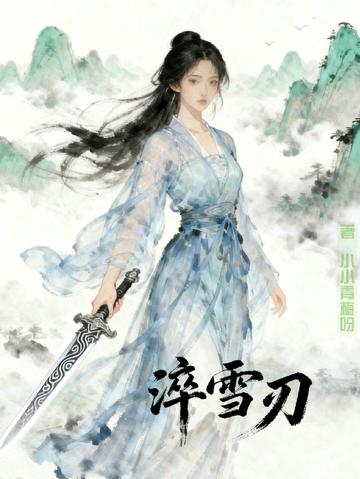
Introduction to "Snow Tempering Blade":
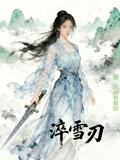
In the past life... One immortal and one demon, in this life, the snow-quenched blade awakens and becomes one
She is the master of the Qingyun Sect who was born with a sword. Her tough blood can temper ice and snow, but she has suffered the most painful setbacks in the human heart - betrayed by her best friend, coveted by resentful spirits, and even the spirit of the person next to her has hidden secrets for thousands of years.
He is an immortal sword spirit who lives by guarding the sword. His spiritual fire can burn the underworld, but he has been waiting for the longest return date in the torrent of time. Every morning when he practices swordplay with her, every evening when he warms her wine, he has already carved "guarding" into his soul.
When the corroding heart Gu crawled all over the sect's stone steps, when the Netherworld Cauldron rekindled the evil fire in the ice field, and when the remnant soul of the original sword master intertwined with the shadow of the Valley of Resentful Spirits, they understood: the so-called fate was never the moves in the sword manual, but the moment the snow-tempered blade hit the blue sword, they were destined to go to the mountain of swords and the sea of fire together——
"I will melt your spirit with my toughness."
"I will protect your resilience with my spirit."
The plum blossoms bloomed and withered, and the lights in Jianlu came on and off. They have seen the darkest night, but they always believe that as long as the two swords can still touch each other, as long as the warmth in the palms of the hands is still there, all the conspiracy and hatred in the world will eventually turn into the string of copper bells blown by the wind in the morning light, and the spring he planted for her.
Reader comments
"Quenching Snow Blade" is a work that incorporates delicate emotions and fatalistic tension into the traditional fairy tale framework. Its highlights and characteristics can be interpreted from the following aspects:
1. Personality: Seeing the warmth of human nature in the shackles of fate
The "sword master and sword spirit" setting of the protagonists Shen Yanqiu and Xie Lin breaks through the traditional fairy tale "the strong are invincible" routine. Shen Yanqiu is not only the leader of the Qingyun Sect with a sharp blade, but also struggles with the dual identity of "the reincarnation of the first generation sword master" and "daughter". Her "tough blood" is not only the source of strength, but also the carrier of emotional bonds - her obsession with her mother, her dependence on Xie Lin, and her responsibility to the common people, so that she always carries the softness of humanity in her killings. Xie Lin's "spirit body" setting is equally intriguing. From the initial "guardian tool" to the gradual awakening of self-awareness, his relationship with Shen Yanqiu is not a simple "master and servant", but a symbiosis of "protecting the toughness with the spirit and integrating the spirit with the toughness". This bond that spans life, death and time and space injects a warm undertone into the cold world of fairy tales.
The creation of supporting characters also shows ingenuity: Liu Wanrou's redemption from "betrayer" to "the reincarnation of Qingluan Sword Spirit", Mo Chen's complexity from "mysterious bookworm" to "reincarnation of the first generation pavilion master", and even the villains such as You Ji and the Sword-Eating Demon Lord are not stereotyped "evil", but poor people wrapped up in obsession and fate, which makes the boundary between "good and evil" more blurred and makes the character arc more convincing.
2. Plot: unfolding the scroll of fate in a nest of suspense
The story starts with "Heart-Eroding Gu" and "Netherworld Cauldron", and gradually reveals the core mysteries such as "The Seal of the First Generation Sword Master", "The Secret of the Sword Spirit" and "The Mirror of Reincarnation". Each foreshadowing grows like a vine - the illusion of Mirror Lake is intertwined with reality, the fragments of the spirit beads connect the cause and effect of thousands of years, and the awakening of Qingluan Blood Sword coincides with the fate of "the two swords unite". The author is good at laying deeper hooks when "resolving crises": Mo Chen's "death" is actually the beginning of reincarnation, Xie Lin's "spiritual solidification" hides the risk of being swallowed up, and even the seemingly perfect seal may be changed again by the appearance of Mo Xiaochen.
The rhythm is relaxed and relaxed, with grand and famous scenes such as the "Battle of Burning Sky Valley" and "Blood Sacrifice at Mirror Lake", as well as life-like details such as "Drying Medicine in the Sword House" and "Warming Wine under the Plum Blossoms", adding more fireworks to the world of swords and swords, and making the emotional progression of the characters more natural.
3. Core: Discussing "Choice and Redemption" under the Xianxia Shell
The work jumps out of the shallow logic of "fighting monsters and upgrading", and the core always revolves around "fate and choice": the first-generation sword master was not swallowed by desire, but actively sacrificed; Liu Wanrou does not need to be trapped in the label of "betrayer", she can cultivate new life with the resurrection grass; Mo Chen's reincarnation is not punishment, but an opportunity to find reconciliation. Even the existence of "Sword Spirit", which is almost a "tool", also reflects the initiative of "choosing to protect" in Xie Lin - the so-called fate is never a set script, but the result of the superposition of each character's choices at critical moments.
The theme of "redemption" runs throughout: the redemption of others (Shen Yanqiu awakens the remnant soul of his mother), the redemption of self (Liu Wanrou faces the past), the redemption of reincarnation (Mo Chen ends his thousand-year obsession), giving the story an extra layer of healing power in addition to blood.
4. Style: Modern empathy hidden in classical charm
The language combines the simplicity of the fairy and the delicate emotions. Images such as "plum tree", "spiritual fire" and "Qingluan" appear repeatedly, both as scene embellishments and emotional symbols - the plum tree's withered glory corresponds to the ups and downs of fate, the light and dark of the spiritual fire metaphors the opening and closing of the heart's defenses, and the weeping blood of Qingluan symbolizes sacrifice and rebirth. At the same time, the emotional logic of the characters is close to modern cognition: Shen Yanqiu's longing for his mother, Xie Lin's confusion about the "meaning of existence," and Liu Wanrou's fear of the "past" can all allow readers to find resonance in the fantasy setting.
It's a pity that some branches (such as the origin of the Blood Sword Alliance and the complete secret of Qianjuan Pavilion) are laid out a little hastily, and some foreshadowings can be recycled more calmly. But overall, "Sword" is the bone, "love" is the blood, and "fate" is the context. In the grand narrative of Xianxia, it always maintains a care for "people". It is a work that allows readers to be moved by the fate of the characters while being passionate.
From the plot point of view, the novel is full of fantasy. It tells the story between the Qingyun Sect Master and the Immortal Sword Spirit. It incorporates elements of the past and present life, as well as mysterious things such as the Heart-eroding Gu, the Netherworld Cauldron, and the Valley of Resentful Spirits, creating an exciting and suspenseful atmosphere. However, some readers believe that the heroine Long Aotian's cold and charming image in the first half of the novel was successfully created. However, after the heroine confirmed her relationship with the hero, the heroine's "sense of love" weakened, which affected the reading experience.
In terms of character creation, the heroine, as a clan master born with a sword, has tough blood that can temper ice and snow, has experienced pains such as betrayal by close friends and covetousness by resentful spirits, and her image is three-dimensional and full. As for the character of the Immortal Sword Spirit, he loyally protects the heroine, and his image is also loved by some readers.
Thematically, the novel revolves around fate and struggle. When facing conspiracy and hatred, the male and female protagonists trust each other and fight together. They firmly believe that as long as they accompany each other, they can break the shackles of fate and convey a positive force.
Very attentive... Even the details of cooking the soup are fully clear, the aroma of the medicine... These are all very detailed, and there is a little bit of emotional drama. I hope the heroine is unique... Come on...
Everyone can follow it with confidence, "Snow Tempering Blade" uses the sword as a guide to connect fate and redemption. The characters are flesh-and-blood, the plot is suspenseful, and there are thoughts on "choice" hidden within the framework of the fairy tale. It has both the passion of swords and shadows and the warmth of fireworks. It makes people's hearts move when reading it.
"Quenching Snow Blade" is a work that incorporates delicate emotions and fatalistic tension into the traditional fairy tale framework. Its highlights and characteristics can be interpreted from the following aspects: 1. Personality: Seeing the warmth of human nature in the shackles of fate The "sword master and sword spirit" setting of the protagonists Shen Yanqiu and Xie Lin breaks through the traditional fairy tale "the strong are invincible" routine. Shen Yanqiu is not only the leader of the Qingyun Sect with a sharp blade, but also struggles with the dual identity of "the reincarnation of the first generation sword master" and "daughter". Her "tough blood" is not only the source of strength, but also the carrier of emotional bonds - her obsession with her mother, her dependence on Xie Lin, and her responsibility to the common people, so that she always carries the softness of humanity in her killings. Xie Lin's "spirit body" setting is equally intriguing. From the initial "guardian tool" to the gradual awakening of self-awareness, his relationship with Shen Yanqiu is not a simple "master and servant", but a symbiosis of "protecting the toughness with the spirit and integrating the spirit with the toughness". This bond that spans life, death and time and space injects a warm undertone into the cold world of fairy tales. The creation of supporting characters also shows ingenuity: Liu Wanrou's redemption from "betrayer" to "the reincarnation of Qingluan Sword Spirit", Mo Chen's complexity from "mysterious bookworm" to "reincarnation of the first generation pavilion master", and even the villains such as You Ji and the Sword-Eating Demon Lord are not stereotyped "evil", but poor people wrapped up in obsession and fate, which makes the boundary between "good and evil" more blurred and makes the character arc more convincing. 2. Plot: unfolding the scroll of fate in a nest of suspense The story starts with "Heart-Eroding Gu" and "Netherworld Cauldron", and gradually reveals the core mysteries such as "The Seal of the First Generation Sword Master", "The Secret of the Sword Spirit" and "The Mirror of Reincarnation". Each foreshadowing grows like a vine - the illusion of Mirror Lake is intertwined with reality, the fragments of the spirit beads connect the cause and effect of thousands of years, and the awakening of Qingluan Blood Sword coincides with the fate of "the two swords unite". The author is good at laying deeper hooks when "resolving crises": Mo Chen's "death" is actually the beginning of reincarnation, Xie Lin's "spiritual solidification" hides the risk of being swallowed up, and even the seemingly perfect seal may be changed again by the appearance of Mo Xiaochen. The rhythm is relaxed and relaxed, with grand and famous scenes such as the "Battle of Burning Sky Valley" and "Blood Sacrifice at Mirror Lake", as well as life-like details such as "Drying Medicine in the Sword House" and "Warming Wine under the Plum Blossoms", adding more fireworks to the world of swords and swords, and making the emotional progression of the characters more natural. 3. Core: Discussing "Choice and Redemption" under the Xianxia Shell The work jumps out of the shallow logic of "fighting monsters and upgrading", and the core always revolves around "fate and choice": the first-generation sword master was not swallowed by desire, but actively sacrificed; Liu Wanrou does not need to be trapped in the label of "betrayer", she can cultivate new life with the resurrection grass; Mo Chen's reincarnation is not punishment, but an opportunity to find reconciliation. Even the existence of "Sword Spirit", which is almost a "tool", also reflects the initiative of "choosing to protect" in Xie Lin - the so-called fate is never a set script, but the result of the superposition of each character's choices at critical moments. The theme of "redemption" runs throughout: the redemption of others (Shen Yanqiu awakens the remnant soul of his mother), the redemption of self (Liu Wanrou faces the past), the redemption of reincarnation (Mo Chen ends his thousand-year obsession), giving the story an extra layer of healing power in addition to blood. 4. Style: Modern empathy hidden in classical charm The language combines the simplicity of the fairy and the delicate emotions. Images such as "plum tree", "spiritual fire" and "Qingluan" appear repeatedly, both as scene embellishments and emotional symbols - the plum tree's withered glory corresponds to the ups and downs of fate, the light and dark of the spiritual fire metaphors the opening and closing of the heart's defenses, and the weeping blood of Qingluan symbolizes sacrifice and rebirth. At the same time, the emotional logic of the characters is close to modern cognition: Shen Yanqiu's longing for his mother, Xie Lin's confusion about the "meaning of existence," and Liu Wanrou's fear of the "past" can all allow readers to find resonance in the fantasy setting. It's a pity that some branches (such as the origin of the Blood Sword Alliance and the complete secret of Qianjuan Pavilion) are laid out a little hastily, and some foreshadowings can be recycled more calmly. But overall, "Sword" is the bone, "love" is the blood, and "fate" is the context. In the grand narrative of Xianxia, it always maintains a care for "people". It is a work that allows readers to be moved by the fate of the characters while being passionate.
From the plot point of view, the novel is full of fantasy. It tells the story between the Qingyun Sect Master and the Immortal Sword Spirit. It incorporates elements of the past and present life, as well as mysterious things such as the Heart-eroding Gu, the Netherworld Cauldron, and the Valley of Resentful Spirits, creating an exciting and suspenseful atmosphere. However, some readers believe that the heroine Long Aotian's cold and charming image in the first half of the novel was successfully created. However, after the heroine confirmed her relationship with the hero, the heroine's "sense of love" weakened, which affected the reading experience. In terms of character creation, the heroine, as a clan master born with a sword, has tough blood that can temper ice and snow, has experienced pains such as betrayal by close friends and covetousness by resentful spirits, and her image is three-dimensional and full. As for the character of the Immortal Sword Spirit, he loyally protects the heroine, and his image is also loved by some readers. Thematically, the novel revolves around fate and struggle. When facing conspiracy and hatred, the male and female protagonists trust each other and fight together. They firmly believe that as long as they accompany each other, they can break the shackles of fate and convey a positive force.
Very attentive... Even the details of cooking the soup are fully clear, the aroma of the medicine... These are all very detailed, and there is a little bit of emotional drama. I hope the heroine is unique... Come on... Everyone can follow it with confidence, "Snow Tempering Blade" uses the sword as a guide to connect fate and redemption. The characters are flesh-and-blood, the plot is suspenseful, and there are thoughts on "choice" hidden within the framework of the fairy tale. It has both the passion of swords and shadows and the warmth of fireworks. It makes people's hearts move when reading it.