In the long river of time, stories from the 1960s strike a deep, mournful chord, playing out a melody of hunger and hardship. As a child, I was deeply moved by the stories my great-grandfather and grandmother told. The images of that generation struggling to survive adversity have stayed with me ever since, impossible to forget.
Now, I put pen to paper and create Li Jianjun, the male protagonist. He transmigrates from the modern era back to the 1960s. He has no System and no golden finger. Relying solely on his formidable agricultural expertise, he is determined to change the fate of ordinary people in that era.
When Li Jianjun first arrives in the 1960s, he witnesses the villagers’ hardships as they struggle with outdated farming methods. Food is scarce, and hunger is a constant shadow. He sees their suffering and feels it deeply, knowing that only the introduction of new techniques can break this vicious cycle. When he promotes plastic-mulch farming, the villagers are skeptical and resistant, but he refuses to give up. With patience and practical results, he earns their trust.
But the road ahead is far from smooth. One crisis after another strikes, from severe weather to damaged irrigation canals and resistance to new farming methods. Yet Li Jianjun draws on his extensive knowledge and indomitable will to lead the villagers through each disaster. He teaches them scientific farming techniques and how to cope with natural calamities, helping them find hope even in the hardest times.
This story is not only a tribute to the difficult past endured by my great-grandfather’s generation, but also a way of carrying on their resilient spirit. Bearing the hope of the modern age, Li Jianjun sows new seeds in the soil of the 1960s, using technology to benefit the people. In doing so, he fulfills a wish from the past that I could never let go of, and reminds us to remember history and cherish the present.
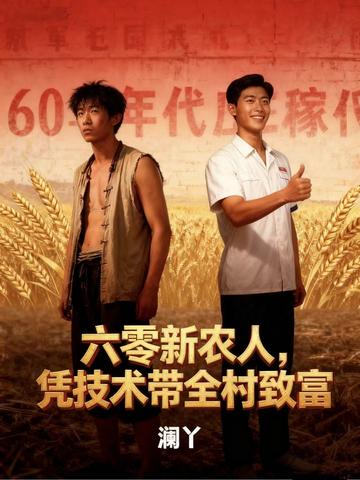
The purely realistic style of rural life, this kind of rural story full of fireworks, is the most evocative. The early morning, night, rainy day, land, and crops are all real rural styles. There are also detailed descriptions of the villagers. Their expressions, movements, and appearances can immediately make people think of the characters. The article does not have any bragging elements, nor does it have any exaggerated tone. It has a sense of the times. Anyway, I really like this kind of rural reality of "planting the land well and relying on technology to create a good life."
It's great. In fact, I was very disgusted with this kind of writing that is all the same and has nothing new. But the person who wrote it was really good and quite interesting. At least it makes you want to watch and keep watching.
It's nice to listen to, very interesting, and so well written that I couldn't put it down.
Wonderful! Every link is intertwined, and each character is unique!!
This is my favorite book. I hope the author will get better and better. I recommend it with five stars.
The content of this book is wonderful, the author's writing style is really good, and the logic is clear. I like it.
The author writes so well, with full characters
There are contradictions and growth in each development stage, which further highlights the three-dimensional sense of the character.
Reflecting the microcosm of that era through villagers' reactions
Out-of-season vegetables and orchard factories are innovative in chronological context