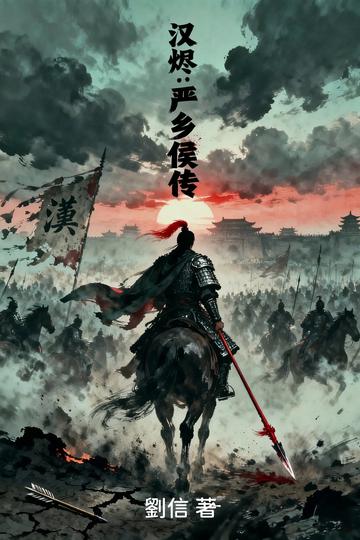
During the Jianping era, the Han court was in decline, Dong Xian meddled in state affairs, Wang Mang coveted the imperial throne, and undercurrents surged across the lands east of the passes. Liu Xin, a member of the Eastern Ping royal house, carried the blood feud of three generations of loyal souls: his father, Liu Yun, was wrongfully accused and forced to drink poison; his elder brother, Liu Kaiming, worked himself to death in service of the state; and his younger brother, Liu Huang, fell on the battlefield.
He went undercover to distribute disaster relief, eating coarse rice alongside refugees. He secretly formed the Loyalty and Righteousness Battalion, swearing on a broken sword to protect the people. At the Apricot Grove Academy, he met Kong Ying and gained the support of the Confucian school. He joined Zhai Yi in raising the banner and led an allied army from the eastern provinces to challenge Chang'an. From a benevolent lord on the banks of the Si River to the Han heir proclaimed emperor on the training grounds of Dong Commandery, he wore “the people are the foundation of the state” as his armor and wielded “the Han mandate is not yet extinguished” as his blade. Beneath Wang Mang's slaughterer's knife, he guarded the royal house's last spark; amid the refugees' cries, he kept the hope of restoration alive.
Blood-written letters stained the ink, and the broken sword gleamed against the snow. The mist in the valleys of Runan concealed his still-burning passion, while the ancient ginkgo at the Apricot Grove Academy bore witness as the Han embers flared to life again. When the Green Forest and Red Eyebrows rose in rebellion, and when Liu Xiu rebuilt the Eastern Han, that bloodstained sword tassel and the vow “Protect the common people and restore the Han” still told the epic of a royal kinsman who gave his life for his cause. A hero need not die in battle; conviction endures, and the flame never dies.