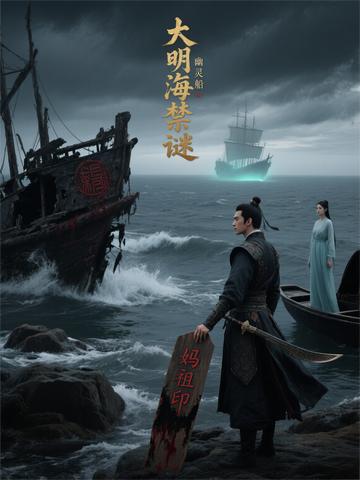
In the thirty-fourth year of Jiajing, the sea ban in eastern Zhejiang was like an iron curtain pressing down on the sea. The lingering rain in Dinghaiwei soaked the livelihood of fishermen and also soaked up the undercurrents under the sea. A piece of official ship plank branded black with the "Mazu Seal" washed up on the beach. The scorch marks contained the cold smell of saltpeter and sulfur, which further confirmed the legend of the "Ghost Ship" - five warships and 300 officers and soldiers of the Polang Camp disappeared overnight.
Jinyiwei Lu Zhao came with a secret edict to "get out of the water". The flying fish suit was stained with the salt of the sea breeze. What the embroidered spring knife wanted to chop was never the empty ghosts and gods, but the greed hidden under the human skin. Su Mei in Wen Tao Tea House hides information, the tides in "Cao Hai Tu Bian" hide the code of the waterway, and the so-called "Mazu Seal" is nothing more than a smuggler's water-tight fire ignited by the poison of lust for power and betrayal.
The sea has tides, and channels are revealed between the ups and downs; people have tides in their hearts, and good and evil can be seen in the ups and downs. Sea bans can lock fishing boats, but not desires; rumors scare people, but not the truth. When Lu Zhao tore apart the web of collusion between Zhang Heng and Yan Song in the sea of fire in Heisha Bay, he realized that the most turbulent waves are never in the sea, but in the whirlpool of people's hearts. All the sins hidden behind the reef will eventually surface with the tide, revealing the eternal game between justice and greed.