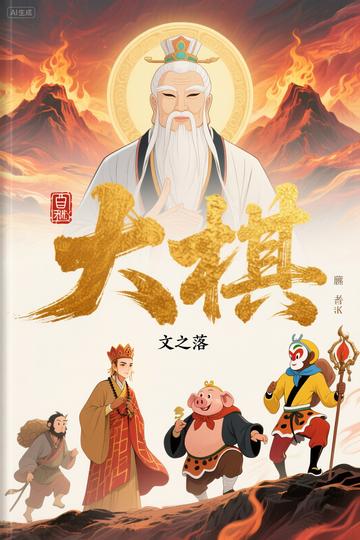
Core perspective: The alliance and game between the gods in heaven (with Taibaijin as the protagonist and narrator) and the Buddhas in the west (with Guanyin Bodhisattva as the main representative).
Core settings:
The essence of learning scriptures: It is not a simple missionary, but a grand "three-realm stability maintenance project." The people of Nanfanbuzhou (the seat of the Tang Dynasty in the East) are old-fashioned and do not believe in cause and effect. The accumulation of resentment and karma has begun to erode the balance of the spiritual energy of heaven and earth, threatening the foundation of the rule of heaven and Lingshan. The purpose of spreading Buddhism is to purify karma, guide people to do good, and thus rebalance the destiny of the three realms. This is a political mission.
The relationship between Heavenly Court and Lingshan: There is a game in cooperation. Heaven represents Taoist orthodoxy and controls order; Lingshan (Western Heaven) represents Buddhist power, which is increasingly prosperous. Both parties hope to use this project to expand their influence, but neither wants the other to dominate. Learning from Buddhist scriptures is a strategic cooperation reached by the top leaders of both parties (Jade Emperor and Tathagata), but the executive levels have their own ideas.
The significance of the disaster: The 81st disaster was not all accidents, most of them were "tailor-made" assessments. On the one hand, it is to sharpen the sutra-retrieval team, eliminate the karma of Sun Wukong, Zhu Bajie, and Sand Monk, so that their "merits and virtues are perfect"; on the other hand, it is also a stage for all parties (including heaven, Lingshan's own faction, Taoist gods, Buddhist Bodhisattvas, and even earthly immortals) to show their strength, ask for favors, clean up the family, and settle the cause and effect. Every difficulty is a political performance or exchange of interests.