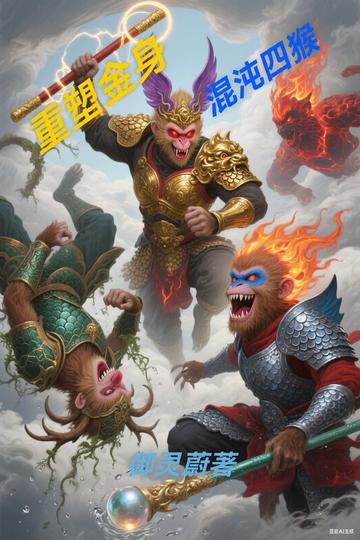
Taking "Journey to the West" as the mother book, through the chapter structure, it focuses on the "composite" image of Taoism integrated with Buddhism, Taoism's five elements, three souls and six souls, immortal cultivation; Buddhism's greed, prudence, and ignorance, character reconstruction, two lines of six core fusion strategies, and the core of "cultivating the mind and realizing the Tao". Deepening - The essence of the battle between the Four Monkeys is the game between human desires and the rules of destiny. No matter whether you enter from the role of metal, wood, water or fire, only through the coordination of the five elements (restraint, transformation, symbiosis) can you break through the temptations of greed, caution and ignorance. The six-eared macaque (rebel), Jinghe Dragon King (the one who breaks the law), Huli Daxian (corrupt official), Dapeng Golden Winged Eagle (murderer), Bone Demon (treacherous person), Xiao Zhuanfeng (traitor), representatives of the three realms of benevolence, righteousness, propriety, wisdom, and faith, and representatives of freedom, fraternity, equality, and democracy At this stage, the rules of friendship, love, and family ethics are reshaped. All of these are the practices set by Tathagata and Laojun for the Four Monkeys of Chaos in order to clear the chaotic order in the three realms, so that they can finally reach the ultimate state of the "Monkey King" (the Monkey of the Heart returns to the right state). It not only retains the mythical tension of the original work, but also gives it the enlightening significance of modern ecology and technological ethics, and finally builds a "balanced" rule system that respects tradition and is subversive.