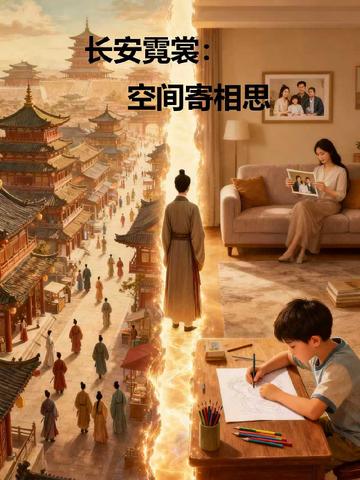
In an accident, the protagonist Lin Can fell from a modern and cozy home into the prosperous age of the Tang Dynasty. When she first arrived in Chang'an (or somewhere during the Zhenguan period/the prosperous Tang Dynasty), she had no one with her. She had to deal with the unfamiliar ancient etiquette and lifestyle, and had to fight for survival. Her heart was filled with concern for her family - her son who had just entered elementary school was waiting for her to sign the test paper, and would her husband, who came home late from overtime, be devastated by her sudden disappearance?
Just when loneliness and anxiety enveloped her, the mysterious space that was unexpectedly opened became her only solace. When the fingertips touch the entrance, the familiar modern living room emerges clearly: the son is drawing at the desk, the husband is looking through the photos she left behind, and the clothes on the balcony are the same as before. She could clearly see her family's actions and hear her son's soft "When will mommy come back?" But she couldn't respond. She could only turn her concern into the motivation to gain a foothold in the Tang Dynasty.
In order to find a possibility of reunion, Lin Wei worked hard to adapt: learn ancient proverbs, learn business, and make a name for herself in Chang'an with modern knowledge; meet noble people, avoid troubles, and move forward steadily in the prosperity and undercurrent of the prosperous Tang Dynasty. When she was tired, she would go into the space to see her family and regain her strength. As her life deepens, she discovers that space not only has a "wait and see" function, but the "strange reactions" between the abnormal images and her family suggest that the barriers of time and space may be broken.
With the opportunities and challenges of the Tang Dynasty on one side and the fetters of family ties across time and space on the other, can Lin Wei realize her self-worth and find an opportunity to reunite with her family? This journey of ancient and modern concerns is slowly beginning.