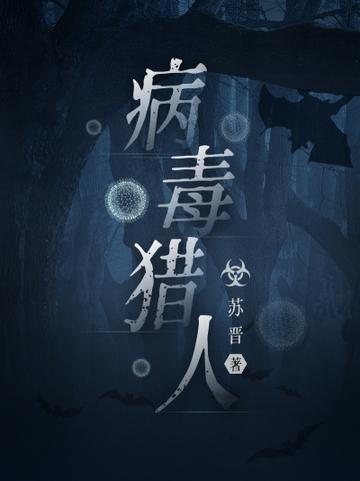
In the Qinba Mountains, an ancient village has been haunted by evil spirits for hundreds of years. On the other side of the ocean, a rich second-generation Internet celebrity fell into the sea and drowned. Two people thousands of miles apart who are completely unrelated to each other are actually infected with the same unknown virus. Who can solve this mystery?
Reader comments
In this book, I saw that behind the mask, you and I are just ordinary people. But after putting on the mask, you need to do everything with a professional attitude.
Lu Jian is the representative of many professionals in the book. He is a good teacher and friend. He guides and teaches Lin Xiaoyu. He never lets Lin Xiaoyu do things beyond his ability. He can also give him timely affirmation or pull back his divergent thinking. He also gives Lin Xiaoyu enough respect and can understand Lin Xiaoyu's emotions when it does not involve professional daily life.
Finally, I feel that there is a lack of an extra episode where Lu Jian invites Lin Xiaoyu to drink bean juice.
Will there be a series of stories at the end?
What touched me most was the portrayal of "balance" in the book. Researchers must not only use accurate genetic sequencing to capture traces of the virus, but also deliver rationality when the public is in panic; they must pursue academic breakthroughs while resisting capital interference in research data. When the protagonist withstood the pressure of "complete elimination" in order to protect a bat population that may carry a key strain of the virus, I suddenly understood: the battlefield of virus hunters has never been limited to fighting viruses, but also to protect the balance between man and nature, science and ethics.
A very interesting and rigorous story. I feel that the author is very knowledgeable and even proficient in the things described in the article, so that readers can understand it from an outsider's perspective. What touched me most in the article was Lu's cautious attitude towards the research results. Scientific research requires careful exploration and careful demonstration. Of course, Xiao Lin's bold assumptions are also indispensable. Thanks to Xiao Lin's existence for making this book more interesting.
At first, I was still thinking that the virus was an ancient virus hidden in the Buddha statue. Lan Xi was very nervous when she saw the Buddha statue. After further reading, I discovered that it was a virus carried by bats. Decrypted layer by layer, very attractive.
It took me two days to read this book "Virus Hunter" and I went through a big adventure of searching for viruses with Lu Jian and Lin Xiaoyu. What impressed me the most was what Lu Jian said when explaining the Ebola virus epidemic to Fu Lanxi on Myer Island. The occurrence of the infectious disease is related to the customs and sanitary conditions of local Africans. They hug and kiss patients and corpses, which is easy to spread. It's also related to people's cognition. Some people in Africa still think that Ebola is a curse. The same goes for the villagers of Miaozhuang Village in this book. They believe in the evil ghost theory of the village chief Pan and think that the patients are possessed by ghosts. Instead of sending them to the hospital for treatment, they ask the goddess to perform a magic dance at home to drive away the ghosts.
I've heard it said that immunologists work like detectives, piecing together the details and wading through a swamp of speculation and experiment in an effort to find the truth. The discovery of Typhoid Mary was exactly such a difficult investigative process.
From this point of view, the title of this book is really appropriate, not to mention that the author is a virology expert and has made contributions in the fight against the epidemic. His daily work is like a hunter or detective, collecting details, getting closer to the truth (prey), and finding ways to subdue it.
Even if you don't mention the above, the protagonist of this book avenges his brother, is not afraid of life and death, constantly reveals the truth, and the description of the bizarre and terrifying atmosphere is very exciting. After reading the middle part, I will really be hooked and think about it for days.
The above are not "composed" because I wanted to write a short essay. I have always liked medical works. The stories of several major infectious diseases around the world were all popular science stories I had read before. The struggle between humans and viruses is endless. From a certain perspective, these non-living entities are more difficult to deal with than living entities, and viruses have also changed human evolution to a certain extent. After reading this book, my feelings became even deeper.
The storyline is very compact and the description is very attractive. It makes people want to read it in one go. It also adds a lot of knowledge. It is my favorite type. If this story is made into a TV series, it will be very interesting. My favorite is the section at the beginning, which describes the scene of a group of people entering the Buddhist cave. It immediately captures the curiosity. I also like the section in Miaozhuang Village very much. I like the role of Lu Jian very much. I feel it is so charming. As soon as he appears, his calm aura comes over me. He feels very reliable and his professional ability is super strong.
After going through the previous few years, reading this book was so touching. If humans lose prudence and awe when facing viruses and nature, disasters will easily occur, not to mention those with ulterior motives. The story's portrayal of the human nature of the characters is so wonderful. At first glance, the author seems to be a professional and practical person.
Three parallel lines of suspense reasoning. Among them, I like the one about going to the countryside the most. It is very down-to-earth and has a sense of life. (It turned out to be a real experience later.) The author himself has an excellent scientific research background, and he has gained a lot of knowledge~
Oops, I really have mixed feelings when I read this book in the era of covid. The spread of the virus is really a disaster for mankind in the era of globalization.
From the moment I entered the village to the successful sampling, I couldn't breathe. It turns out that this is how our system works. Thank you to every staff member! And, Hu Chuchu, you are so awesome!
When I was reading with enthusiasm, the novel stopped abruptly. When you read the end of the story, you will think that there will be another one. After reading it, I feel like I still have something to say... Maybe it has something to do with the fact that the author finished writing and went to participate in the rescue.
Who would have thought that Fu Lanxi was a boy at first! He and Lu Jian were moving and quiet, one was rigorous and the other was casual, and neither of them wanted to quarrel. Unexpectedly, Fu Lanxi later contracted the virus and went offline. The writing of the novel is plain, combining science and suspense, and the subsequent twists and turns are also many unexpected.
Opening "Virus Hunter" is like opening a door to a microscopic battlefield. It does not use exaggerated dramatic conflicts to exaggerate the tension. Instead, it uses an almost documentary style to lay out the truth about virus tracking in front of readers: not the lone hero in the movie, but the boredom of the team's repeated verification in the laboratory, the danger of going deep into the epidemic area and dealing with the host, and the awe-inspiring and determined exploration in the face of unknown viruses.
The prelude is a little long. Chapter 17 officially enters the exploration period of suspense and decryption. With Lin joining in, Lu Jian's image is also more vivid. In the early stage, I actually thought it was suspense and thriller, after all, the weird Buddha statue is really scary. I thought it was going to be a thriller adventure, but I didn't expect it to be a serious scientific mystery novel. Professor Lu, who I originally thought was perfect, turned out to be a little clumsy and cute after going to the countryside.
Little Sun Lin Xiaoyu and cold-faced mentor Lu Jian.
I almost kowtowed to the point where I was kowtowing. What kind of arrogant mentor is Lu Jian? On the surface, he seemed to dislike Lin Xiaoyu, but in fact, he was slowly infected by Lin Xiaoyu's optimism.
Moreover, after Lu Jian later discovers Lin Xiaoyu's potential, he will immediately take over the responsibility of his mentor and guide Lin Xiaoyu with all his heart.
Looking at the name, I thought it was a cliche novel, but it turned out to be super exciting! The author must be a professional. He has written all aspects of virus prevention and control in a very detailed and exciting way. The various games are very solid, credible and thrilling.
The author majors in microbiology, and the writing about sampling and finding the source of the virus is very realistic, not nonsense, and there are not so many difficult words to understand. The atmosphere in the village is well described. The villagers believe in the same old stereotypes, while the researchers talk about science. The comparison is quite interesting.
It's well written, and many details in it are very close to life. Sometimes I even feel like I've encountered it before. Especially the Buddha statue. I remember there was news that Wai Guoren bought the Buddha statue in a certain village.
But I really didn't expect it to be combined with viruses and superstition.
The previous story reminded me of "Tomb Raiders" and "Antique Bureau Middle Game". I really like these types of themes, but I didn't expect that it turned out to be a story about searching for a virus. The beginning was really suspenseful and exciting, but I didn't expect it to be so mysteriously involved with reality. I'm really looking forward to the next plot, so I'd like to give you a big thumbs up.
This book has the structure of a suspense novel. The process of tracing the origin of the virus is full of thrills, vividness and cleverness. Because it incorporates the author's real experience as an inspector, it doesn't make people feel suspended. It's beautiful! In addition, I also saw how the capillary-like epidemic reporting system was deployed and put into operation, which gained me a lot of knowledge.
I really like the female characters in it, especially Section Chief Hu, who works at the grassroots level, with a bit of seriousness and a lively, approachable and respectable character!
In the sparsely populated Qinba Mountains, an ancient village has been haunted by horror rumors for hundreds of years. A farmer named He Qingde was regarded as a curse by the villagers because he was infected with "evil spirits"; far across the ocean, Fu Lanxi, a rich man with huge wealth, drowned on an island controlled by a pharmaceutical giant. In a story full of conspiracies and unknowns, it captures science and exposes lies and truths. It's great to watch.
I was attracted from the beginning. I thought it would be about supernatural, metaphysical and folk customs. I didn't expect that the author is very professional and has solid foundation. He is not just a piece of random imagination, but a professional practitioner. Alas, after the heavy losses in those years, the economy in various places is still very difficult. Recently, there has been the Aedes fever, and various deviations in the implementation of decision-making by grassroots personnel are still repeated. This kind of theme that explores the dilemma of scientific ethics is rare, and it is sad to see it.
It's great. I've read them all. I haven't seen such a novel that leaves me unsatisfied in a long, long time. I really hope that it will be published as a series of novels. It is rare to see suspense novels from this angle. The introduction of the short story at the beginning is very gripping, and the plot has a tight rhythm and is really fascinating.
At the beginning, a virus appears in a place where folk fantasy events and urban events have nothing to do with each other, which makes people want to read on. The content of Lu Jian's speech at the beginning was factual, but it also felt like a hint, and he felt very CP with Lin Xiaoyu. After entering the village, some of the descriptions made my skin stand on end.
As someone who has experienced the epidemic, when reading "Virus Hunter", I can't help but think of those figures wearing protective clothing. The virus sampling, traceability process, and emergency response written in the book do not have any sense of fictional suspension. It is said that the author has a scientific research background in the study of pathogenic microorganisms. No wonder the details are so real, and the characters really have a "living feeling".
A rare masterpiece. It felt a little heavy and a little funny after watching it. Who wouldn't know how serious and cruel the virus is after going through such a spicy situation? One of the earliest popular documentary articles said that his father-in-law just caught a simple cold and passed away within a few days. They tried their best. Later we learned it was the flu, and now it's the same. The more you know about viruses, the better prepared you will be
It's a medical theme with a realistic background, and the sense of suspense is quite strong. The author is mostly a professional, and all the details look realistic, and it will remind people of that history from time to time. The professional stories are quite strong, but compared to popular themes and some cool articles, they lack the addictive flavor. However, the setting and subject matter are really novel. I will keep reading and hope that this type of work will get better and better.
Covered in suspense, the core is actually composed of science. The content of the article is very novel. Although it incorporates all kinds of life science knowledge, it does not feel boring. Instead, it follows the protagonist holding the "scientific blade" to peel off the truth layer by layer, which makes people addicted to read.
It is a very realistic book to read. The author has participated in the fight against the epidemic in Wuhan, so he can intersperse his professional knowledge into the whole plot. The author also deeply depicts the human heart and human nature, as if recreating the invisible war.
This is a book that is very suitable for being made into a film or television drama. The author's writing is concise and smooth, with a strong visual sense. The just-in-time appearance of bats makes readers immediately think of viruses. The evil in the book's eyes is essentially viral infection.
In this book, I saw that behind the mask, you and I are just ordinary people. But after putting on the mask, you need to do everything with a professional attitude. Lu Jian is the representative of many professionals in the book. He is a good teacher and friend. He guides and teaches Lin Xiaoyu. He never lets Lin Xiaoyu do things beyond his ability. He can also give him timely affirmation or pull back his divergent thinking. He also gives Lin Xiaoyu enough respect and can understand Lin Xiaoyu's emotions when it does not involve professional daily life. Finally, I feel that there is a lack of an extra episode where Lu Jian invites Lin Xiaoyu to drink bean juice. Will there be a series of stories at the end?
What touched me most was the portrayal of "balance" in the book. Researchers must not only use accurate genetic sequencing to capture traces of the virus, but also deliver rationality when the public is in panic; they must pursue academic breakthroughs while resisting capital interference in research data. When the protagonist withstood the pressure of "complete elimination" in order to protect a bat population that may carry a key strain of the virus, I suddenly understood: the battlefield of virus hunters has never been limited to fighting viruses, but also to protect the balance between man and nature, science and ethics.
A very interesting and rigorous story. I feel that the author is very knowledgeable and even proficient in the things described in the article, so that readers can understand it from an outsider's perspective. What touched me most in the article was Lu's cautious attitude towards the research results. Scientific research requires careful exploration and careful demonstration. Of course, Xiao Lin's bold assumptions are also indispensable. Thanks to Xiao Lin's existence for making this book more interesting.
At first, I was still thinking that the virus was an ancient virus hidden in the Buddha statue. Lan Xi was very nervous when she saw the Buddha statue. After further reading, I discovered that it was a virus carried by bats. Decrypted layer by layer, very attractive.
It took me two days to read this book "Virus Hunter" and I went through a big adventure of searching for viruses with Lu Jian and Lin Xiaoyu. What impressed me the most was what Lu Jian said when explaining the Ebola virus epidemic to Fu Lanxi on Myer Island. The occurrence of the infectious disease is related to the customs and sanitary conditions of local Africans. They hug and kiss patients and corpses, which is easy to spread. It's also related to people's cognition. Some people in Africa still think that Ebola is a curse. The same goes for the villagers of Miaozhuang Village in this book. They believe in the evil ghost theory of the village chief Pan and think that the patients are possessed by ghosts. Instead of sending them to the hospital for treatment, they ask the goddess to perform a magic dance at home to drive away the ghosts.
I've heard it said that immunologists work like detectives, piecing together the details and wading through a swamp of speculation and experiment in an effort to find the truth. The discovery of Typhoid Mary was exactly such a difficult investigative process. From this point of view, the title of this book is really appropriate, not to mention that the author is a virology expert and has made contributions in the fight against the epidemic. His daily work is like a hunter or detective, collecting details, getting closer to the truth (prey), and finding ways to subdue it. Even if you don't mention the above, the protagonist of this book avenges his brother, is not afraid of life and death, constantly reveals the truth, and the description of the bizarre and terrifying atmosphere is very exciting. After reading the middle part, I will really be hooked and think about it for days. The above are not "composed" because I wanted to write a short essay. I have always liked medical works. The stories of several major infectious diseases around the world were all popular science stories I had read before. The struggle between humans and viruses is endless. From a certain perspective, these non-living entities are more difficult to deal with than living entities, and viruses have also changed human evolution to a certain extent. After reading this book, my feelings became even deeper.
The storyline is very compact and the description is very attractive. It makes people want to read it in one go. It also adds a lot of knowledge. It is my favorite type. If this story is made into a TV series, it will be very interesting. My favorite is the section at the beginning, which describes the scene of a group of people entering the Buddhist cave. It immediately captures the curiosity. I also like the section in Miaozhuang Village very much. I like the role of Lu Jian very much. I feel it is so charming. As soon as he appears, his calm aura comes over me. He feels very reliable and his professional ability is super strong.
After going through the previous few years, reading this book was so touching. If humans lose prudence and awe when facing viruses and nature, disasters will easily occur, not to mention those with ulterior motives. The story's portrayal of the human nature of the characters is so wonderful. At first glance, the author seems to be a professional and practical person.
Three parallel lines of suspense reasoning. Among them, I like the one about going to the countryside the most. It is very down-to-earth and has a sense of life. (It turned out to be a real experience later.) The author himself has an excellent scientific research background, and he has gained a lot of knowledge~
Oops, I really have mixed feelings when I read this book in the era of covid. The spread of the virus is really a disaster for mankind in the era of globalization. From the moment I entered the village to the successful sampling, I couldn't breathe. It turns out that this is how our system works. Thank you to every staff member! And, Hu Chuchu, you are so awesome!
When I was reading with enthusiasm, the novel stopped abruptly. When you read the end of the story, you will think that there will be another one. After reading it, I feel like I still have something to say... Maybe it has something to do with the fact that the author finished writing and went to participate in the rescue.
Who would have thought that Fu Lanxi was a boy at first! He and Lu Jian were moving and quiet, one was rigorous and the other was casual, and neither of them wanted to quarrel. Unexpectedly, Fu Lanxi later contracted the virus and went offline. The writing of the novel is plain, combining science and suspense, and the subsequent twists and turns are also many unexpected.
Opening "Virus Hunter" is like opening a door to a microscopic battlefield. It does not use exaggerated dramatic conflicts to exaggerate the tension. Instead, it uses an almost documentary style to lay out the truth about virus tracking in front of readers: not the lone hero in the movie, but the boredom of the team's repeated verification in the laboratory, the danger of going deep into the epidemic area and dealing with the host, and the awe-inspiring and determined exploration in the face of unknown viruses.
The prelude is a little long. Chapter 17 officially enters the exploration period of suspense and decryption. With Lin joining in, Lu Jian's image is also more vivid. In the early stage, I actually thought it was suspense and thriller, after all, the weird Buddha statue is really scary. I thought it was going to be a thriller adventure, but I didn't expect it to be a serious scientific mystery novel. Professor Lu, who I originally thought was perfect, turned out to be a little clumsy and cute after going to the countryside.
Little Sun Lin Xiaoyu and cold-faced mentor Lu Jian. I almost kowtowed to the point where I was kowtowing. What kind of arrogant mentor is Lu Jian? On the surface, he seemed to dislike Lin Xiaoyu, but in fact, he was slowly infected by Lin Xiaoyu's optimism. Moreover, after Lu Jian later discovers Lin Xiaoyu's potential, he will immediately take over the responsibility of his mentor and guide Lin Xiaoyu with all his heart.
Looking at the name, I thought it was a cliche novel, but it turned out to be super exciting! The author must be a professional. He has written all aspects of virus prevention and control in a very detailed and exciting way. The various games are very solid, credible and thrilling.
The author majors in microbiology, and the writing about sampling and finding the source of the virus is very realistic, not nonsense, and there are not so many difficult words to understand. The atmosphere in the village is well described. The villagers believe in the same old stereotypes, while the researchers talk about science. The comparison is quite interesting.
It's well written, and many details in it are very close to life. Sometimes I even feel like I've encountered it before. Especially the Buddha statue. I remember there was news that Wai Guoren bought the Buddha statue in a certain village. But I really didn't expect it to be combined with viruses and superstition.
The previous story reminded me of "Tomb Raiders" and "Antique Bureau Middle Game". I really like these types of themes, but I didn't expect that it turned out to be a story about searching for a virus. The beginning was really suspenseful and exciting, but I didn't expect it to be so mysteriously involved with reality. I'm really looking forward to the next plot, so I'd like to give you a big thumbs up.
This book has the structure of a suspense novel. The process of tracing the origin of the virus is full of thrills, vividness and cleverness. Because it incorporates the author's real experience as an inspector, it doesn't make people feel suspended. It's beautiful! In addition, I also saw how the capillary-like epidemic reporting system was deployed and put into operation, which gained me a lot of knowledge. I really like the female characters in it, especially Section Chief Hu, who works at the grassroots level, with a bit of seriousness and a lively, approachable and respectable character!
In the sparsely populated Qinba Mountains, an ancient village has been haunted by horror rumors for hundreds of years. A farmer named He Qingde was regarded as a curse by the villagers because he was infected with "evil spirits"; far across the ocean, Fu Lanxi, a rich man with huge wealth, drowned on an island controlled by a pharmaceutical giant. In a story full of conspiracies and unknowns, it captures science and exposes lies and truths. It's great to watch.
I was attracted from the beginning. I thought it would be about supernatural, metaphysical and folk customs. I didn't expect that the author is very professional and has solid foundation. He is not just a piece of random imagination, but a professional practitioner. Alas, after the heavy losses in those years, the economy in various places is still very difficult. Recently, there has been the Aedes fever, and various deviations in the implementation of decision-making by grassroots personnel are still repeated. This kind of theme that explores the dilemma of scientific ethics is rare, and it is sad to see it.
It's great. I've read them all. I haven't seen such a novel that leaves me unsatisfied in a long, long time. I really hope that it will be published as a series of novels. It is rare to see suspense novels from this angle. The introduction of the short story at the beginning is very gripping, and the plot has a tight rhythm and is really fascinating.
At the beginning, a virus appears in a place where folk fantasy events and urban events have nothing to do with each other, which makes people want to read on. The content of Lu Jian's speech at the beginning was factual, but it also felt like a hint, and he felt very CP with Lin Xiaoyu. After entering the village, some of the descriptions made my skin stand on end.
As someone who has experienced the epidemic, when reading "Virus Hunter", I can't help but think of those figures wearing protective clothing. The virus sampling, traceability process, and emergency response written in the book do not have any sense of fictional suspension. It is said that the author has a scientific research background in the study of pathogenic microorganisms. No wonder the details are so real, and the characters really have a "living feeling".
A rare masterpiece. It felt a little heavy and a little funny after watching it. Who wouldn't know how serious and cruel the virus is after going through such a spicy situation? One of the earliest popular documentary articles said that his father-in-law just caught a simple cold and passed away within a few days. They tried their best. Later we learned it was the flu, and now it's the same. The more you know about viruses, the better prepared you will be
It's a medical theme with a realistic background, and the sense of suspense is quite strong. The author is mostly a professional, and all the details look realistic, and it will remind people of that history from time to time. The professional stories are quite strong, but compared to popular themes and some cool articles, they lack the addictive flavor. However, the setting and subject matter are really novel. I will keep reading and hope that this type of work will get better and better.
Covered in suspense, the core is actually composed of science. The content of the article is very novel. Although it incorporates all kinds of life science knowledge, it does not feel boring. Instead, it follows the protagonist holding the "scientific blade" to peel off the truth layer by layer, which makes people addicted to read.
It is a very realistic book to read. The author has participated in the fight against the epidemic in Wuhan, so he can intersperse his professional knowledge into the whole plot. The author also deeply depicts the human heart and human nature, as if recreating the invisible war.
This is a book that is very suitable for being made into a film or television drama. The author's writing is concise and smooth, with a strong visual sense. The just-in-time appearance of bats makes readers immediately think of viruses. The evil in the book's eyes is essentially viral infection.