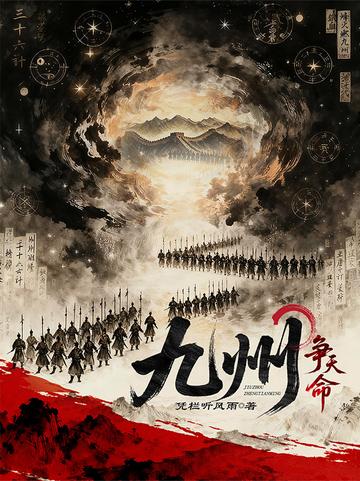
Kyushu***
九州***
- Status
- Ongoing
- Length
- 3.3M Words
- Genre
- Eastern Fantasy
- Subgenre
- Traditional Eastern Fantasy
- Audience
- Male
- Updated
- 2d ago
- Source
- Fanqie
Stats
338Reads
5.8Score
975Chapters
34Listens
138kReads · all time
Synopsis
Reader comments
In booklists 5
Yunchao, Dynasty, Imperial Dynasty, Heavenly Dynasty, Imperial Dynasty, Divine Dynasty,
40.8MViews451Books2dUpdated
The Late Old Man Saw That the Human Race Was Being Bullied and Took Action: Who Dares to Bully My Human Race❗
27.6MViews293Books1moUpdated
In the Dynasty Genre, the Protagonist Rarely Takes Action, Is Invincible and Domineering
11.1MViews381Books1dUpdated
Is There Any Book About Emperors of All Dynasties Getting Together and Becoming Brothers?
I would like to read a book similar to "Starting with Yingzheng: The Arrival of Kings from Past Dynasties".
7.4MViews163Books2dUpdated
Do You Have Any Recommendations for the "Conquest of Hundreds of Clans" and "The Battle of Luck" Genres with a Lot of Words?
More words~
2MViews113Books1moUpdated
This novel is so hilarious! Throw Emperors of Qin, Han, Wu, Emperors of Tang and Song on one battlefield and be reborn. The beginning is a fight between gods and gods. Each one of them is the best of human beings. The intrigues collide and sparks fly, and all kinds of historical jokes are played. There is no strongest, only stronger. The whole process is high-energy without any peeing spots. It's just a word of fun!
The satisfaction of recycling the foreshadowing is overwhelming! The suspense buried in the early stage such as "The Restart of Heaven's Way" and "The Coming of China" are unlocked one by one in the middle and later stages. Each answer can echo the previous details. This closed-loop narrative greatly improves the integrity of the entire novel.
The fight for the sole throne is full of fate! There is no such thing as destiny. Each competitor is challenging destiny in his own way. The protagonist relies on the accumulation of two lives and the combat power of fifteen realms to find his own imperial path among the heroes.
An example of combat power serving the plot! The setting of the fifteen realms is not the end, but provides a higher-dimensional game stage for the emperor's struggle for hegemony. When he is strong, he can be evenly matched with the top players, and when he is weak, there are ways to break the situation. The fluctuations in combat power always revolve around the advancement of the plot.
The "uniqueness" of Emperor's Hegemony will be implemented to the end! There is no vague win-win ending, only the eternal emperor after the iron-blooded competition. The characters of each emperor are distinctly shaped. Qin Shihuang's domineering, Zhu Yuanzhang's forbearance, and Li Shimin's brilliance make the hegemony plot full of tension.
The cultural core of Eastern fantasy is full! The talismans, formations, and sect inheritance in the book are all rooted in the Chinese fantasy system, and there is no rigid grafting of Western fantasy elements. The disputes over orthodoxy and the theory of destiny all have a classical charm, which will make old book fans ecstatic.
The rhythm of the plot is relaxed and relaxed! There are exciting cross-border battles and imperial showdowns, as well as undercurrents of machinations and foreshadowing. The narrative rhythm combines fast and slow, making the reading process exciting but not tiring, making it suitable for long-term reading.
The charm of oriental fantasy is accurately grasped! The settings of artifacts such as the Xuanyuan Sword and the Dingtang Sword are in line with traditional culture, and the skill systems such as the cultivation of immortals and the control of spirits are derived from the classical fantasy framework. They not only retain the traditional essence, but also add innovative settings, which will make old bookworms ecstatic.
The "retro coolness" of traditional fantasy is perfectly balanced with innovative elements! It not only includes classic plots such as break-up of engagement, trials, and treasure hunting, but also adds fresh settings such as imperial intrigues and cross-life memories. Old readers can find the feelings, and new readers can get the excitement.
The Emperor's Contest line can be called apotheosis! Different from the conventional setting of multiple powers coexisting, this book firmly sticks to the core of "the only one". The protagonist rises from a humble beginning, competes in the Six Kingdoms, wipes out the sects, and controls the Nine Provinces. Every strategic game is full of tension, and the road to the top is exciting.
The logic of reversing the plot is extremely strong! There is no rigid operation of reversal for the sake of reversal. Each turning point is supported by the foreshadowing of the previous text. For example, a certain emperor's abnormal behavior is actually to resist the shackles of heaven, which makes people suddenly realize when decrypting it.
The creation of the emperor's group portraits is a masterpiece! Not only is the protagonist uniquely beautiful, but the emperors' struggles for hegemony are all flesh and blood. Their ambitions, perseverance, and regrets are intertwined, making the fight for "the only destiny" not only a competition in combat power, but also full of human game.
This book is definitely a masterpiece!
It can be called the benchmark work of "emperor's fantasy"! Listening to the Wind and Rain uses a solid setting, exciting plot, and profound foreshadowing to integrate elements such as time travel and rebirth, invincibility in two lives, and combat power in fifteen realms. It not only meets the expectations of Shuangwen readers, but also has a depth worthy of careful consideration. It's not a loss if you close your eyes and enter the pit!
The foreshadowing is really great! A seemingly casual rumor or an ancient artifact in the early stage became the key to the plot in the later stage. The reversal was unexpected and reasonable. It was only after the second playthrough that I discovered that there were detailed easter eggs everywhere.
The setting of time travel and rebirth has reached a new level! The protagonist not only carries the memories of his previous life, but also inherits the Taoist insights of the previous life. This "double buff" blessing makes the growth line both fast and solid, avoiding the frustrating and procrastinating feeling in the early stages of similar novels.
The depth of the foreshadowing is amazing! The seemingly irrelevant details in the early stage can be connected into a reversal that subverts cognition in the later stage. For example, the jade pendant of a supporting character finally reveals the core secret of destiny. This kind of narrative skill is rare in fantasy literature.
The description of the combat power ceiling in the fifteenth realm is extremely impactful! After the protagonist reaches the top of the fifteenth realm, it is not the end, but the beginning of a new journey of "controlling the way of heaven". This "breakthrough and breakthrough" setting keeps the upgrade of combat power fresh.
A sincere work of traditional fantasy! The setting of time travel and rebirth + memories of two lives brings a sense of excitement. The protagonist has poor information at the beginning, and the road to invincibility is steady and burning, which completely appeals to the aesthetics of Eastern fantasy lovers.
The memory of two lives is not a brainless thing! The protagonist uses his previous life's cognitive layout of the Kyushu pattern to have both the thrill of invincible crushing and the step-by-step power calculations, especially the section where he uses modern thinking to decipher the ancient immortal cultivation formation, which is both imaginative and logical.
The only setting of Clash of Emperors is amazing! Qin Shihuang, Li Shimin and other ancient emperors compete on the same stage, and the plot of Thirty-Six Strategies to Break the Sky is full of tension to see who can finally control the way of heaven and become the eternal supreme.
A wall-breaking work of traditional fantasy! Listening to the Wind and Rain perfectly combines time travel and rebirth with the emperor's struggle for hegemony. The invincibility setting of the superimposed memories of two lives is very exciting. The scene where Qin Shihuang, Li Shimin and other emperors compete on the same stage can be called the oriental fantasy version of "Ten Thousand Dynasties Competition", and the blood index is full.
The double buff of time travel + rebirth is directly filled up! The protagonist returns with the memories of two lives. He not only has the accumulated experience of conquering Kyushu in his previous life, but also has the prophetic advantage of changing his fate against the odds in this life. The feeling of "invincible flow" comes naturally and there is no frustration in the whole process.
The rebirth of the emperor is vividly described, the plot is compact and exciting!
The subject matter is novel, the text is beautiful, and the words are fluent
The foreshadowing is cleverly placed, and every picture has a twist, so you'll want to keep an eye on it!
The character's behavior is logical and self-consistent, with both IQ and EQ online. Five-star recommendation.
It's an exciting novel. It's received good reviews. The author is of high quality and very attentive.
It's all about the details! The author is very attentive to the preparation of the training system. It gradually unfolds from Chapter 147 when the seven realms are clearly defined, and the promotion logic of the subsequent fifteen realms is clear, making the upgrade of combat power both satisfying and reasonable.
The aesthetics of oriental fantasy are implemented throughout! Whether it is the names of the exercises, the settings of the artifacts, the scene descriptions, or the embellishments of the poems, they all have a strong classical charm. For example, the combat strategy of "Thirty-Six Strategies to Break the Sky" adds a bit of cultural heritage to the fantasy story.