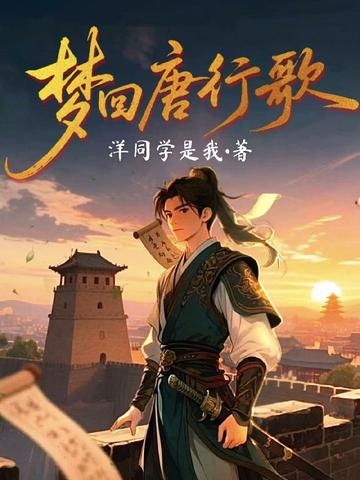
One dream, and he wakes to the golden age of Kaiyuan.
Yang Xuanhe, a young man from the modern world, falls into Tang Dynasty Chang’an dressed in Han clothing. The city is dazzling as a dream, but he has no money and nowhere to turn.
A performance on the konghou by the musician A Kong is the first warmth he finds in his despair.
An identity pass belonging to a distant cousin from the former Sui clan gives him a foothold in this splendid age.
He sets up a stall in the Western Market, where his slender-gold calligraphy amazes the crowd.
He talks late into the night about past and present, and writes ci poems about homesickness.
He repairs houses, tunes zithers, tries his hand at cooking, and uses a modern mind to make sense of every little detail of this age.
Yet beneath the golden age, undercurrents stir.
A clearly reasoned written complaint draws the attention of the renowned minister Song Jing.
His exquisite calligraphy brings him face to face with the Poet Immortal and the Sage of Calligraphy.
The tide of history rolls on, and An Lushan’s ambitions are already swelling.
Fifteen years of Tang dreams: he witnesses the splendor, sees the danger, takes up arms, and defends the realm.
He once played a tune with Wang Wei, saw Du Fu weep as he wrote “Spring View,” and joined Guo Ziyi in reclaiming the land.
But what he remembers most is still that first encounter in the Western Market, when the konghou’s plaintive notes softened the entire High Tang.
Dreaming of the Tang Dynasty is both a dream and the road home.
What he leaves behind is more than a traveling song.