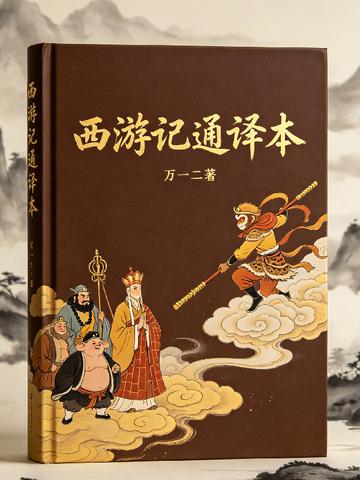
"Journey to the West" is one of the four classic Chinese classics written by Wu Cheng'en in the Ming Dynasty. It is based on the main line of Tang Monk's master and apprentice studying for Buddhist scriptures from the West. It tells the story of the stone monkey Sun Wukong who was born out of a stone, escorted Tang Monk through eighty-one hardships with Zhu Bajie and Sha Monk, subdued demons such as the White Bone Demon and Red Boy, and finally obtained the true scripture. The book creates classic images such as the unruly Wukong and the honest Bajie. It uses fantasy adventure as a metaphor for spiritual cultivation and social reality, and combines romantic imagination with profound philosophical meanings.
This general translation faithfully restores the original work in modern vernacular. On the basis of retaining the chapter structure and poetry rhythm, the ancient vernacular is transformed into a popular text. It not only smoothly presents the fantasy scenes of gods and demons fighting, but also retains cultural heritage such as the "Five Elements and Bagua" through annotations, allowing contemporary readers to easily appreciate the charm of classical literature and experience the allegory of Wukong's growth from "Monkey King" to "fighting and defeating the Buddha", as well as the Eastern wisdom that "the human heart is an obstacle to demons, and cultivating the mind is to conquer demons".