Stats
5.8Score
Synopsis
No synopsis yet.
We haven’t got an English blurb for this one. It appears once the source description has been translated.
Reader comments
In booklists 4
A Novel About the Three Kingdoms That Will Captivate You at First Glance
Win with strategy, passionate and domineering, and can't stop looking good.
86.5MViews364Books2dUpdated
The Beauties of the Three Kingdoms, Qiao Diaochan and Cai Wenji
23.2MViews82Books5dUpdated
The Three Kingdoms Is the Hottest Topic on Tomato. Please Read the Three Kingdoms Article.
I want to read a book similar to "Ji Xing Three Kingdoms". As long as you dare to write all kinds of good Three Kingdoms articles, I dare to read them.
3.3MViews296Books2dUpdated
Are There Any Three Kingdoms Novels?
It's best if the male protagonist is invincible
230.9kViews106Books3moUpdated
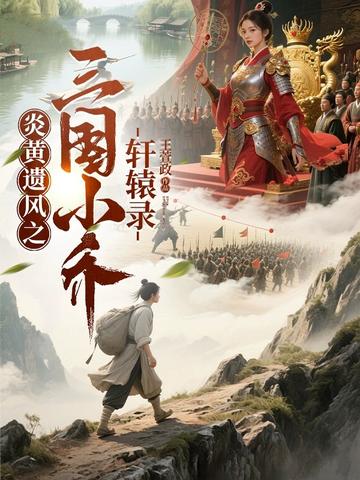
A historical story and heroine legend under the vision of "Xiao Qiao". Among the many works on the Three Kingdoms theme, the author is committed to depicting and supplementing the doubtful characters and scenes in the original works and historical records, and boldly brings Xiao Qiao to the forefront as the protagonist of the story. With novel ideas, unique vision, and grand structure, it is worthy of attention and expectation. I hope the author can maintain his original intention and perfectly present a unique online novel.
The story starts from the unclear stories in the Romance of the Three Kingdoms and explains the truth of those things. It is very logical. The article is presented in classical Chinese, which drives away many readers, but leaves most readers with high IQ levels. It is a very good novel and well worth reading. I checked, and the places and characters you fought are still here. The poems and songs in the early stage and the stories in the later stage are very realistic. They are indeed real scenes and characters. The deeds of heroic figures that can be expressed are well documented and are rare.
It's awesome, it's really awesome. When I clicked on it, I thought it was a real Romance of the Three Kingdoms. Whether it's the opening poem or the classical Chinese text at the beginning, the characters and locations are very consistent with the original work, but Xiao Qiao's time travel does bring a little difference. To be honest, I read the original work intermittently and didn't finish it all, but here I can feel that the author's literary skills are really deep. In fact, I felt that it was a bit difficult to read at first, but after reading it, I felt pretty good, and it had the flavor of previous novels. I once again lamented the author's literary skills, it is so strong!
With Xiao Qiao as the protagonist, this novel describes the turbulent times of the late Eastern Han Dynasty from a very unusual perspective. Xiao Qiao shoulders the responsibility of revenge and peace of the troubled times. He interacts with Liu Dai, gets acquainted with Xu Huang and Lu Bu, and shows his extraordinary wisdom and charisma. Moreover, the author's research on the history of the Three Kingdoms is very detailed. It is based on the novel and has been rewritten to a certain extent. It is rigorous and reasonable. The poems in the novel are also in line with the cultural style of that era. All in all, this is an excellent historical novel worth reading.
This novel cleverly adopts the creative method of "textual research fiction", and through the perspective of the fictional character Xiao Qiao, it conducts an interesting "contradiction" of the characters and events in historical works such as "The Romance of the Three Kingdoms". The author does not simply retell famous allusions such as the Battle of Chibi and the Spring Deep of the Bronze Bird. Instead, he uses Xiao Qiao to organize documents and participate in confidential daily life, delicately questioning those overly dramatic scenes in historical records. The novel specifically describes that when Xiao Qiao wrote the appointment letter for Rencheng, he strictly referred to the official format and terminology of Han Dynasty bamboo slips. Its rigorous textual research details make readers feel as if they have personally experienced the bureaucratic operating system of that era. This method of treatment not only shows the author's respect for historical truth, but also hints at how later literary creations have attached a layer of flesh and blood of folk imagination to the historical skeleton. The author tried to integrate some knowledge of traditional Chinese medicine into the plot, such as using Xiao Qiao to recuperate Zhou Yu to explore the medical concepts of the time. However, in the end, he chose to delete some medicinal materials because the age when they were introduced or the way of diagnosis and treatment conflicted with the time and scene set in the novel. This kind of self-consciousness of "self-deletion" precisely reflects the author's high sensitivity to the historical context - it is not that he is unable to write "wonderful skills", but he is unwilling to destroy the true texture of the era with a time-traveling "golden finger". This is also similar to the wisdom of "Bold adoption without violating basic historical facts" when dealing with folklore in "The Romance of the Three Kingdoms". What is particularly valuable is that the poetry, folk slang, and even some seemingly "vulgar" curse words that appear in the novel are all original works by the author based on the language style of the Han Dynasty. These contents are not for curiosity, but to construct a "living" historical context so that readers can feel the unique breath and pulse of that era. Through Xiao Qiao's questioning and research, the author is actually having a dialogue across time and space with classics such as "The Romance of the Three Kingdoms": he not only affirms the artistic sublimation of historical figures by literary fiction, but also attempts to pursue a deeper reality in fiction - that kind of reality.
The author is so awesome, let me pay my respects first! The author's logical deduction of the age of Xiao Qiao's life experience, to the restoration of the historical scene of Dian Wei's murder of the Fuchun County Magistrate, to the historical data analysis of the identities of Qiao Mao, Qiao Yu and other characters, each adaptation anchors the gap between "The Romance of the Three Kingdoms" and the official history of the Three Kingdoms, using rigorous textual research to complete the reasonable logic for "questionable plots", turning the curiosity of Three Kingdoms fans about "historical possibilities" into a well-founded story line. This creative attitude of anchoring historical facts in fiction and respecting the original work in deduction shows his deep research on the culture of the Three Kingdoms, making this work a double surprise of textual research and narrative in the Three Kingdoms theme. Thumbs up!
Although this book is based on history, it gives Xiao Qiao a new life trajectory. She is not only a survivor in troubled times, but also a woman who takes the initiative to change her destiny. From avenging his father to strengthening the army and governing the country, from witnessing the rise and fall of princes to participating in the world's chess game, Xiao Qiao's tenacity and strategy subvert the traditional impression. The work finds a balance between romance and fiction, allowing readers to experience the majesty and desolation of the Three Kingdoms era through her eyes. Although the plot is legendary, its careful study of historical details and portrayal of character growth are still worth reading. Very good, I like it very much😍
This book is based on the background of the Three Kingdoms, and cleverly incorporates the historical figure Xiao Qiao, constructing an ups and downs and fascinating historical novel. The novel begins with Emperor Huan selling his official position and getting a title as an introduction, laying out the political corruption and turmoil in the late Eastern Han Dynasty, laying a strong historical tone for the story. The protagonist Xiao Qiao is not only beautiful and intelligent, but also courageous and resourceful. Faced with the tragedy of her family, she did not succumb to fate, but bravely took on the important task of revenge and revival of the family business. From outsmarting Liu Dai to escaping cleverly, from making friends with heroes from all walks of life to arranging the plan to merge the state with ZTE, Xiao Qiao appeared calm and decisive in every step, showing extraordinary leadership skills and strategic vision. Other characters in the book also have their own characteristics. Dian Wei's bravery, Cheng Yu's resourcefulness, and Xu Huang's loyalty are all vividly portrayed, adding a lot to the story. In particular, Xiao Qiao's interactions with Dian Wei, Xu Huang and others not only demonstrated her leadership charm, but also reflected her good use of people and her understanding of people. In addition, the novel is also very ingenious in plot design. From power struggles to battlefield battles, from family grievances to world trends, various elements are intertwined to form a magnificent historical picture. In particular, Xiao Qiao's series of arrangements and actions in Bingzhou pushed the tense atmosphere of the story to a climax.
Explore the true story of the Three Kingdoms with Xiao Qiao's eyes Unlock the shocking pictures of the grand ancient battlefield from the unique perspective of the time-traveling heroine Xiao Qiao. The author has deep knowledge of classics and rigorous research. From the format of the appointment slips to the detailed restoration of historical scenes, he fully demonstrates his awe and reluctance for "The Romance of the Three Kingdoms". The original poems and prose in the article are quaint and profound, and the occasional knowledge and practical information make "watching the excitement" and "learning knowledge" a perfect blend. Although the author insists on handcrafting and slow work, he makes every plot stand up to scrutiny, injecting fresh vitality of both textual research and imagination into the Three Kingdoms-themed novels, which are worth reading carefully.
Different from the setting of "Jiangdong Er Qiao" as a symbol of beauty in most works, Xiao Qiao in this book is given a unique "Xuanyuan bloodline". She is no longer a passive image in Tongquetai's poems, but an independent individual who awakens ancient power in the wars of troubled times - in the flames of the Battle of Chibi, she uses Xuanyuan secret techniques to help Zhou Lang defeat the enemy. What flows through her fingertips is not only the wisdom of her daughter's family, but also the tenacity of the Yanhuang ancestors; In the whirlpool of secret fighting in the court, she relied on the prophet passed down by her blood to gain insight into people's hearts and maneuvered in the machinations of Wei, Shu and Wu, breaking the stereotype of "beautiful women bring disaster". This contrasting setting of "soft appearance + hard core strength" makes Xiao Qiao's image three-dimensional and vivid, and also makes "Yanhuang Legacy" no longer an empty slogan, but the spiritual core integrated into the character's flesh and blood.
Using Xiao Qiao as the narrative eye, the author not only gives this male-dominated history a gentle and sharp brilliance, but also builds a convincing literary bridge between fiction and historical facts. What I admire most is the author's dedication to details. From the identification of Qiao Mao and Qiao Yu to the restoration of the scene where Dian Wei killed the county magistrate, every plot is rooted in the blank spaces of official history, and solid research evidence is used to fill in the logic, allowing historical possibilities to take root in the story. This creative attitude gives fictional stories the weight of history! Xiao Qiao's image breaks through the norm! She is not an embellishment in troubled times, but a bearer of wisdom and courage! After the dramatic changes in the family, he calmly dealt with Liu Dai, Dian Wei and other forces, and laid out the ZTE business in Bingzhou, showing his strategist's vision at every step. In the book, Dian Wei's bravery, Cheng Yu's planning, and Xu Huang's loyalty are intertwined with Xiao Qiao's leadership, making power, battlefield, and human nature vivid on the page. It is worth mentioning that the author's original elegant poems and knowledge are just like hidden Easter eggs, allowing readers to immerse themselves in the story and encounter new historical knowledge. This kind of slow-crafted sincerity is especially precious in today's era of quick reading.
It's great that the author uses the fictional Xiao Qiao as the anchor - she is like a "historical observer", unfolding famous scenes such as the Battle of Red Cliff and the city defense game from a more vivid perspective, which not only respects the classic framework of "The Romance of the Three Kingdoms", but also quietly adds the idea that "the historical reality may be like this". When reading, I can't help but follow her perspective and wonder: So this historical event can still be interpreted this way? The ancient lines and battlefield descriptions are also very immersive, and it feels like you have really followed her into that era of fighting and iron horses. Five-star praise! It has a full sense of immersion and is an excellent work with potential!
It feels like this is not only a story, but also a reflection on history itself. The author does not indulge in the grand narrative of Red Cliff Beacon Fire or Tongque Chunshen, but cleverly uses Xiao Qiao to organize documents and participate in confidential daily life, leading us to those historical dramas that we are familiar with. What is the real texture of them? The most admirable thing is the author's stubborn sense of history. In order to write a letter of appointment to the city, we strictly studied the format and terminology of Han Dynasty bamboo slips! Because there was a conflict between the time when the medicinal materials were introduced and the plot setting, the carefully designed sections of Chinese medicine and psychology were resolutely deleted. This self-awareness of self-deletion is far more valuable than the golden finger of imagination. It embodies a high degree of sensitivity and reverence for the historical context. The creation is not an omnipotent fiction, but a careful deduction of a reasonable possibility within a solid time and space framework. The original poetry and slang in the book based on the language style of the Han Dynasty are not embellishments. They successfully build a living context, allowing us to touch the breath and pulse of that era. Through Xiao Qiao's perspective, the author has actually completed a dialogue with history! It not only accepts the flesh and blood of the folk imagination represented by "The Romance of the Three Kingdoms", but also always uses textual research as an anchor, trying to correct those overly dramatic fallacies, and in the fictional narrative, it restores to us a historical reality that is more simple and complex, and has a more bureaucratic daily texture. This undoubtedly opens up a new path for the creation of the Three Kingdoms theme with both intellectual interest and narrative charm.
The writing is exquisite and durable, with both texture and appeal. It can outline vivid characters and magnificent scenes with just a few strokes. The plot has ups and downs without dragging on, with machinations and tenderness intertwined, and full of excitement and empathy. Each chapter makes people eager to unlock the next plot.
The article is wonderful, the setting is ingenious, the plot has ups and downs, and is very attractive [Like][Like][Like]
This book reshapes the image of Xiao Qiao. She is no longer a passive symbol of beauty, but an independent and strong person who uses secret skills to help in the Red Cliff beacon fire and has insight into people's hearts in the whirlpool of intrigues. The contrast between soft appearance and hard core strength is refreshing. It's finished, and I feel like it's not enough to watch. I'm looking forward to the author's new work!
The storyline is full of ups and downs! Exciting!
The content is rich and substantial, the structure is clear and reasonable, the plot is fascinating, the images are lifelike, and the descriptions are meticulous. Wonderful and worth reading.
It is really a magnificent novel. The two styles suit everyone's taste. The ancient style poems and songs are so good that ordinary authors cannot write them. I love it so much. The refreshing ancient style of writing at the back leaves people wanting more. It is indeed a rare good novel. Keep up the good work! The hero's story continues.
A great book with a sense of immersion! The logic is rigorous and full of ingenuity. Whether it is the construction of a grand world view or the depiction of subtle emotions, it shows a strong foundation. During the reading process, you feel like you are immersed in it, following the protagonist through laughter and struggle, which is full of stamina.
The author uses the fictional Xiao Qiao to connect the troubled times of the Three Kingdoms, turning her into a historical observer to unlock a new perspective on the Red Cliff and city defense games. It not only fits the framework of the novel but also complements the historical imagination. The sense of substitution in the lines and battlefield descriptions directly makes people immersed in that era! Worth collecting and recommending! Looks good, keep chasing! Big cheers for the author!
I originally came here for the theme of the Three Kingdoms, but I didn't expect to be a fan of the author's "realism" - it not only restored the grandeur of the ancient battlefield, but also used the logic of the novel to straighten out the doubtful points in "The Romance of the Three Kingdoms". Even the poems are original and in an ancient style. The heroine Xiao Qiao does not travel in a silly and sweet way, but with the sobriety of "spectator + participant", while stirring up the situation of the Three Kingdoms, while secretly filling in the historical details. It is both enjoyable to read and you can get some interesting knowledge. It is a treasure of historical literature that I have recently discovered~ The story is so exciting and worth reading!
It is an immersive read from the beginning to the end. The growth arc of the little characters is heart-stirring, and the overall narrative is even more amazing. There is no unnecessary plot, and every foreshadowing has echoes. It is full of pleasure and emotion after reading it!
The writing is smooth, the story is wonderful, and the plot is as tight as an arrow. Every page is gripping and addictive. This is a masterpiece that will make you forget time and immerse yourself in it! [Like] [Like] [Like] [Like] [Shocked]
I have a profound and solid cultural background and am very familiar with history. It is really great to have it at my fingertips and put it to use.
The writing is as smooth as a clear stream, and the characters and scenes are outlined as if they are present; the story is wonderful, like a delicate nine-link chain, interlocking and fascinating; the plot is compact and without redundancy, and the suspense and climax progress just right, making you unable to put it down, and you will still have endless aftertaste until the final chapter. It is truly an immersive masterpiece.
This book retells the Three Kingdoms from a female perspective with novel ideas. The author pushes Xiao Qiao from behind the curtain of history to the front of the stage, and delicately depicts her entire process of growing up from an orphan girl with a family feud to a far-sighted leader in troubled times. The story does not stick to love, but closely interweaves personal destiny with the grand narrative of fighting and iron horses. In the cold and hard historical logic, it composes a heroine legend full of resilience, wisdom and feelings of family and country. The layout is broad and moving.
The author picked it up casually and portrayed the character of Xiao Qiao in a three-dimensional and vivid way, which is very interesting [Like][Like][Like][Like]
Xiao Qiao is no longer a love symbol, but a heroine who wields a sword to take revenge and governs the country and strengthens the army. The work uses her as the main line to connect the disputes between the Three Kingdoms with a unique perspective. History and imagination are intertwined, presenting a picture of troubled times that is different from the past. The brushwork is delicate and worth savoring!
The name Xiao Qiao seems very friendly. The novel uses many of its own original words, sentences and symbols, respecting the author's creative attitude towards traditional handmade writing. I look forward to seeing how Xiao Qiao copes with the greater changes in the follow-up, and also looking forward to her personal emotional destiny. Quoting a sentence from a novel I just read, I wish the author and all book friends: "One article attracts ten thousand articles!"