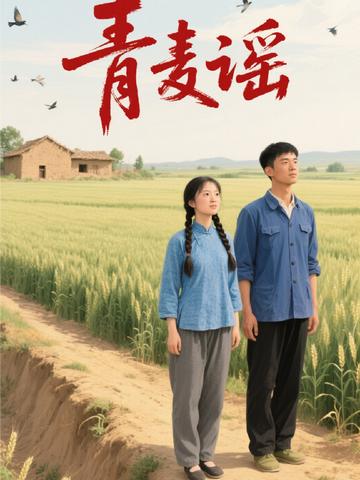
In the early spring of 1969, Lin Wan, a 17-year-old Beijing educated youth, said goodbye to alleys and classrooms. Carrying his mother's fried noodles and a book "How Steel Was Tempered", he set foot on the loess slope in the north of Saibei and came to the Linhebao production team. When she first arrived in a strange adobe cave dwelling and faced with the heavy farm work, she was at a loss, but she gradually found a sense of belonging while getting along with local reporter Li Jianguo - he taught her how to hoe weeds and identify seedlings, handed her hot cornmeal buns, sang the northern Shaanxi folk song "Orchid Flower" in his rich voice, and expressed his sincerity under the kerosene lamp. The love between the two quietly sprouted in the labor and fireworks of the loess.
However, this relationship that spanned the identities of "educated youth" and "rural youth" soon encountered a storm. County cadre Wang ordered the two to break up on the grounds of "contrary to the revolutionary cause" and suspended Lin Wan's work points. Fortunately, Uncle Zhou of the production team came to the rescue and found an old comrade to mediate, and the crisis was resolved. After that, their love grew stronger with closer support: when Lin Wan fell ill, Li Jianguo braved the cold night to find a doctor and guarded her all night; when Li Jianguo's clothes were torn, Lin Wan quietly mended them. Although the cave dwelling was simple, it was full of warmth.
As winter approaches, the policy that educated youth can return to the city comes from Beijing. Lin Wan is caught in a dilemma - on one side is her long-missed parents and the familiar city, on the other side is her beloved Li Jianguo and the land that carries her youth. In the end, under Li Jianguo's promise of "I will save enough money to go to Beijing to find you," Lin Wan bid farewell to Linhe Fort in tears. After returning to Beijing, she returned to coaching, but she was always concerned about the distance. She wrote to Li Jianguo every day, but she never received a reply.