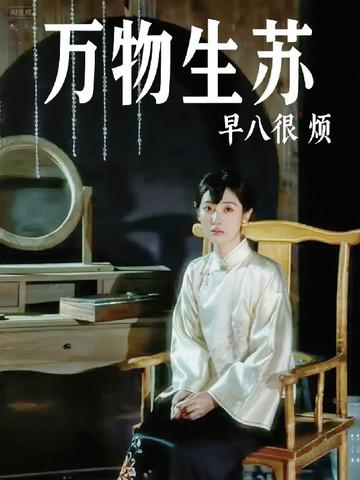
A bowl of poisonous red date porridge ended Ning Susu's humble and obedient life.
She is a bargaining chip in her father's eyes, a tool for carrying on the family lineage, and a victim of the family's reputation.
When she was reborn at the turning point of fate - on the sedan chair that determined the tragedy of her life, she asked herself: Why?
Why should a woman's fate be decided by men and families?
This time, she chose to resist.
From the battle of wits with bandits to survive, to the turmoil that stirred up the marriage of two families; from marrying into a deep house, working step by step, to using the knowledge of later generations to farm and do business in Mengshan; from fighting for personal revenge, to establishing a women's workshop for group liberation... Ning Susu walks in the gap between feudal ethics and the current of the times with a weak body.
What she fights against is not only her vicious eldest sister-in-law and selfish father; she fights not only for her family property and status. What she wants to fight is the invisible, cannibalistic rules, and what she wants to fight for is a woman's right to hold her head high and live for herself.
She is no longer the submissive Miss Ning Er, but the thoughtful and step-by-step "Boss Su". She wins people's hearts with her good cooking skills, accumulates wealth with her forward-looking business vision, and unites the sisters at the bottom with her empathy.
She turned the wasteland of her dowry into a mountain of gold and silver; she turned an abandoned dyeing workshop into a well-known "women's workshop".
She once thought that love was the only light in her life, but eventually discovered that career and sisters were the backbone that allowed her to truly stand up.
This is an epic of self-redemption for women in the old days. There is no earth-shattering golden finger, only a strong heart that is not willing to be a fish.