When the New Era Group registers “time” as a mineral resource,
humanity is left with only two identities:
Either a past edited down, or a future formatted away.
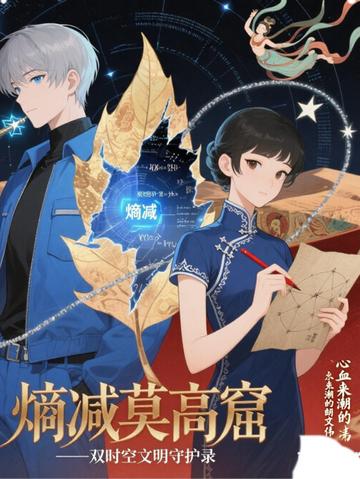
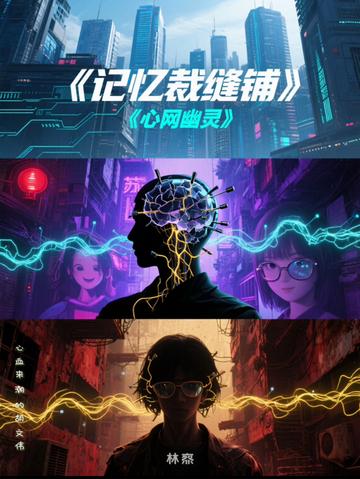
In 2075, a quantum surveyor digs a particle of “spacetime impurity” from the ruins of the Songhu battlefield:
Dunhuang’s yellow sands, a qipao, camel bells, and a woman gazing up at the stars.
The System labels it “noise,” yet seals it away with its highest-grade quantum lock.
Lin Shen, a low-level data cleaner, needs only 0.7 seconds to decide to steal it.
On the night of his escape, he stumbles into the last sliver in his mother’s eyes that has not been overwritten by the program:
“Star Chart Jiuli, awaken.”
The voice sounds like an old cassette rewinding, and carries his mother’s name away with it.
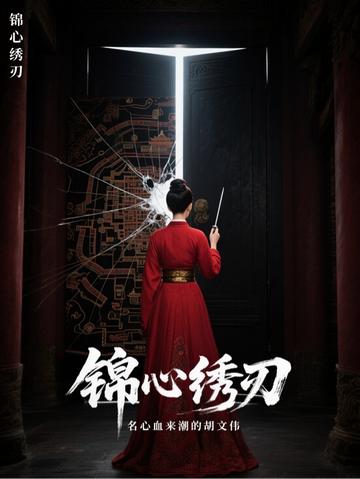
Meanwhile, in Cave 61 in 1937, mural restorer Shen Ruobing is prying a piece of plaster from the wall with her hairpin.
Behind it lies half a vermilion star chart, and the reason someone is pointing a gun at her.
She hears footsteps coming from the future, not hoofbeats but drones;
and the labored breathing of a strange man, not a soldier but a fugitive from time.
Quantum foam builds a bridge between them, wide enough for only one person.
Every resonance leaves an unhealable crack in the other’s world:
He takes a bullet for her, and the bullet unleashes a storm in the data sea of the year X x x x;
she alters the star chart’s coordinates for him, and they instantly tear the New Era’s firewall to shreds.
When the Group’s CEO, Li Mo, activates the final “Perfect Civilization” protocol, set to erase every uncontrollable variable, including Dunhuang and the two of them,
Lin Shen and Shen Ruobing