New Books, Mutual Reviews, Reminders for Updates, and Additions to Each Other's Bookshelves
I want to read a book similar to "Guo Zhan Wushuang". New books, mutual reviews, reminders for updates, and additions to each other's bookshelves
1.5MViews250Books19hUpdated
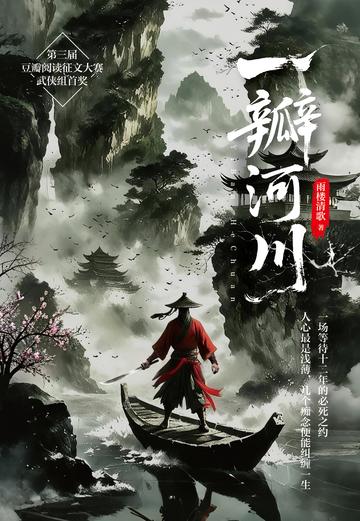
Although there are only eight simple short stories, after reading several short stories, I have the urge to cry. Reading the reviews, some people said that it lacked a sense of energy, but I felt that this book was full of energy, martial arts energy, and martial arts energy. When I first started reading it, I probably liked Yun Moyou, a hero who lived in the legend of Jianghu. He was so good at martial arts that he almost became a god. After reading the whole book, I turned out to love Yang Xun the most. He was very similar to Guo Jing. It's been a long time since I've seen a story that moved me so much. Whether it's the language or the richness of the characters, it brought about a sound of insects chirping in the cold mountains in the middle of the night and a glimmer of moonlight on a lonely fishing boat. It turns out that in this prosperous world, there are still people who can write such words. So good, so good, so good!
I haven't watched martial arts in years. This is a collection of short stories, with many characters, but the two central characters are Mr. Yun and Yang Xun. Mr. Yun is as ethereal as an immortal. He is devoted to martial arts in the mortal world, and his occasional good deeds have influenced many people. He has no distinction between good and evil sects. His white clothes are as white as snow, unstained by the dust. Just like Fang Xue's feelings can never be spoken, he is around but far away. In comparison, I prefer Yang Xun. He was flying in his youth, busy with the word "chivalry" all his life, and his appointment with Miss Liu in Yangzhou is poignant and moving... Looking forward to the new book of Yulou!
I spent two days reading eight martial arts stories, which left me feeling irritated and filled with sadness. The Jianghu described by Yulou Qingge is full of chivalry. As his character said, "I have good wine and sword, so it is my duty to act chivalrously and to enjoy love and hatred." The big people tend to have gentle personalities and understand life, while the small people will try their best to repay the kindness they once had. The author's writing style is good, his descriptions are delicate, and he focuses on exaggerating the swordsmanship and sword spirit of the heroes. But the literary style is also too strong, and it lacks a bit of fireworks. It feels like watching a Zen story. Overall, this is a very good martial arts novel and worth reading.
I thought it was a novel, but after reading it I realized that it was actually "A Petal in the River". Each story is a segment, a section and a side of the river. There are stories of love between sons and daughters, brotherly love, and encounters by chance and drawing swords to help; the writing style is more Gulong-style freehand, with not much action description; I like Fang Xue's chapter the most. In a blink of an eye, people can really smell the atmosphere of the rivers and lakes. Things are unpredictable. One second you live and the next they die. No one can be your brother or friend forever. They may betray you or they may be separated from you. Everyone walks alone in the river. Compared with other chapters, this chapter has a stronger sense of sadness.
There are people who have the world, and chivalry is worthy of others and worthy of the heart. However, there are many injustices in this world, and it is impossible to punish the evil ones one by one. However, the dashing figures of these chivalrous people will remain in the hearts of the world forever. The whole book gives people a soul-stirring feeling - as the saying goes, if you never forget it, there will be echoes, but the end of each chapter makes people feel infinite melancholy and regret. We are already heroes. We are different from others, but we still have so many helplessness and regrets, let alone us mere mortals. I like the author's style very much and plan to check out the author's other works "The Sword Sect of the World" and the new book "Sword Carved Whale Boat".
After watching "Wind and Dew Thorn", I complained, "Why can't I just walk a few steps and recite a few sour poems? What kind of Jianghu poetry convention is this?" Then "Blue Eyes in the Mountain" started to be so fragrant and slap-happy all the way. It was written so lightly and beautifully that people knew it was a scam, but still fell into the old dream like Yue Kongshan a few years later. I secretly think that "Jin Liang Wen Gu", the first two inherited the realistic style of the Ming and Qing novels, focusing on plot logic more than martial arts, using a person's struggle to counterattack the history to explore the issues of "who am I" and "who can I become"; Wen ancient freehand brushwork, using emptiness to seek emptiness, and using chivalry to seek truth, are always confused about "who am I at this moment". Film and television works, with "Ashes of Time" as the dividing point, also show similar changes. Therefore, for the new martial arts, imitating gold is the end of the road, and chasing the ancients may gain new life. It can be seen in this book that the traditional moves have become obsolete. The scenes of the duel between veterans have the sense of immediacy of many movie stills. The description of victory or defeat being determined in an instant with one finger is even more reminiscent of the battle to win the cake in Ye Gong Jinlou. The eight chapters describe the ups and downs and turbulence of the four generations. There are gods and humans, there are shortcomings and perfections, but in the end they all seem to be lonely. But I still want to thank you for giving me a sword like a dream.
A freehand martial arts novel with a superb artistic conception. The martial arts masters in the novel no longer fight in a rigid manner, fighting with each move, but instead discuss artistic conceptions. Each of the swordsmanship and swordsmanship has its own extreme state, and there are also images between the extreme states, such as plum blossoms and blue eyes. This kind of martial arts breaks out of Jin Yong's framework and borrows the charm of Gu Long. But his skills are almost Taoist and his martial arts are almost immortal, but he is no longer a true martial arts warrior. He is more dashing than chivalrous. However, Mr. Yun doesn't like the old man who is like an immortal. His favorite is the Shechuan sword Yang Xun. The grievances are clear. I recommend using Shedachuan 80%.
The content is indeed in line with expectations, the writing is so beautiful, and it is very graphic. When I read every word, sentence, and scene, I can't help but picture that frame in my mind. The demeanor of a hero, the loyalty and perseverance of a small figure in the world, the faint but unforgettable love... Although the story is short, the descriptions are very delicate. I am looking forward to the author's novel!
Martial arts enters the 21st century, and they talk about inheriting the Jin Dynasty and inheriting Wen Liang. In fact, the style is completely different. The martial arts novels of Jin Yong's generation emphasize the word "xiaxia" and the word "righteousness". They describe a world of rivers and lakes. They are written on a white horse and the autumn wind plugs it. They want a great hero, a true hero, and the eighteen palms of the dragon. Today's martial arts, when talking about a noble man who emerged from troubled times in the mist of the south of the Yangtze River, must be in white clothes, must use a sword, must have a nice name, be in the rivers and lakes, and be in the sky, speak with poetry, and walk while enjoying the scenery. It's a bit soft, just like Liu Yong's lyrics, it's suitable for a girl in her 17s or 18s, holding a red tooth to make a clapper, singing "The dawn wind wanes outside the willows". Even if it is written about Chang'an in Guanxi or outside the Great Wall in western Liaoning, it feels like the misty water vapor from the south of the Yangtze River is rushing towards your face.
Apart from being wonderful, what else is there to say? My favorite piece is "A Petal of the River". The whole book has a loose structure but a coherent charm. It gradually gets better in the middle and later stages, and the spiritual energy almost bursts out. In my opinion, if Chinese martial arts novels are written with the rigorous structure of Western novels, they will lose the narrative beauty of traditional Chinese novels; therefore, what Chen Shixiang said about "The Eight Parts of the Dragon" is not wrong here: "The world in the book is a bright world, with monsters and ghosts hidden everywhere, and they are exposed and satirized in surprising ways at any time. How can we not call it a loose structure if we want to present such a pitiful world for all living beings?"
Yulou Qingge is so good at writing, and has a unique charm of classical martial arts. Chivalry, Jianghu, swordsman, the text with elements of swordsman is very enjoyable to read. I haven't read such elegant writing in a long time. Among the 8 chapters, Fukitsuto is my favorite, and the tragedy makes him even more chivalrous!
Little people who like "Flowing Snow Vine" work together to accomplish great things, which is unexpected. I also like "A Petal in the River". The characters are related to each other like beads on a string. Forming a very rich picture of rivers and lakes.
When I put down the book, I realized that I was not looking at martial arts, but at poetry, emotion and spirit. When focusing on a long plot, I tend to write deeply about the human heart, and it is easy to get confused; on the contrary, I cut the stream of light into short sections and write about the human heart shallowly, but I can see a little bit of clarity in the delusion of the human heart. The style and character can truly be seen in the genre.
Mainland China's new martial arts are not dead yet! Among the eight stories, I particularly like "Wind Dew Thorn", "Blowing Snow Vine" and "Burning Calyx Tower". I like the decisiveness of "I like it, even if everyone in the world is against me"; I like the chivalrous spirit of an unknown person risking his life just for a promise; I also like the ruthlessness of "writing words to the point of despair and practicing swords until they grow old". Compared with the previous martial arts works, Yulou Qingge prefers to write about people, all kinds of different people, their lives, their choices, their loves and hates. Heroes also have their own way of life that they cannot understand, and small people may not be without chivalry.
The poem "Green Eyes in the Mountains" is truly beautiful, with pear blossoms reflecting the snow and the Milky Way reflecting, everything is just a wisp of fragrant soul. Most of the author's articles are actually freehand descriptions, and the plot and writing style complement each other to produce beautiful and wonderful reactions. I personally recommend five articles: "Green Eyes in the Mountains", "Falling Heroes", "Blowing Snow Vine", "Wind Dew Thorn" and "One Petal of the River".
There is no clichéd feeling of pleasure, only the involuntary feeling of Jianghu people. The characters are as vivid as before, and the love, hate, anger, and ignorance are all vivid. When I close the book, I am still overwhelmed by the joys and sorrows in the river.
The author's control of "blank space" is so accurate. In the process of re-elaborating the story, there is no detailed explanation of everything, but there is a lingering rhyme at key points, so that readers can't help but imagine along with them during the reading process: Where did they go? Will those unspoken words become permanent regrets? It writes about Jianghu, and it really talks about people's hearts. It's so beautiful!
"From then on, we parted ways, and I waited for the pear tree to bloom again for many years. Meeting Miss Liu made the sound of water flow in my heart calm, but Miss Liu became another river in my heart." Gu Long has a freehand style, and he handles the emotions of the characters very naturally. After reading some of the stories, I felt soul-stirring, and I felt that martial arts should be like this. Dividing martial arts into independent stories is lacking in terms of reading experience.
The novel is quite Zen-like. The story that impressed me the most was that of Fukitsuto, and my favorite character was Yang Xun. In his self-narration, I seem to see our own misunderstandings in the process of growing up and the relief many years later.
The stories complement each other, the river that no one can cross, the life that cannot be understood, the green eyes in Yue Kongshan's eyes, the petals in Yang Xun's heart, the dead branches in Liang Yu's hands, a single thought can entangle them for a lifetime. Rancalyx and Chuixueteng are the best, followed by others. It looks so melancholy
Swords and swords, pleasure, love and hatred, the concept and writing are excellent, and several novels are connected with each other, both overt and dark, to build a relatively complete martial arts world. Some people say that fighting relies entirely on thoughts, which may be considered the author's specialty. This kind of stopping when you are good and clicking until you can give people more room for imagination.
When I just finished reading the first chapter, I thought the author had written too many characters, but they were not specific at all, which seemed a bit deliberate. Fortunately, the subsequent chapters gradually complete all the character creations. When I read the last few chapters, I felt that the author cared too much about the settings, so that the settings seemed far-fetched. While reading, I was completely addicted to each move described by the author. Putting aside the hard work of previous martial arts battles, the swords written by the author are more about freehand brushwork. A dead branch can release the sword's intention from the clouds in the sky, which is really refreshing. Recommended reading! ! !
"Flowing Snow Vine" is the best in the whole book. I say "admiration" to the four heroes! "Rancalyx Tower" describes the passion of the world, "men never look back"! "Good and evil have always existed. There are many people who do evil, but there are also many who do good. We can only hope that more people in the world will sincerely do good, and that everyone will have more good thoughts than bad intentions in their hearts, and the world will always get better and better." This is the most basic morality of Jianghu.
The writing is so beautiful. The eight articles build a world that belongs exclusively to Yulou Qingge. There are people here who enjoy grudges, some are chivalrous and righteous, some are addicted to swords, and some are indomitable for love... The majestic talent spreads in this first book of Yulou Qingge, which is fascinating!
The rivers and lakes full of friendship, the visual sense of Chinese painting, the miraculous martial arts skills, and the "chivalrous spirit" of martial arts are all described. The stories "thorns in the wind and dew", "green eyes in the mountains" and "traces of clouds on the boat" are particularly spiritual, and they are clear and comfortable to read.
Freehand Jianghu, rivers and knights, I didn't have time to read the full-length works of the two masters Jin Yong and Gu Long. I didn't expect to choose such a masterpiece when I read martial arts for the first time. The eight short and medium-length stories unfold the plot from different perspectives, and there are main characters running through them. After reading it, I feel like I can use paper and pen to draw a timeline and a character relationship diagram to sort out the complete story line. It's so beautiful.
In the end, martial arts training becomes metaphysics. What is the intention of the sword and the intention of the sword? I feel like the author didn't explain it clearly. But this does not hinder the beauty of this novel. The rhetoric is particularly gorgeous. The author is very ideal. In his martial arts world, there is only chivalry and love.
When I was a child, I liked martial arts very much, not because of martial arts or Xia, but because of its charm in explaining the world. From martial arts to rivers and lakes to philosophy, in martial arts novels everyone sits, stands and walks, the poetry, wine, singing and dancing, and the swords and hidden weapons all make sense. This new work lacks the indispensable aspects of martial arts such as youth growth and monster fighting and upgrading, but it has gorgeous rhetoric, full of charm, soul but no bones. In the final analysis, it is just an explanation of how swords are like life. Maybe it's because of the short story.
Novel martial arts novels, seemingly unrelated martial arts novels, are finally connected together through characters spanning several generations. Each one is an independent chapter, but together they have a unique flavor. The most valuable thing is that after watching it, you have to think about it before you can appreciate it.
The reading experience of this martial arts book is excellent. Every page, every chapter, every character, every plot, every description and every characterization are all unexpected. They are stunning after stunning, making people immersed in it.