[Lily] "I give you the right to save the world, but the price is your existence itself." Yeluo always remembers the teachings of the gods and sacrifices everything to save the collapsing world. She saved the dragon queen, vampires, succubi, puppet sisters, elves and apprentices, and gave them power to build the City of Eidolon. When the world was finally healed, Ye Luo smiled weakly and was about to say goodbye - Dragon Lady Mo Xue suddenly clasped her hands behind her, chuckled and whispered, "Who allowed the savior to leave the world she saved without permission?" In the underground cell, Ye Luo watched desperately as the friends she had saved took turns approaching, and her cold fingertips touched her pale skin: "Don't be afraid, we will always... Always love you." Until one day, when her consciousness was on the verge of collapse, she cried to the gods for relief, but she was shocked to see the evil god on the throne laughing ferociously. It turns out that all of them had become puppets played by the evil god long before they succeeded in saving the world...
Reader comments
To save the world again, the savior's fantasy journey. Ye Luo sacrificed everything to save the world. She saved the dragon lady, vampires, doll sisters, elves and others, but she was betrayed, imprisoned, imprisoned, and tortured for the purpose of occupying them! Ye Luo was desperate and didn't understand why. It wasn't until later that she discovered that the evil god sitting on the throne was the culprit! It turns out that all of them had become puppets played by the evil god long before they were saved! What to do? Take a look at the answer Yeluo gave us, shake Mount Tai with the power of an ant!
When Ye Luo tears apart the barrier of time and space in "The Savior Again," the Tomato novel platform once again verified its ambition as a testing ground for salvation narratives. This girl, burdened with the curse of reincarnation, uses the system as a blade and memory as a shield to complete her self-sacrifice on a stage where doomsday and immortality intersect. She is both a vessel forced to awaken when the law of heaven collapses, and a rebel who uses code to reconstruct the world. Ye Luo's salvation logic is full of paradoxes: in order to save the common people, he must devour the souls of his loved ones, and in order to restart civilization, he must personally destroy the existing order. This spiraling aesthetic of sacrifice makes each of her rebirths feel like a tap dance on the tip of a knife, and the reader is repeatedly stung by the duet of system prompts and ancient mantras. While other saviors are still struggling to choose between humanity or divinity, Ye Luo has already crushed the two into stardust and paved the way for a third path - this may be the most charming violent romance in tomato-based apocalyptic novels.
Ye Luo's salvation methodology can be called a sophisticated and cruel philosophical experiment. She turns system vulnerabilities into weapons, such as using data overflow to create time wrinkles and carving out a five-minute absolute safe zone in the zombie wave; or tampering with the operating parameters of Heaven's Way to cause a meteorite that should have fallen to deviate from its orbit at the last second. Behind these operations is a chilling cost accounting - each time the space is folded, part of the memory will be permanently lost, and each time the rules are rewritten, an equal amount of emotion will be sacrificed. While other characters are still arguing about the rescue ratio, Ye Luo has used mathematics to prove that in order to maintain 70% of human survival rate, 30% must be sacrificed, and she always puts herself at the bottom of the denominator. This almost paranoid rationality is pushed to the extreme in the fast-paced narrative unique to Tomato novels: within three chapters, she goes through three personality iterations, and each upgrade is accompanied by a more decisive betrayal. Readers will be shocked to find that those seemingly cold calculations are actually the only way for her to fight against the fate of the system - just like using poison to undo the poison, only being crazier than the way of heaven can open the gap in the possibility of salvation.
The story has rich twists and turns and is thought-provoking. Reflect the complexity and diversity of human nature.
Apart from anything else, the three views are still somewhat guaranteed.
The writing is beautiful and the characters are vividly drawn! Save, betray, save yourself! The struggle between justice and evil, the battle between light and darkness!
The second part is another catastrophe, wonderful. "The Savior Again" takes Ye Luo as the core character and constructs a salvation narrative full of philosophical speculation. Its unique feature is that it deconstructs traditional heroism into "atypical salvation" - Ye Luo does not save the world with force or divine power, but through small choices in reincarnations, such as preventing an accident, saving a dying soul, and reversing the end of the world in the butterfly effect. This setting of "taking steps to reach a thousand miles" not only subverts the conventional routine of grand narratives, but also coincides with the universal resonance of "mortals can also rewrite their destiny". The discussion of the "savior paradox" in the article is particularly profound: when the act of rescue itself becomes a new source of disaster, Ye Luo has to redefine the boundaries of "rescue" in a moral dilemma. The struggle in this gray area injects a strong realistic metaphor into the story. The unique fragmented reading experience of the Tomato novel platform instead strengthens the suspense of the reincarnation chapters, allowing readers to gradually piece together the tragic trajectory of Ye Luo's "failure-retrospection-try again" by turning pages quickly.
Ye Luo's growth trajectory can be called an "anti-hero" textbook: from a tool man who mechanically performs system tasks at the beginning, to an awakened person who actively questions the logic of salvation in the later stage, his transformation progresses through three key decisions. The first time was to sacrifice her best friend for a tactical advantage, and she realized the price of "rescue" for the first time; the second time was to deliberately fail to destroy the system and exchange for self-exile for the truth; in the final chapter, she used a decisive attitude of "not saving the world" to reveal the absurd truth that the so-called apocalypse is nothing more than a screening experiment for high-level civilizations. The author uses "savior" as a prism to reflect the eternal contradiction between collectivism and individual freedom - when Ye Luo tears off the saint label of "must save everyone", the groups she abandoned become a blessing in disguise. This subversive design completely deconstructs the divine halo of traditional salvation narratives. The unique short chapter structure of this novel condenses this collision of ideas into high-density plot points, allowing readers to experience the pleasure of cognitive subversion at the touch of their fingertips. It can be called a philosophical fable packaged in a web shell.
The story of cultivating immortality and attaining Taoism requires a little patience. It is a good book for young friends to read or listen to!
Like Like👍🏻👍🏻👍🏻👍🏻
Thank you for your hard work, author, keep up the good work
Now I'm following the second novel
A good book for children, worth owning and sharing.
The author continues to work hard and looks forward to new masterpieces! ! !
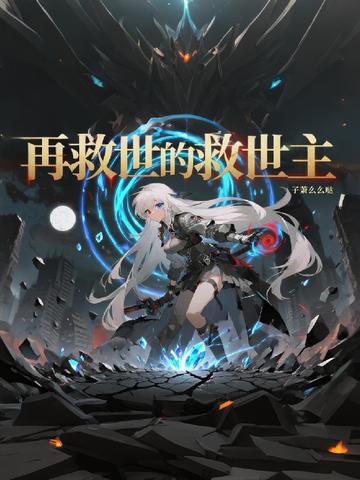
To save the world again, the savior's fantasy journey. Ye Luo sacrificed everything to save the world. She saved the dragon lady, vampires, doll sisters, elves and others, but she was betrayed, imprisoned, imprisoned, and tortured for the purpose of occupying them! Ye Luo was desperate and didn't understand why. It wasn't until later that she discovered that the evil god sitting on the throne was the culprit! It turns out that all of them had become puppets played by the evil god long before they were saved! What to do? Take a look at the answer Yeluo gave us, shake Mount Tai with the power of an ant! When Ye Luo tears apart the barrier of time and space in "The Savior Again," the Tomato novel platform once again verified its ambition as a testing ground for salvation narratives. This girl, burdened with the curse of reincarnation, uses the system as a blade and memory as a shield to complete her self-sacrifice on a stage where doomsday and immortality intersect. She is both a vessel forced to awaken when the law of heaven collapses, and a rebel who uses code to reconstruct the world. Ye Luo's salvation logic is full of paradoxes: in order to save the common people, he must devour the souls of his loved ones, and in order to restart civilization, he must personally destroy the existing order. This spiraling aesthetic of sacrifice makes each of her rebirths feel like a tap dance on the tip of a knife, and the reader is repeatedly stung by the duet of system prompts and ancient mantras. While other saviors are still struggling to choose between humanity or divinity, Ye Luo has already crushed the two into stardust and paved the way for a third path - this may be the most charming violent romance in tomato-based apocalyptic novels. Ye Luo's salvation methodology can be called a sophisticated and cruel philosophical experiment. She turns system vulnerabilities into weapons, such as using data overflow to create time wrinkles and carving out a five-minute absolute safe zone in the zombie wave; or tampering with the operating parameters of Heaven's Way to cause a meteorite that should have fallen to deviate from its orbit at the last second. Behind these operations is a chilling cost accounting - each time the space is folded, part of the memory will be permanently lost, and each time the rules are rewritten, an equal amount of emotion will be sacrificed. While other characters are still arguing about the rescue ratio, Ye Luo has used mathematics to prove that in order to maintain 70% of human survival rate, 30% must be sacrificed, and she always puts herself at the bottom of the denominator. This almost paranoid rationality is pushed to the extreme in the fast-paced narrative unique to Tomato novels: within three chapters, she goes through three personality iterations, and each upgrade is accompanied by a more decisive betrayal. Readers will be shocked to find that those seemingly cold calculations are actually the only way for her to fight against the fate of the system - just like using poison to undo the poison, only being crazier than the way of heaven can open the gap in the possibility of salvation.
The story has rich twists and turns and is thought-provoking. Reflect the complexity and diversity of human nature.
Apart from anything else, the three views are still somewhat guaranteed.
The writing is beautiful and the characters are vividly drawn! Save, betray, save yourself! The struggle between justice and evil, the battle between light and darkness! The second part is another catastrophe, wonderful. "The Savior Again" takes Ye Luo as the core character and constructs a salvation narrative full of philosophical speculation. Its unique feature is that it deconstructs traditional heroism into "atypical salvation" - Ye Luo does not save the world with force or divine power, but through small choices in reincarnations, such as preventing an accident, saving a dying soul, and reversing the end of the world in the butterfly effect. This setting of "taking steps to reach a thousand miles" not only subverts the conventional routine of grand narratives, but also coincides with the universal resonance of "mortals can also rewrite their destiny". The discussion of the "savior paradox" in the article is particularly profound: when the act of rescue itself becomes a new source of disaster, Ye Luo has to redefine the boundaries of "rescue" in a moral dilemma. The struggle in this gray area injects a strong realistic metaphor into the story. The unique fragmented reading experience of the Tomato novel platform instead strengthens the suspense of the reincarnation chapters, allowing readers to gradually piece together the tragic trajectory of Ye Luo's "failure-retrospection-try again" by turning pages quickly. Ye Luo's growth trajectory can be called an "anti-hero" textbook: from a tool man who mechanically performs system tasks at the beginning, to an awakened person who actively questions the logic of salvation in the later stage, his transformation progresses through three key decisions. The first time was to sacrifice her best friend for a tactical advantage, and she realized the price of "rescue" for the first time; the second time was to deliberately fail to destroy the system and exchange for self-exile for the truth; in the final chapter, she used a decisive attitude of "not saving the world" to reveal the absurd truth that the so-called apocalypse is nothing more than a screening experiment for high-level civilizations. The author uses "savior" as a prism to reflect the eternal contradiction between collectivism and individual freedom - when Ye Luo tears off the saint label of "must save everyone", the groups she abandoned become a blessing in disguise. This subversive design completely deconstructs the divine halo of traditional salvation narratives. The unique short chapter structure of this novel condenses this collision of ideas into high-density plot points, allowing readers to experience the pleasure of cognitive subversion at the touch of their fingertips. It can be called a philosophical fable packaged in a web shell.
The story of cultivating immortality and attaining Taoism requires a little patience. It is a good book for young friends to read or listen to! Like Like👍🏻👍🏻👍🏻👍🏻 Thank you for your hard work, author, keep up the good work Now I'm following the second novel
A good book for children, worth owning and sharing. The author continues to work hard and looks forward to new masterpieces! ! !