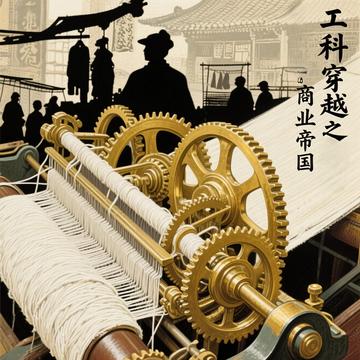
Li Yang, a modern engineering student, travels back in time to a Ming Dynasty-like Dasheng in the twelfth year of Tianqi due to a laboratory accident, and becomes a refugee in a ruined temple. With the help of modern knowledge, he first improved the loom and made a water-powered spinning machine, with the help of cloth merchant Su Wanqing. However, he angered the powerful Zhao family. Despite repeated suppression, he still persisted in technological innovation, and even proposed the concept of "patent" to protect the rights of craftsmen. After that, he expanded into the papermaking industry, using low-cost raw materials to make straw paper and create movable type printing, which impacted the Zhao family's business. He also improved technologies such as tarps and glass mirrors, exposing the Zhao family's conspiracy to collude with Japanese pirates. With the expansion of his territory, he established "Tonghui Bank" to promote anti-counterfeiting banknotes, changed water transportation and ship control of the Yangtze River waterway, developed minerals, and developed prototypes of steam engines. During this period, he was involved in power struggles: corruption in the Ministry of Household Destruction, using the imperial examination to promote new papers to gain the support of scholars, and using alcohol to disinfect to save people during the plague. He was gradually recognized by the seventh prince and the court, and obtained the privileges of imperial merchants. In the end, Li Yang built a business empire covering many fields based on engineering technology, used modern knowledge to solve water control problems in Jinluan Palace, transformed from a refugee into an "industry sage" who promoted the changes of the times, and wrote an engineering legend that spans time and space.