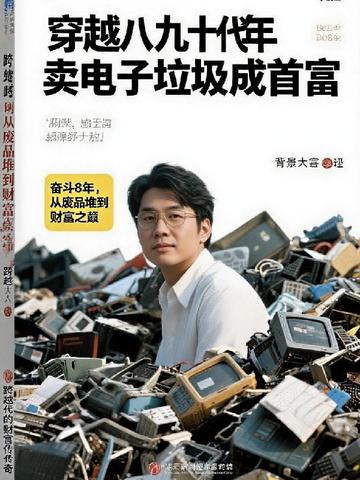
Lin Zhou, the "ragtag king" of Huaqiangbei in 2023, accidentally opened the time and space passage in Shenzhen City in 1987. With a warehouse full of second-hand MP3s, universal chargers, and old VCDs, he opened a "Future Electronics" store in Electronics Street. Relying on the "electronic waste" thirty years in advance, he ignited the market in the first month by playing old songs on MP3s and multi-compatible VCDs, and made his first pot of gold.
But there are dangers behind the business opportunities: the boss next door spreads rumors to disrupt the business, and Chen Hao, the son of an electronics tycoon, repeatedly interferes with the business, and even joins forces with foreign-funded enterprises to engage in technical blockades and customs to make things difficult. Fortunately, Lin Zhou has the "future knowledge base" to back it up - electronic textbooks and maintenance manuals brought back from 2024 to help him optimize memory chips and develop independent laser heads. He also cooperated with Professor Su's granddaughter from the Shencheng Electronics Research Institute to launch color TVs, smart color TVs, and portable computers, building up technical barriers step by step.
While traveling between two time and space to replenish supply sources and engage in research and development, he also resolved opposition from his peers and pressure from foreign investors. From a 60-square-meter store to a "future technology" with a research and development base, his products are exported to Southeast Asia. When Lin Zhou and Su Wan stood at the 1990 Electronics Expo, watching the self-developed DVD defeat the lock-on products, no one could have imagined that the starting point of this upstart in the electronics industry was just a warehouse of "electronic waste" that no one wanted.