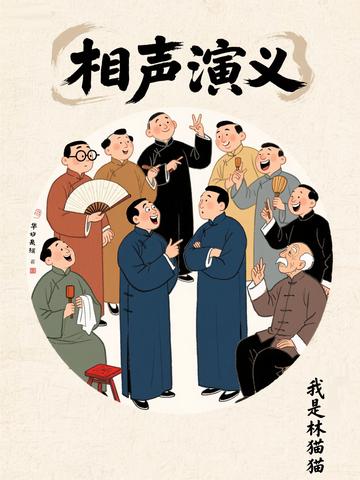
This chapter-style novel uses Shan Tianfang's Jianghu tone to panoramically unfold the rise and fall of cross talk over the past century. From the end of the Qing Dynasty, Zhang Sanlu broke away from the shackles of the octagonal drum and founded a sect, to Zhu Shaowen's "White Sand Spreading Characters" to spread his skills on the footbridge, and "The Eight Virtues of Crosstalk" became famous in Beijing and Tianjin teahouse competitions; from the flames of the Anti-Japanese War, artists used laughter as a knife to kill people Passing on the national aspirations, to Hou Baolin and other innovations and purifying the stage after the founding of the People's Republic of China; from the golden age of crosstalk in the Spring Festival Gala in the 1980s, to the revival of tradition in Deyun Society, which triggered heated discussions in the industry, to diversified explorations such as crosstalk dramas and online crosstalk. The book not only contains the hardships of survival as a performer, the feuds between sects, but also the character of artists who keep their integrity in troubled times and explore new paths in changes. The essence of the skill of "speaking, learning, and singing" is revealed between the lines, and the legendary lives of famous masters such as Ma Sanli, Hou Baolin, and Ma Ji are told. It also hides the eternal proposition of the persistence and innovation of cross talk art in the tide of the times.
Reader comments
It's well said. It can tell the origin of cross talk, and it also has a bit of cross talk flavor.
For those who like cross talk. You can see the development process of cross talk in this book. It's really great!
It's well said. It can tell the origin of cross talk, and it also has a bit of cross talk flavor.
For those who like cross talk. You can see the development process of cross talk in this book. It's really great!
Lifelike, clear structure, super beautiful