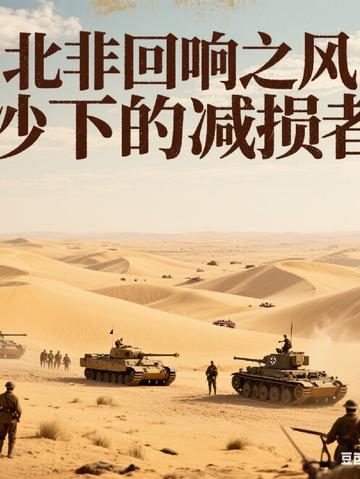
Lin Yan, a modern history enthusiast who is obsessed with historical materials of World War II, accidentally traveled through time while reviewing the archives of the North African Campaign and became a staff officer of the British 8th Group Army in the North African battlefield in 1940. When the [Battlefield Damage Reduction System] was activated in his mind, he saw clearly the cruelty of this era - the jumping troop numbers on the system panel, real-time casualty statistics, and the core mission of "reducing casualties on both sides" made him understand that his mission was by no means to rewrite history, but to maintain the bottom line of humanity in the flames of war.
He was familiar with Rommel's "desert tactics", but never pursued a crushing victory. Instead, he quietly adjusted the density of minefields before the Battle of El Alamein to leave a way out for the German infantry. He understood the logistical loopholes in the siege of Tobruk, but prioritized blowing up ammunition depots rather than water sources, just to spare the civilians defending the city from suffering from water shortages. From Sidi Barani's initial battle test to Tunisia's final persuasion to surrender, he walked between Montgomery's "Decisive Order" and Rommel's "Armored Assault", using the time traveler's prophetic and systematic simulation capabilities to "drill camp" in the gaps of each battle: predicting the route of the German submarine and saving the Allied hospital ship, guiding the Bedouin tribe to avoid artillery fire, and even fighting for prisoner of war treatment for Italian recruits at the negotiation table.
When the wind and sand in the North African battlefield gradually subsided and the system prompted "Damage reduction target achieved," Lin Yan returned to modern times in a daze. In the history book in the study, the number of casualties in the Battle of El Alamein was reduced by 15%, and the name of Tobruk Hospital was relabeled - the lives he saved became echoes that were not buried under the wind and sand.